FRANCISCO AND ANASTASIA RAZON STIPEND SCHOLARSHIP #2

FRANCISCO AND ANASTASIA RAZON STIPEND SCHOLARSHIP #2

- 1 BS Chemistry Student Slot

Benefits:
– Stipend of $500 per semester divided equally and paid over the five (5) calendar months of the semester until the awardee graduates
 
Qualifications:
1. Must be a Filipino Citizen
2. Regular student of the University
3. Currently enrolled under the Bachelor of Science in Chemistry program in the College of Science
4. Must have earned minimum cumulative weighted average grade “3.00” in all courses taken in the University
5. Enrolled and passed in at least twelve (12) credit units per semester
6. Must not have received any final grade lower than “3.00” or have an existing grade of “INC” or “Incomplete” before the awarding of the Grant or any payment of its benefits
7. Parents / Guardian’s combined annual gross income is not more than Five Hundred Thousand Pesos (P 500,000)
8. Must not have committed any act of misconduct with a corresponding corrective measure of more than one (1) week suspension
 
Terms of the grant:
– The awardee shall finish all the requirements of his/her study program within the duration prescribed by the College
– The awardee consents to receiving communications from UPAAA and shall submit a photograph and thank you letter to UPAAA
– The awardee shall not be concurrently a recipient of any other study grant or assistance that provides cumulative benefits exceeding the equivalent of PHP 10,000 in any month
– The awardee shall not be employed in any manner and earning more than the cumulative equivalent of PHP 10,000 in any month
 
Please submit the following requirements to adsapa_staff@science.upd.edu.ph
1. Accomplished Scholarship Form
2. Latest Income Tax Return (ITR)
3. True Copy of Grades (TCG)
4. Current semester’s Registration form (Form 5)
5. Office for Student Ethics (OSE) Clearance
6. Letter of Intent addressed to College of Science Dean, Dr. Giovanni A. Tapang
 
Deadline of Applications on October 13, 2024 (Sunday)
 
Request Form for TCG:
 
Request Form for GMC:
 
Request Form for OSE Clearance:

MICHAEL AND ALESSANDRA (“MAP”) SCIENCE SCHOLARSHIP GRANT

MICHAEL AND ALESSANDRA ("MAP") SCIENCE SCHOLARSHIP GRANT

- 1 Undergraduate Student Slot

Benefits:
– Stipend of 60,000 php per semester
– Miscellaneous expenses (book allowance) of 20,000 php per semester

Qualifications:
1. Must be a Filipino Citizen.
2. Regular student at the University and minimum Second Year standing.
3. Currently enrolled in any Undergraduate program in the College of Science.
4. Must have earned minimum cumulative weighted average grade “2.75” in all courses.
5. Enrolled and passed in at least Fifteen (15) credit units per semester.
6. Must not have received any final grade lower than “3.00” or have an existing grade of “INC”.
7. Parents / Guardian’s combined annual gross income is not more than Three Hundred Thousand Pesos (P 300,000.00).
8. Must have not been held liable in any disciplinary action.
9. Must have been of good moral character and must not has been convicted on any crime.

Please submit the following requirements to adsapa_staff@science.upd.edu.ph
1. Accomplished Scholarship Form
2. Latest Income Tax Return (ITR)
3. True Copy of Grades (TCG)
4. Current semester’s Registration form (Form 5)
5. Certificate of Good Moral Character (GMC)
6. Office for Student Ethics (OSE) Clearance
7. Letter of Intent addressed to College of Science Dean, Dr. Giovanni A. Tapang

Deadline of Applications on September 30, 2024 (Monday)

Request Form for TCG:

Request Form for GMC:

Request Form for OSE Clearance:

UP Researchers Investigate E. coli Levels in Urban Farm Vegetables

UP Researchers Investigate E. coli Levels in Urban Farm Vegetables

Published: August 27, 2024

By: Eunice Jean C. Patron

A type of bacterium called Escherichia coli (E. coli), found in the feces of humans and animals, is often released into bodies of water such as streams. Although most E. coli strains are harmless, some can cause foodborne diseases such as gastroenteritis, typhoid fever, and dysentery. Feces are a major source of microbial contamination in fresh produce. With the rise of urban farming in the Philippines during the COVID-19 pandemic, it is essential to monitor fresh produce from urban farms to recognize and address food safety issues immediately.


Scientists from the University of the Philippines – Diliman College of Science (UPD-CS), supported by the Department of Agriculture – Bureau of Agricultural Research (DA-BAR), assessed vegetables from wet markets and urban farms in Metro Manila during the peak of the pandemic to detect and quantify the presence of E. coli.

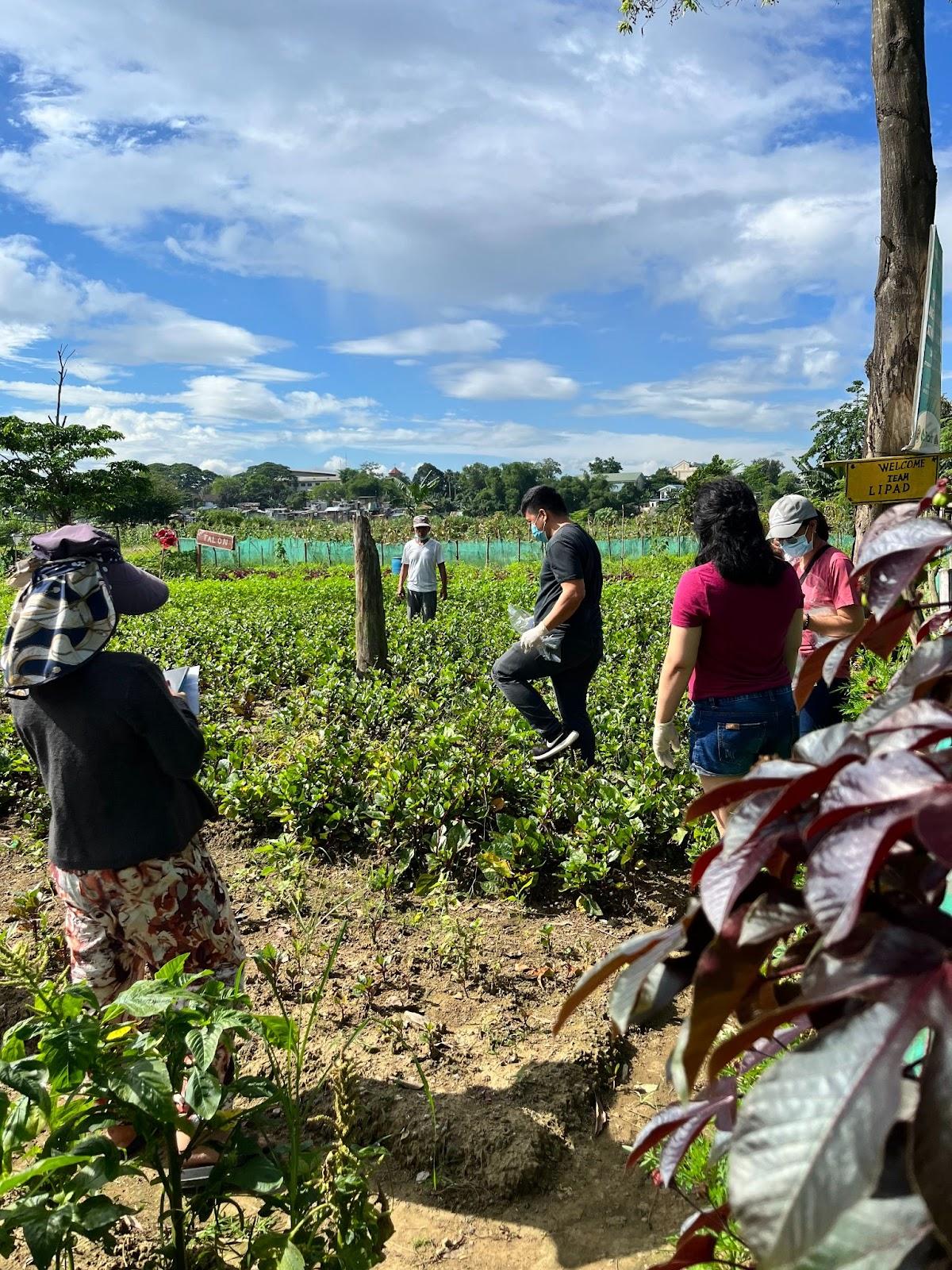
Researchers gather samples of mustasa, or mustard greens (Brassica juncea), at New Greenland Farm in Bagong Silangan, Quezon City. (Photo credit: The Research Team)

Dr. Pierangeli Vital, Donnabel Sena, Czarina Jay Catapat, and Ma. Christine Jasmine Sabio from the UPD-CS Natural Sciences Research Institute (UPD-CS NSRI), along with Dr. Windell Rivera of the UPD-CS Institute of Biology (UPD-CS IB) gathered 419 vegetable samples from three urban farms and four major wet markets in Metro Manila. The group detected E. coli in 13.60% of all the samples. The presence of E.coli in the samples from urban farms was also higher than in the samples obtained from wet markets.


According to Dr. Vital, high levels of E. coli in the samples from urban farms could be linked to various factors, such as lack of thorough post-harvest processing, unlike the samples from wet markets. “As observed in the urban farm sampling sites, they frequently use rainwater, pond water, and well water for irrigation, mainly for economic reasons, but this increases the risk of bacterial contamination,” she said.


Animals such as dogs, cats, and chickens often roam around urban farms, which raises the risk of microbial contamination in the irrigation water and soil where the vegetables grow. The researchers considered these as areas for improvement in developing urban farming practices.


“This research, together with our past research on agricultural food safety, is and was used in creating and adopting Philippine National Standards (PNS) on pre- and post-harvest microbial food safety in agriculture, with initiatives spearheaded by the DA – Bureau of Agriculture and Fisheries Standards (DA-BAFS),” shared Dr. Vital.


The researchers stated in their paper that the results could provide a factual basis for regulating, controlling, and eliminating food pathogen contamination in fresh produce, thereby helping policymakers implement regulations that ensure food safety. Even so, Dr. Vital mentioned that preventing foodborne illnesses such as E. coli can also be done by Filipinos in their own homes.


“Proper handling and cooking must be practiced at home, which involves simple steps such as thoroughly washing hands and kitchenware as well as disinfecting table surfaces when preparing food, using clean water when washing vegetables, effectively separating cooked and raw foods, and storing food the right way,” Dr. Vital added. “Following these simple steps can significantly help reduce the risks of foodborne illness at home and in the community.”


They plan to include more surveillance of relevant foodborne pathogens and conduct the study on a national level, in addition to investigating the antimicrobial resistance of the bacteria. These endeavors will provide significant data for analyzing trends in microbial food safety in the Philippines.


The paper, titled “Thermotolerant Escherichia coli contamination in vegetables from selected urban farms and wet markets in metro Manila, Philippines at the height of COVID-19 pandemic,” was published in the Asia-Pacific Journal of Science and Technology, a peer-reviewed journal covering research fields such as engineering, agricultural sciences, technology, and health sciences.


For interview requests and other concerns, please contact media@science.upd.edu.ph.


References:


Vital, P., Rivera, W., Sena, D., Catapat, C. J., & Sabio, M. C. J. (2024). Thermotolerant Escherichia coli contamination in vegetables from selected urban farms and wet markets in Metro Manila, Philippines at the height of COVID-19 pandemic. Asia-Pacific Journal of Science and Technology, 29(03), APST–29. https://doi.org/10.14456/apst.2024.44

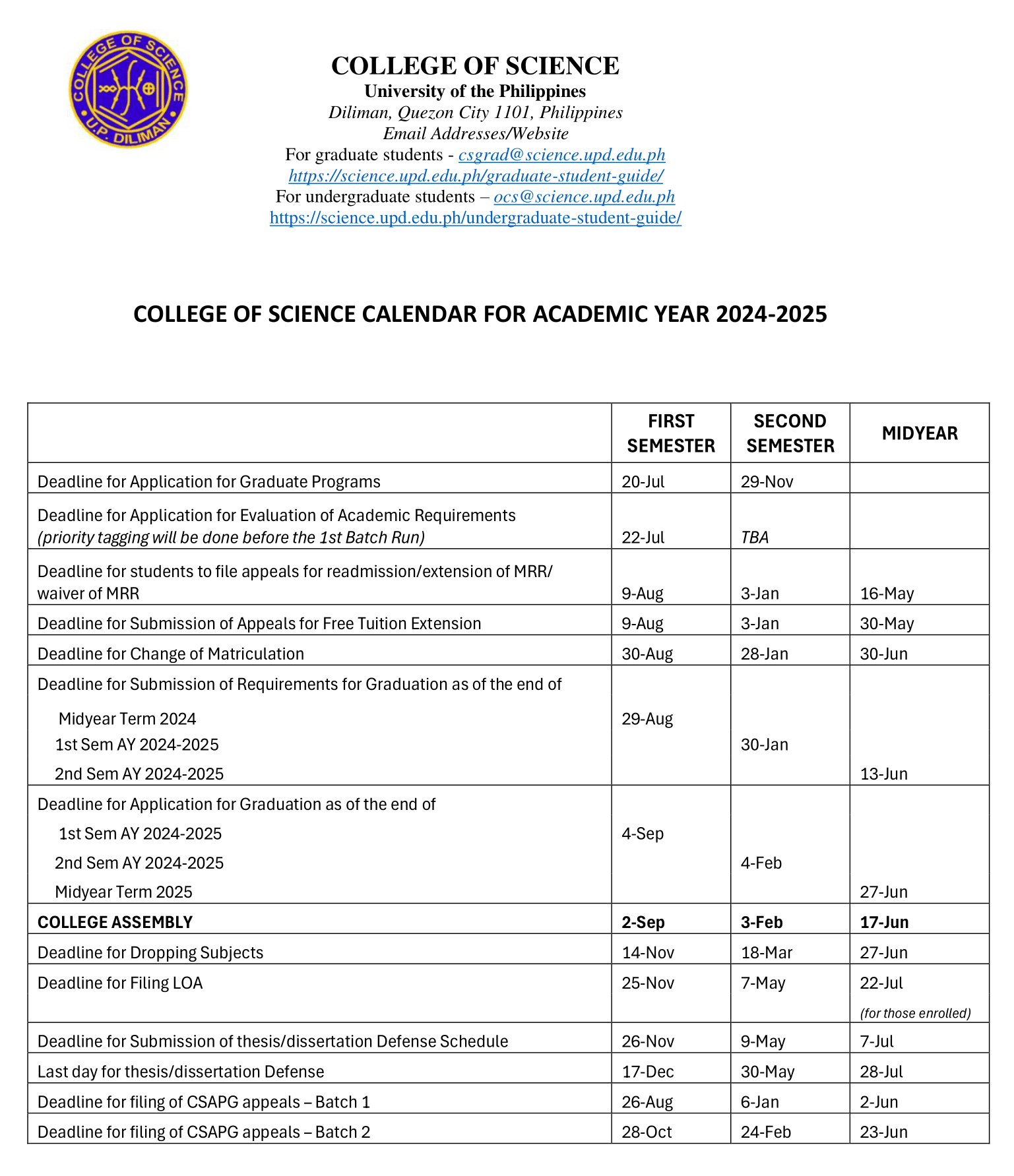
COLLEGE OF SCIENCE CALENDAR FOR ACADEMIC YEAR 2024-2025

COLLEGE OF SCIENCE CALENDAR FOR ACADEMIC YEAR 2024-2025

Deadline for Submission of Appeals for Free Tuition Extension

Deadline for Submission of Appeals for Free Tuition Extension

Requirements:

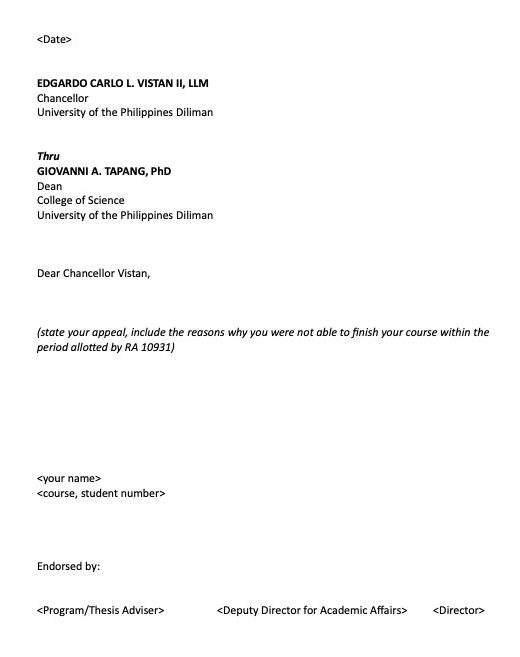
1. Letter of Appeal – See sample here.

2. Accomplished Free Tuition Extension Appeal Workplan

(After accomplishing the form, have it signed by your Program Adviser then upload in pdf format)

3. Upload Letter of Appeal and Accomplished Workplan here.

Response of behalf of the MS/PhD Graduates

Response on behalf of the MS/PhD Graduates

To our guest speaker, National Artist Kidlat Tahimik, to our Chancellor, Chancellor Vistan, to our dean, Dr. Giovanni Tapang, academicians, university officials, institute directors, faculty, parents, guests and of course graduates, magandang gabi po sa ating lahat.


The theme for today’s commencement is “Science in the Service of Society.” Since I’m not particularly experienced in writing speeches, I’ll approach this topic the way we tackle complex scientific journals—by defining and discussing each term.


Let’s start with the word “science.” After spending at least four years immersed in this field, I believe its meaning is already familiar to us. However, I’d like to share a glimpse of the state of science in our country based on my experiences.


My adviser, Dr. Nathaniel Hermosa came back to the Philippines from his postdoctoral position as a Balik-Scientist fellow to establish his own laboratory in 2015. I was fortunate to be one of his first advisees. I witnessed firsthand the process of building a laboratory from the ground up, including the relatively tedious process of procuring equipment. I have seen how researchers, including my mentors, often have to justify their work as addressing pressing issues like poverty just to secure financial support in their projects. I, myself have experienced being disheartened with these circumstances. Last 2023, our work was selected as a finalist for the Best Student Research Award in Spain. Despite the university’s generous support, I was unable to attend the conference in person due to inadequate funding.


Let me be clear: our university is incredibly supportive and generous with research funding, but these challenges are part of the reality we face. Minsan nakaka-frustrate, madalas nakaka-lungkot. Yet, despite these obstacles, we continue to excel, producing great research papers and nurturing world-class scientists.


During one research meeting, I asked my adviser, “Why did you choose to return and conduct experiments here in the Philippines when it might be easier to do so abroad?” His response, in essence, was that while we might lack in resources and funding, we make up with ingenuity and resourcefulness. This may be an adaptive skill, but our lack forces us to think outside the box and come up with creative solutions to problems.


Next word is service. For this part, let me tell you a story.


Tungkol ito sa isang mag-asawang magsasaka na nagngangalang Ceasar at Aurora. Sila ay may tatlong anak: isang panganay na babae at dalawang lalaki. Upang mapagtapos ang kanilang mga anak, kinailangan nilang maghanap ng iba pang trabaho bukod sa pagsasaka. Nagsimulang mag-buy and sell si Ceasar ng mga baboy, at naging manininda naman sa palengke si Aurora. Ang kanilang panganay na anak na si Mona ang katulong ng kanyang ina sa pagtitinda sa palengke.


Sa murang edad, namulat si Mona sa hirap ng buhay at sa sakripisyo ng kanyang mga magulang upang mapag-aral silang magkakapatid. Sa buong apat na taon ng high school, mayroon lamang siyang isang pares ng uniporme at isang pares ng sapatos na pinilit niyang pinagkakasya sa kanyang lumalaking paa. Nakapagtapos ng high school si Mona, ngunit dahil sa hirap ng buhay, sinabihan siya ng kanyang ina na baka hindi na nya ito kayang suportahan sa pag-aaral nito sa kolehiyo. Pursigidong makatapos ng pag-aaral si Mona, kaya naghanap siya ng paraan upang tulungan ang kanyang sariling makapag tapos. Nag-simula syang magbenta sa kanyang mga classmates ng kanyang mga paninda. Nag tiis syang mag-meryenda sa isang pirasong muncher o tattoos habang pinapanood ang kanyang mga kaklaseng kumain ng softdrinks at piattos. Sa awa ng Diyos, nakakuha sya ng scholarship at tuluyang nakapagtapos ng kolehiyo.


This story is not mine but that of my mother’s and grandparents’. My mother was the first in her clan to earn a college degree. I am the first in our immediate family to graduate in UP.


We should remember that these diplomas and degrees are not solely the result of our individual efforts. We are here because of the collective support and sacrifices of those who stood by us throughout this journey. We are reaping the fruits of their labor and dedication.


Where does service fit into all this? Service and sacrifice go hand-in-hand. True service is never comfortable; it involves sacrificing something of our own and going out of our way to help others.


My grandfather Ceasar, who passed away during the 2020 pandemic, is not here to witness this moment. While we may never fully repay the debt we owe to those who came before us, we can certainly pay it forward. We can become mentors to the next generation of scientists. We can serve our community with our knowledge and skills. We can conduct research that advances science for the betterment of society.


Finally, let’s reflect on the word “society.”


I had a hard time concentrating on writing this speech due to the recent flood that has affected so many this week. In the middle of the typhoon last Wednesday, my husband had to rescue our pamangkins in Cainta because the flood is already approaching their second floor. It is really challenging to celebrate today however, I believe this is precisely the moment to reflect on the true meaning of this ceremony.


I took some time to research the meaning behind our UP Sablay. According to OUR’s website, the word “Sablay” refers to an indigenous loose garment that, though simple, is traditionally worn for formal occasions. As a verb (isablay), it means to drape a precious object, such as this garment, over one’s shoulder, symbolizing value and respect for that object.


Today, we are giving value and honoring not only our efforts but also the people who have paved the way for us—our seniors, mentors, and the entire community who helped us wear this Sablay with pride. We are showing respect for the dedication and service of everyone who made our journey possible.


Our UP Sablay represents more than personal achievement; it symbolizes our responsibility to contribute to society. As we wear our Sablays today, let us remember that our journey is a testament to the collective effort and dedication of our community. It’s a call to use our knowledge, skills, and achievements to serve others, to uplift those around us, and to address the pressing needs of our society.


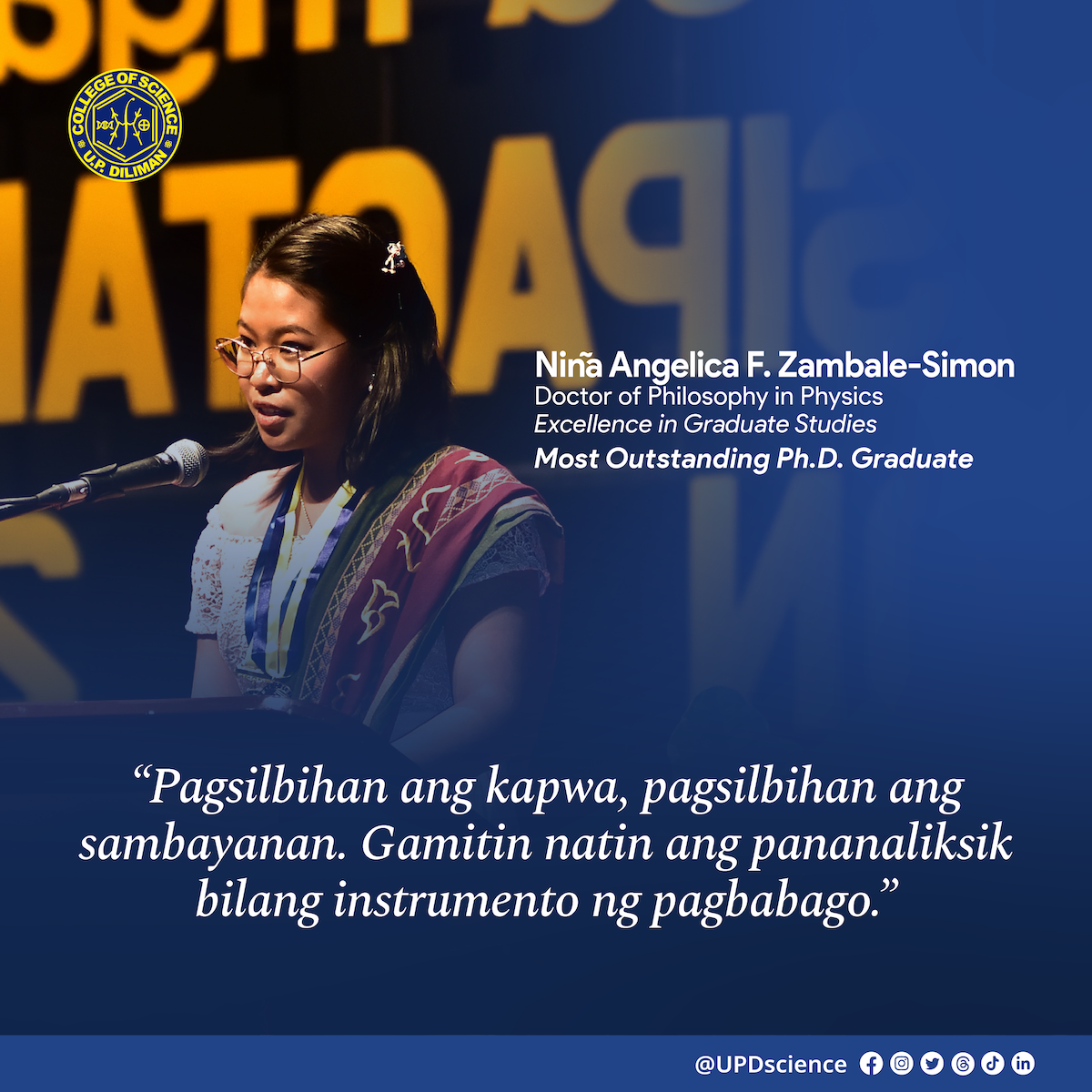
As my call to action, I want to repeat what I said in our institute’s recognition this morning.

Pagsilbihan ang kapwa, pagsilbihan ang sambayanan. Gamitin natin ang pananaliksik bilang instrumento ng pagbabago.


Let’s use our education in paying it forward and may our legacy be one of bettering the next generation.


Thank you, and congratulations to the College of Science Class of 2024. Mabuhay ang mga siyentista ng bayan.

Response of behalf of the BS Graduates

Response on behalf of the BS Graduates

Maganda’t mabuting araw sa inyong lahat! Ako si Sean Brendan, mula sa Pambansang Linangan ng Pisika.


Tuwing iniisip ko kung bakit ba ‘ko nandito sa pisika’t agham, palagi akong walang depinitibong sagot. No’ng bata ako pinangarap ko maging astronot. ‘Di ko alam. Baka dahil ang astig ng kanilang damit, tapos sasakay sa ispeyship. Ang lupit din tingnan ng mga kemistri-kemistri. Pati ‘yang mga daynosor na ‘yan. Palaging paiba-iba ang gusto ko.

Bilang mga siyentista ng hinaharap, na minsa’y sinilaw rin ng mga bitwin, numero, palaka, o kung anumang dahilan kung bakit tinahak ang daang siyensya, kahit sa’n pa man tayo dalhin ng ating pagtuklas, alam nating madaling malunod sa angking ganda nito—sa sarap ng pakiramdam tuwing nakaka-solb tayo ng ekweysyon, sa pagpaypet ng kemikal, sa pagdila ng bato, o maging sa pakiramdam na, …, basta, “ang kul pakinggan”. Pero minsan, malungkot. Totoo ang mga nararamdaman nating kalungkutan sa “‘di tayo napili”, “‘di tayo nanalo”, “‘di tayo nakapasa kasi mababa ang gan’to”. “Kapag ba nagpatuloy ako sa
siyensya, magiging matagumpay pa ba ‘ko kung ngayon palang, ‘di na ‘ko magaling?”

Kadalasang ikinakabit ng mga pamantayang internasyual ang tagumpay sa agham sa ating h-index, o kung anumang iskolarling batayan sa bilang ng ating mga nailathala, kung ilang beses ito isinipi, at iba pa. Ang iba nama’y ikinakabit ang tagumpay sa kung ga’no kataas ang ating makakamit, sa rekognisyon at kasikatan na makukuha natin sa akademikong komunidad mula sa pagtuklas ng mga bagong resulta o pagbuo ng mga abstraktong teorya. Ang iba pa’y ikinakabit ang tagumpay sa kung ga’no kalayo ang ating mararating, kung ga’no kalaki’t maimpluwensiya ang mga prestihiyosong institusyong akademiko o industriyal ang ating mapupuntahan. Maraming pagsasalarawan sa iba’t ibang puntong pibotal na sumusukat sa kung ga’no tayo katagumpay sa ating mga larangan. Kung ngayon sa mga linangan, mga grado, sa akademya’t industriya, marami pang metrikong ginagamit para sukatin tayo. Bagamat nagagamit ito sa pagsukat ng kasanayan, pananagutan, pagpuna, pagdedesisyon, at pagpapabuti, ang mga ito rin ay nagiging kawnterproduktib.

Sa ganitong kapaligiran, ang presyur na umayon ay maaaring nakapaghihina sa pagkamalikhain. Ang mismong diwa ng siyentipikong pagdiskubre—ang pagsasaliksik at paghahamon sa istatus kwo—ay napahihina ng walang tigil na paghahabol sa mga paborableng sukatan. Gayunpaman, maging sa harap nitong mga mahihirap at ‘di magagandang realidad sa mundo ng agham na nagdudulot ng malawakang kumpetisyon sa trabaho at paghina ng produktibong gawa—sa mukha ng krisis sa edukasyon, limitadong akses sa impormasyon, kakulangan sa pondo, at sa kadiliman ng klimang pulitikal—hindi pa rin dapat na kalimutan ang mga mamamayan.


Habang nauunawaan natin na ang mga pananaliksik ay may kanya-kanyang kalakasan, sakop, at limitasyon—may direktang impak man sa mga komunidad at napapanahong isyu, o wala dahil ito’y abstrak at wala pa masyadong nakaiintindi—nais kong ipaalala sa lahat na ang ating pananaliksik, ang kabuuan ng ating trabaho, ay hindi umiiral isang bakyum. Ito’y isang intigral na bahagi ng mas malawak pang ekosistemang kinabibilangan din ng mga taong sumusuporta sa ating pananaliksik at ng publiko na ang buhay ay nais nating pagbutihin no’ng una pa lamang. Kaya kahit ano pa man ang sabihin ng mga
sukatan tungkol sa kakayahan at tagumpay natin, h’wag nating hayaan na magtabon ito sa tunay na pagkamalikhain, sa tunay na paghahangad ng kaalaman, at syempre sa integridad ng agham, dahil ang bayan ay nakasandal sa atin.


At habang naiintindihan din naman natin na ‘di makapagbubuhos ang walang laman na bukal—na tayo ri’y napapagod, nauubos, nalulubog sa kahirapa’t, nawawala ang pangarap para sa mamamayan dahil sa minsang pangangailangang unahin ang sarili—nais ko ring ipaalala na ang ating pagpupunyagi ay magkakaroon pa rin ng mas malalim na kahulugan. Kapag sumikat na muli sa wakas ang araw sa napakatagal at napakadilim nating gabi, makababalik din tayo sa pagpapanday ng landas para sa mga susunod na henerasyon.
At ‘di rin dapat natatapos ang siyensya sa papel at pagsasaayos ng mga metriko. ‘Di rin sa pagbuo ng mga aplikasyon nito.


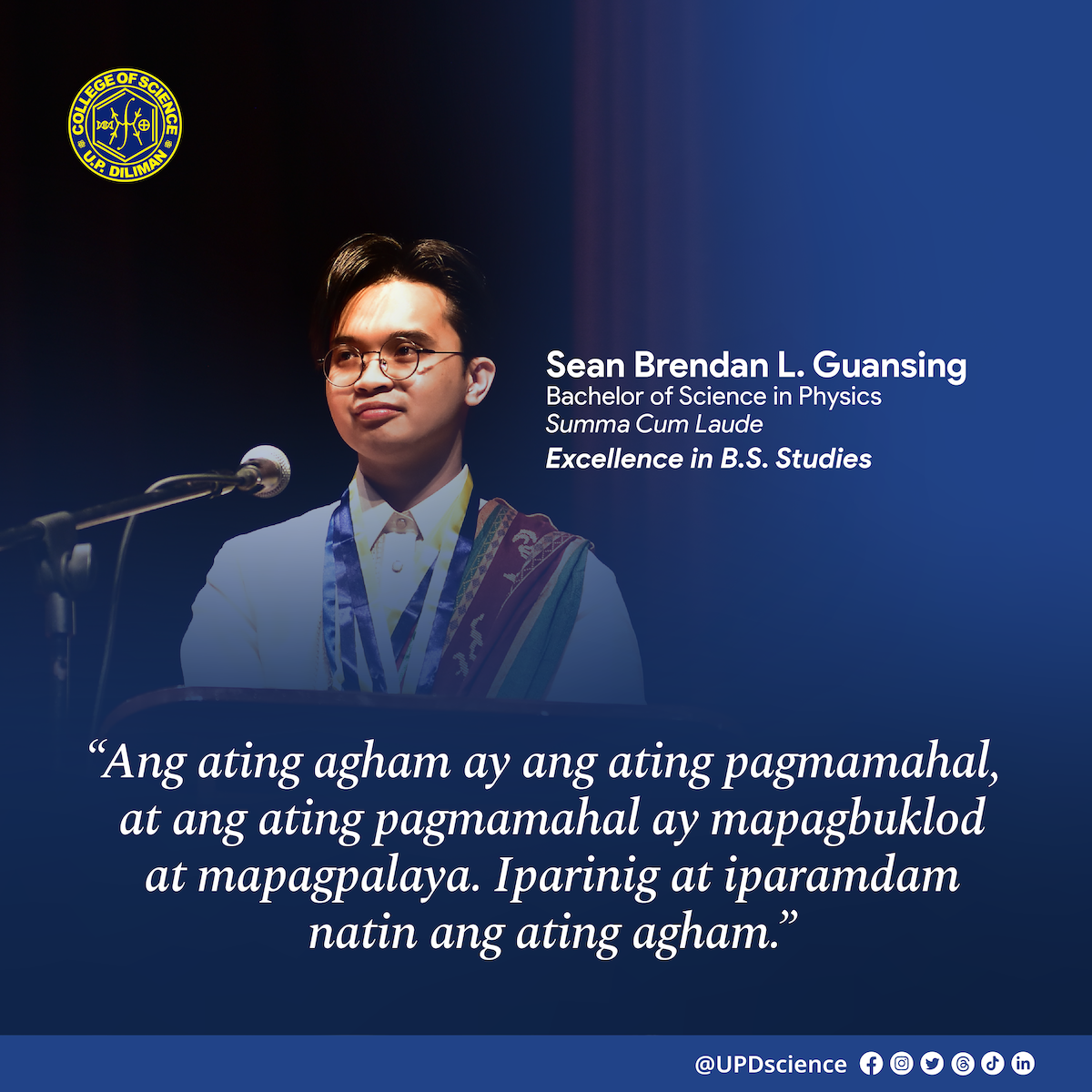
H’wag tayong magtapos sa pagtutok lamang sa ating mga pag-uusap sa isa’t isa rito, sa pagbabahagi sa mga kapwa lamang na siyentista sa mga kumperensya’t kumbensyon, kundi iparating din natin ang ating mga natutuklasan sa mga lente ng mga nararanasang realidad na nakaaantig sa mga tao. Hindi sapat na alam lamang natin na ang ating ginagawa ay para sa tao, para sa bayan, naiuugnay din dapat natin ito sa adbokasiya’t aktibismo. Dapat naisasalin din natin ang mga kumpleksiting ito sa mga malilinaw at makabuluhang naratibong akesibol para sa mga bata, sa mga matatanda, sa mga taong nasa ibang larangan, sa mga taong may limitadong kakayahan, maging sa mga taong kinaaayawan—para sa lahat—dahil ang ating agham ay ang ating pagmamahal, at ang ating pagmamahal ay mapagbuklod at mapagpalaya.


Iparinig at iparamdam natin ang ating agham.

SCHEDULE OF FINAL EXAMINATIONS MIDYEAR 2024

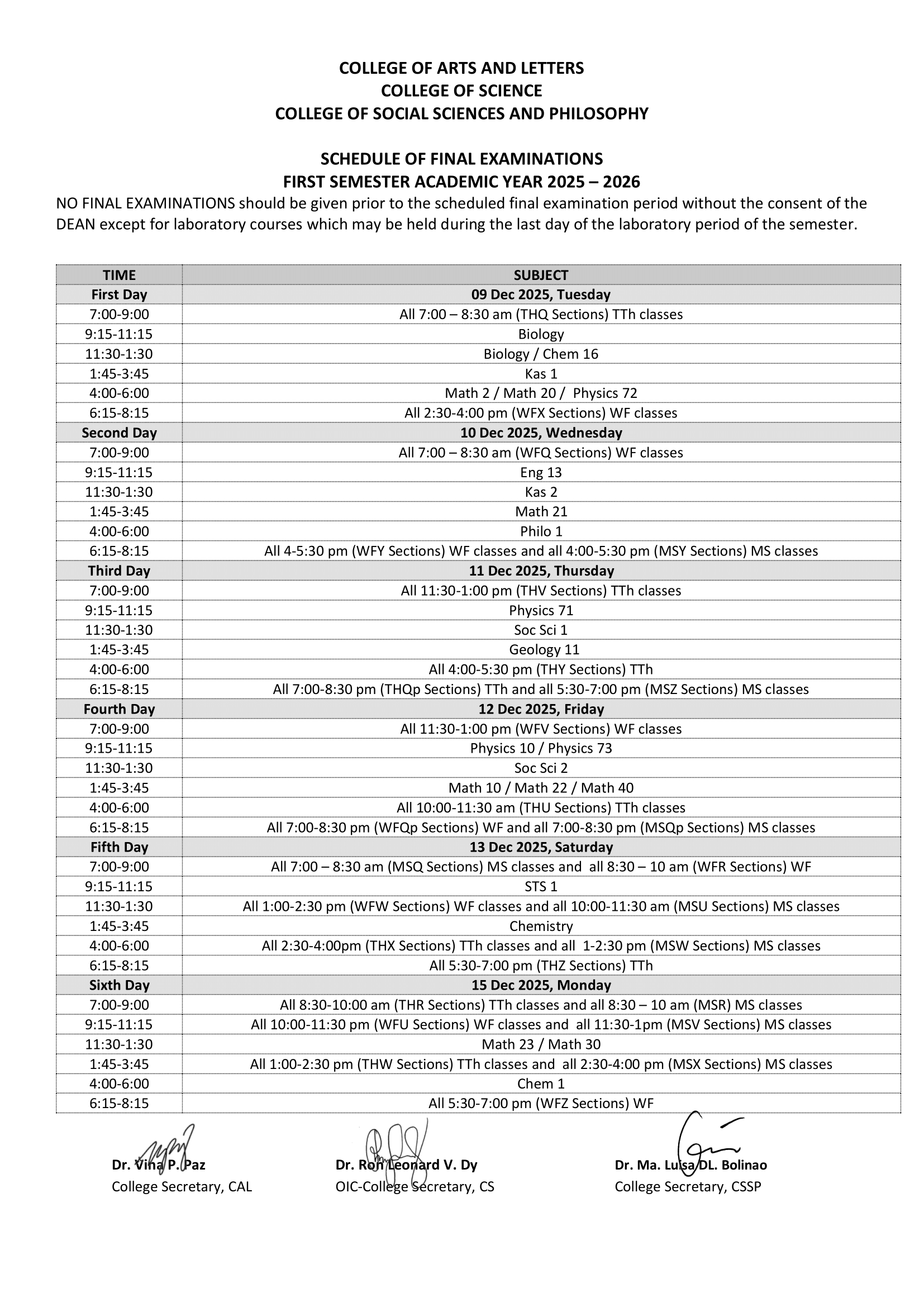
SCHEDULE OF FINAL EXAMINATIONS 1ST SEMESTER FOR AY 2025-2026

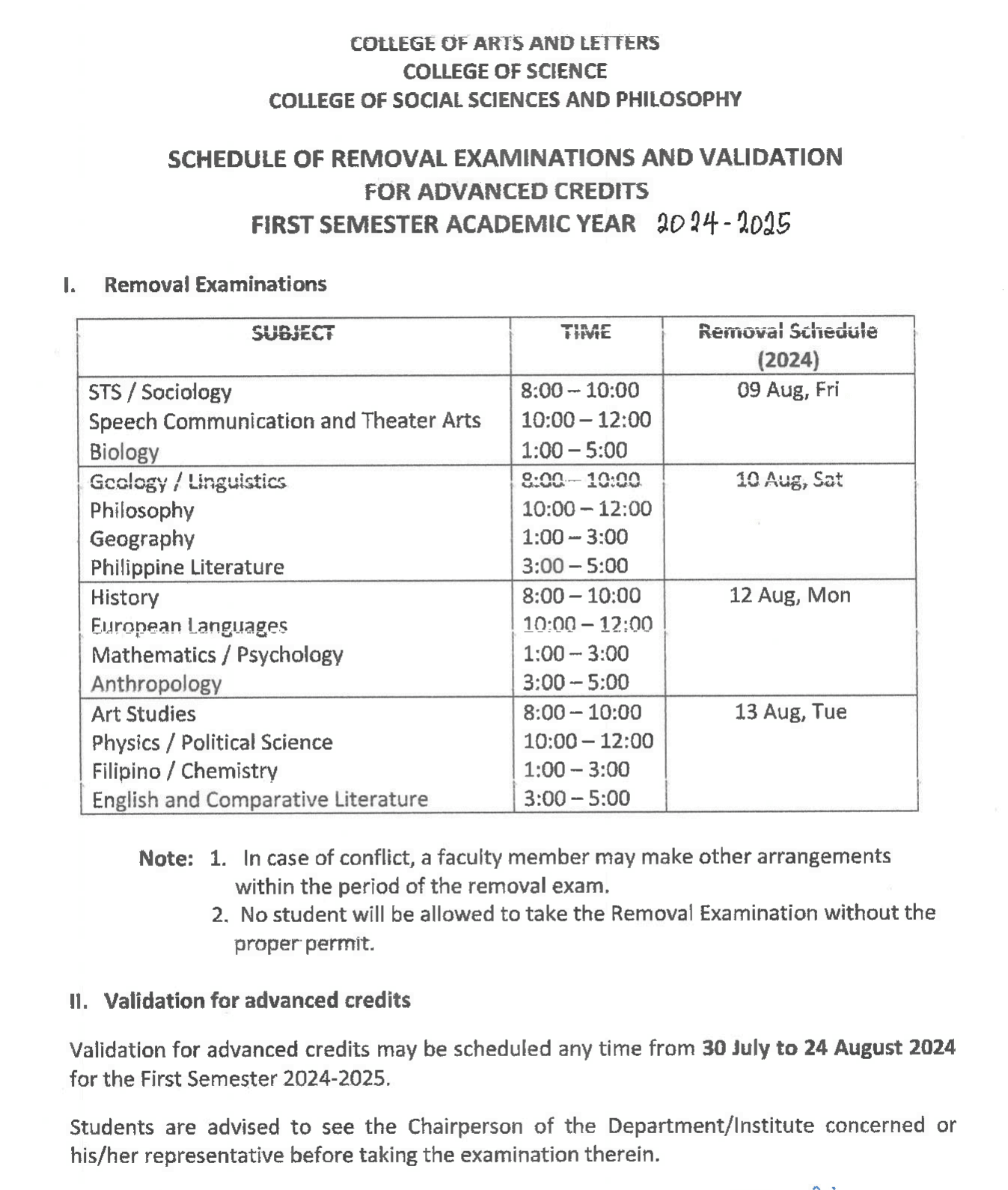
SCHEDULE OF REMOVAL EXAMINATIONS AND VALIDATION FOR ADVANCED CREDITS FIRST SEMESTER ACADEMIC YEAR 2023-2024

SCHEDULE OF REMOVAL EXAMINATIONS AND VALIDATION FOR ADVANCED CREDITS FIRST SEMESTER ACADEMIC YEAR 2023-2024

UP Scientists Explore Non-Gaussian Laser Effects

UP Scientists Explore Non-Gaussian Laser Effects on Metal Heat Diffusion

Published: July 30, 2024

By: Eunice Jean C. Patron

While existing research on material properties rarely examines changes in laser pulses, or the flashes of laser lights, over time, scientists from the University of the Philippines – Diliman College of Science (UPD-CS) approached laser exploration differently by investigating how non-Gaussian lasers affect the diffusion of heat in metals.

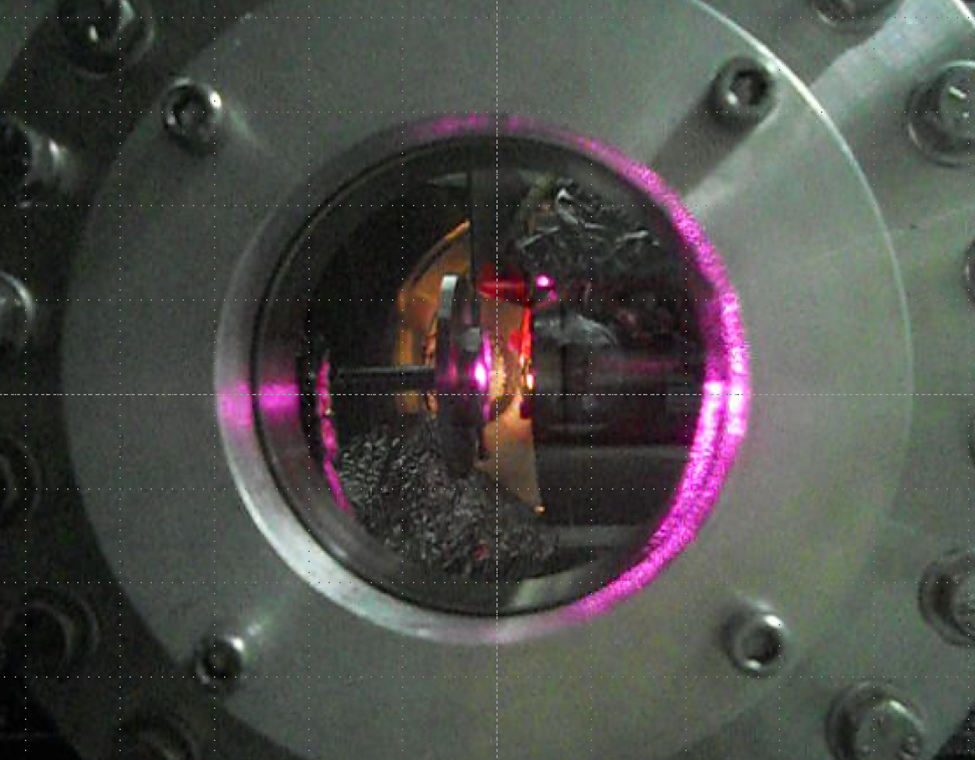
Pulsed laser ablation of a material inside a vacuum system. (Photo credit: Dr. Lean Dasallas)

In their recent study, Jenny Lou Sagisi and Dr. Lean Dasallas of the UPD-CS Materials Science and Engineering Program (UPD-CS MSEP), along with Dr. Wilson Garcia of the UPD-CS National Institute of Physics (UPD-CS NIP), investigated the effects of different temporal laser source terms (TLSTs), or shapes of the laser pulses, on simulating heat diffusion in metals.


Validating Gaussian Assumptions in Studies


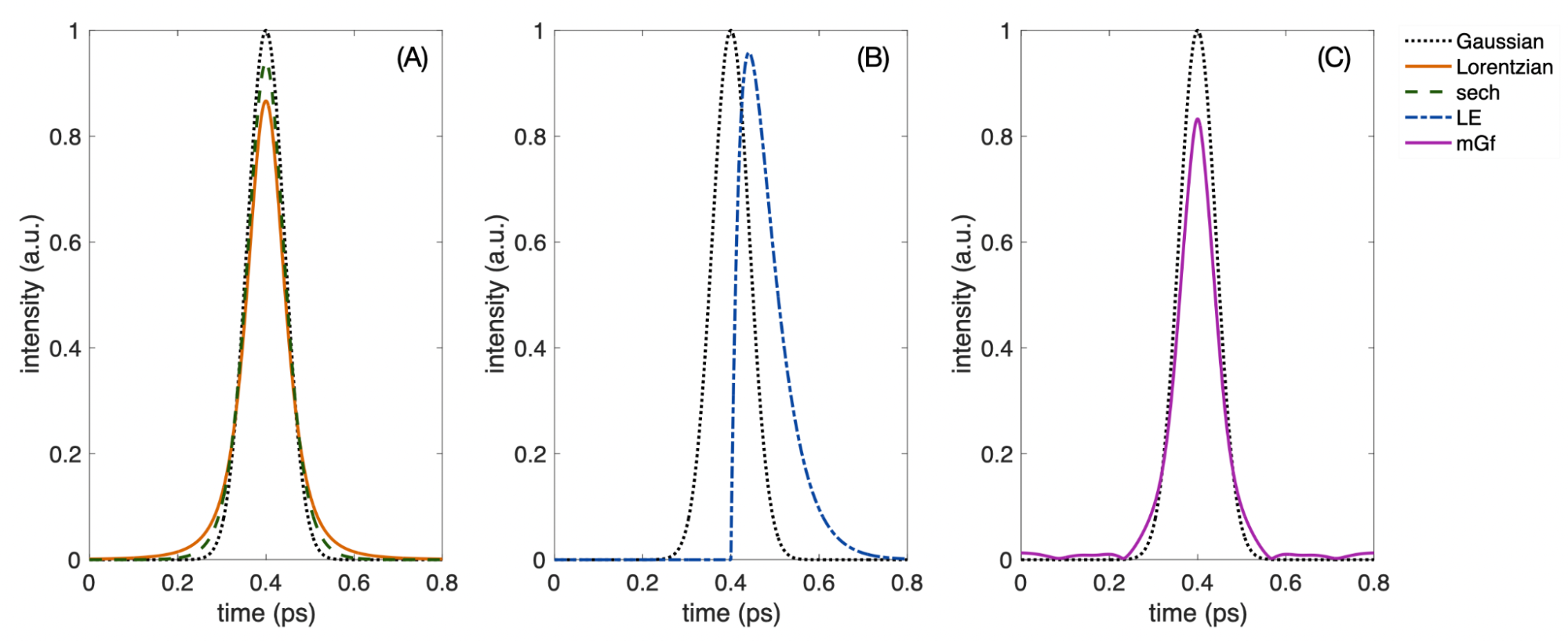
Dr. Dasallas explained that scientists often assume laser pulses to light up in a bell-shaped curve (known as Gaussian): “Dim at first, but slowly brightening until it becomes super bright in a very short time, before dimming again,” he further expounded. This assumption is common and accepted in laser research due to the laser pulse’s duration, which is one quadrillionth (10-15) of a second.


Simulations conducted by the scientists to compare the differences between Gaussian-shaped and non-Gaussian-shaped laser pulses showed that the rough edges on a non-Gaussian laser pulse make it difficult for the laser to vaporize the metal. They also noted that consecutively using laser pulses shows effects on metals that are not as distinct as those seen with Gaussian-shaped laser pulses.

Comparison of Gaussian and non-Gaussian laser pulses in intensity over time. (Photo credit: Sagisi et al., 2024)

“We were curious to see if there are any changes in the laser pulse’s effect on heat diffusion in metals when they are not Gaussian-shaped,” Dr. Dasallas shared. “Through our computer simulations, we were able to validate that assuming a Gaussian-shaped laser pulse has a basis. It also turns out that the shape of the laser pulses won’t matter if there are many of them.”


Implications in Industry


According to the researchers, exploring the effects of non-Gaussian laser pulses is vital for optimizing laser processing methods in more precise applications such as micro- or nano-machining, surface modification, and nanoparticle generation. Becoming more acquainted with non-Gaussian-based lasers also allows for more options and tools in laser material processing.


Extending this work to other materials, such as semiconductors, polymers, and insulators, would be very interesting. We plan to continue improving our understanding of complex laser-material interactions, which could involve experimental, theoretical, or computational approaches,” Dr. Dasallas said as he shared their team’s goals for research on laser-based material processing. “The laser industry is now worth billions of dollars. Various technologies already employ lasers, and the Philippines is catching up with these technologies.”

For interview requests and other concerns, please contact media@science.upd.edu.ph.


References:

Sagisi, J. L., Garcia, W. O., & Dasallas, L. L. (2024). Modification of the temporal laser source term in two-temperature model. Numerical Heat Transfer, Part A: Applications, 1-18. https://doi.org/10.1080/10407782.2024.2350687