UP Professors Urge Long-term Monitoring of West Philippine Sea Resources 

UP Professors Urge Long-term Monitoring of West Philippine Sea Resources

Published: May 30, 2024

By: Eunice Jean C. Patron

The ongoing dispute over the West Philippine Sea between China and the Philippines hinders Filipino scientists from conducting scientific work in Philippine territory, but something can still be done.
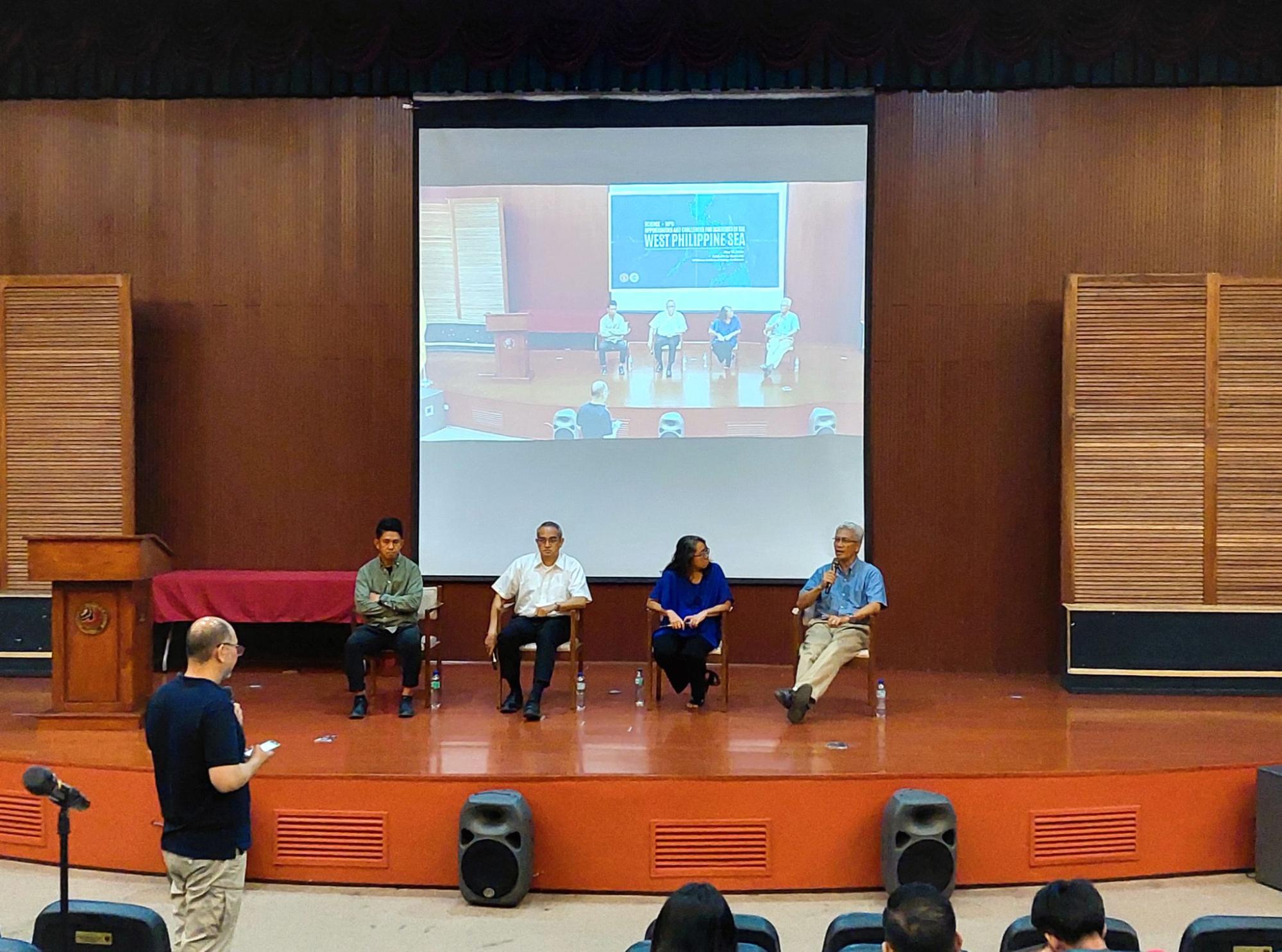
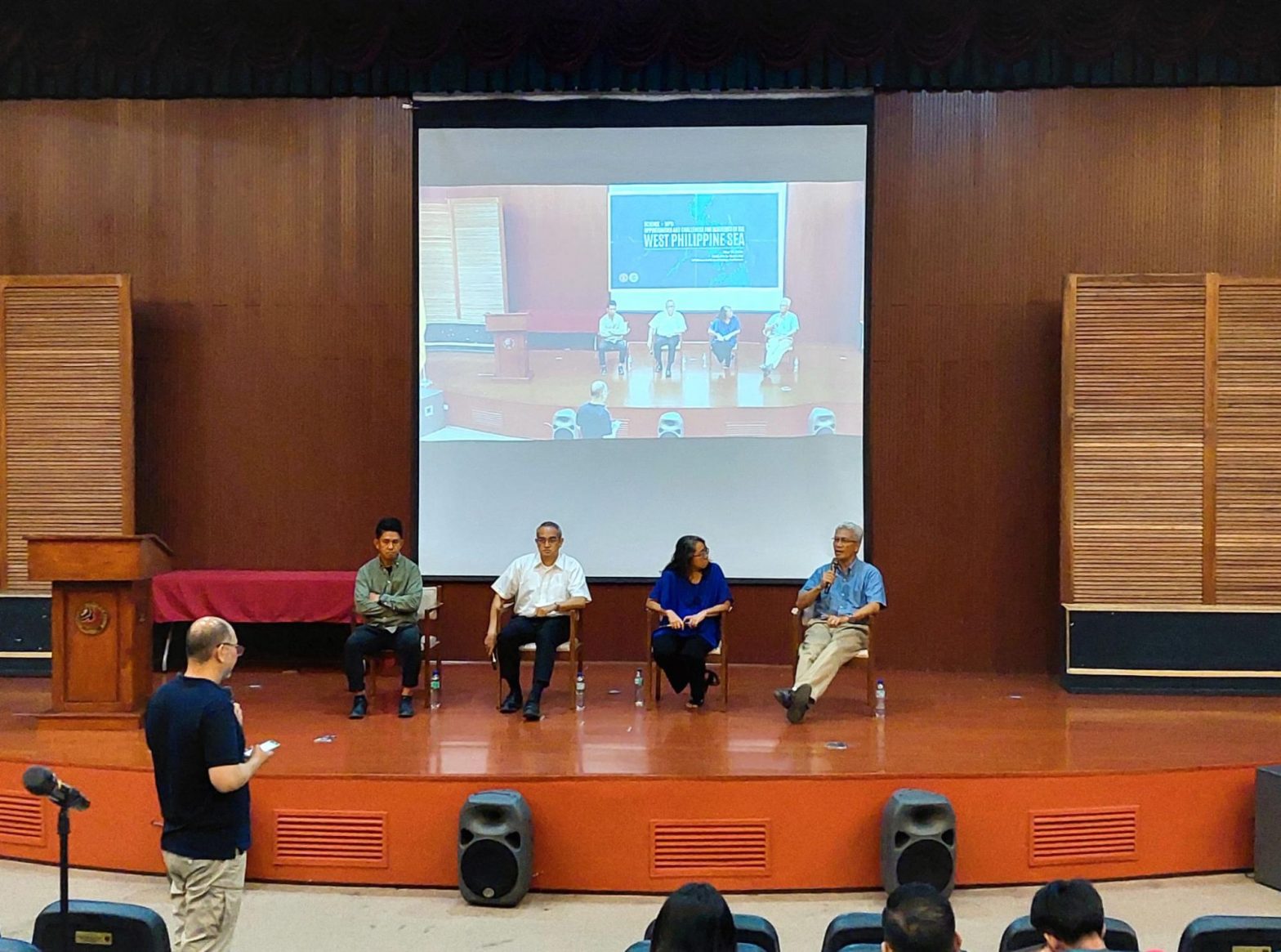
Guest speakers of the SCIENCE x WPS forum held on May 13, 2024 (Photo credit: Craig Soroño).

The University of the Philippines – Diliman College of Science (UPD-CS) facilitated a public forum titled SCIENCE X WPS: Opportunities and Challenges for Scientists in the West Philippine Sea on May 13, 2024. During the public forum, UP professors discussed the current geopolitical and ecological situation in the West Philippine Sea, as well as strategies that scientists and researchers can use to protect and preserve the sea’s marine resources.


“The issue of the West Philippine Sea is not a single topic issue, it is also not a single-agency activity.” UPD-CS Dean Giovanni Tapang said, with an invitation to collaborate with other agencies, as part of the university’s mandate to serve the nation. “The College of Science would want to work with everyone to address not only the scientific issues surrounding the West Philippine Sea but other issues as well.”


Threats and Opportunities in the West Philippine Sea


The West Philippine Sea faces a lot of risk because of climate change, shared Dr. Laura David, UPD-CS Marine Science Institute (MSI) Director. Changes in the environment have a huge impact on coastal habitats such as coral reefs, seagrass, and mangroves.


Dr. David listed several threats that the West Philippine Sea faces. Overfishing is a major challenge that Filipino fisherfolk experience. “People think that our neighbors are interested in the West Philippine Sea because of natural gas. That’s true, but they’re also interested in the fish because they have to feed their population.”


She also pointed out that, unlike the Philippines, neighboring countries subsidize the catch of their fisherfolks by giving additional compensation for every tub of fish they catch aside from the cost of the actual fish.


Oil spills and land use are other threats that the West Philippine Sea deals with. Dr. David cited the oil spill in the Verde Island Passage in 2023 as proof that the Philippines is still not prepared for such occurrences. Mangroves have also degraded all over the South China Sea area because of converting mangrove areas for other land use, therefore contributing to a huge percentage of mangrove loss.


Dr. David also mentioned plastics as a huge threat to the West Philippine Sea, with plastic waste floating in places far from populated islands. “In certain areas, including West Palawan, you have mostly fishing gears. But as you come closer to the population, then it becomes trash associated with shampoos, sachets, snacks, and so on. If you look at the labels of those, they are not just in English. They’re in different languages. That means it’s coming from all over the South China Sea,” Dr. David added.


The reclamation of islands has jarring effects on the West Philippine Sea. Dr. David said that the number of alive coral reefs declined as the amount of occupations rose. “Somebody has to be held liable for all that damages because the damage is not just local,” she further explained. Everything that happens across the whole South China Sea region ends up having an impact on all countries in that area, but Dr. David said that the Philippines is the country that experiences the highest impact – with the number of fish families found in the West Philippine Sea declining from 34 to 22 in just 20 years.


Dr. Fernando Siringan, Academician of the National Academy of Science and Technology and Professor at MSI said that one threat the West Philippine Sea should also consider is tsunamis that occur because of earthquakes.


“Sana may mga simulations rin tayong gawin, tingnan natin kung ano ang epekto ng mga tsunami sa ating mga pulo-pulo, at maging bahagi ‘yon ng ating consideration sa pagdevelop ng mga isla [in West Philippine Sea],” Dr. Siringan shared, who also mentioned that monitoring the occurrences of natural hazards such as tsunamis, storm surges, and floods will help researchers determine what kind of structures can be developed in the West Philippine Sea. 


Dr. David underscored the importance of long-term monitoring as a tool for creating strategic plans for protecting and preserving marine resources. “We need to increase our research efforts, and we need to involve a lot of other disciplines. We need to talk to the fishers, and we need more policymakers so that we can make better-informed policies for the West Philippine Sea,” she concluded.


Similar to Dr. David, Dr. Siringan also encouraged conducting long-term monitoring activities involving marine and terrestrial biodiversity in the West Philippine Sea region. “I-sample natin ‘yung mga hindi pa na-sample, at magkakaroon tayo ng maraming discoveries. Kailangan nating idescribe kung saan natin sila nakita, ano ang kanilang kondisyon. Makakatulong ito in understanding the area’s biology and diversity,” he specified, adding that these studies can help in designing a marine protected area in the West Philippine Sea.


Apart from letting scientists study the West Philippine Sea, Dr. Siringan calls on the government to fund these research projects, for studying the ocean is expensive and can be perilous. “Hindi man tao ‘yung source ng fear mo, nandoon ‘yung alon, ‘yung agos ng tubig. Mamatayan ka ng makina, saan ka pupulutin?” he said.


In his talk, Dr. Siringan mentioned the Pagasa Island Research Station, a marine station in Pagasa Island. For 2024, an additional six marine stations all over the country will soon be established. Dr. Siringan recommended marine researchers collaborate with them at the marine stations. “This is a facility for everyone, I would highly encourage that we work together,” he added.


The current geopolitical situation in the West Philippine Sea


Professor Herman Joseph Kraft of the UPD College of Social Sciences and Philosophy – Department of Political Science briefly introduced geopolitics, which, when applied to the West Philippine Sea issue, is more than the Philippines versus China. “On one hand, you’re talking about questions of control over space. But, on the other hand, that control involves the relationship between the great powers – particularly, the competition between China and the United States,” he said.


According to Professor Kraft, countries located in the South China Sea adjusted their claims based on the United Nations Convention on the Law of the Sea (UNCLOS). The only country that has not made any changes and whose claim is not based on UNCLOS is China with its nine-dash line. The UNCLOS also added that maritime domains emanate from land territory. “What China has here is excessive because it goes farther away or quite far from the territory of China itself,” Professor Kraft said.


There are several reasons why China wants to claim a wide area of the South China Sea and its islands from other neighboring countries. This includes controlling maritime and air traffic, accessing marine resources, and pursuing petroleum interests. China has built artificial islands for its vessels to resupply, allowing for longer lingering times.


The solution, Professor Kraft mentioned, is multilateral cooperation with other countries. “The geopolitical situation requires the Philippines to work with various partners to try to maintain the situation in the region,” he added. However, this isn’t an easy solution, as this means being involved in the competition between two powerful forces.


“On one hand, the Philippines seeks to be able to assert its claims and sovereign rights vis-à-vis China. But in doing so, its inability to do anything on the waters requires us to work with the United States, which puts us in a situation where we seem to choose the US over China,” Professor Kraft concluded. “The Philippines is caught in a situation where it has to make diplomatic and political choices regarding the kind of situation it faces now in the West Philippine Sea,” he said further.


Looking beyond West Philippine Sea resources


“We cannot separate the West Philippine Sea from the rest of the country.” Dr. Jonathan Anticamara of the Institute of Biology said, emphasizing the importance of the Philippines’ marine resources – including those in the West Philippine Sea. “Our marine resources are our treasures, but we don’t have a lot of information on what’s going on. We don’t have a systematic database to analyze what’s going on over time. These are our resources, we are small islands in the middle of the Pacific and we shouldn’t forget that.”


Dr. Anticamara mentioned how the Philippines greatly expanded its fishing power and efforts – such as the number of boats and fishers – which led to an increase in contributions of the Philippines to global fisheries. “As Asia’s and the Philippines’ fishing power increase, the production decreases. Fisheries production in the Philippines has declined by more than 60% or 80%. Government agencies give thousands of boats and ships, yet these are just lying [around],” he added.


Lower fisheries production and overfishing resulted in extreme poverty experienced by fishing communities in the Philippines. Dr. Anticamara said that changes should be implemented in taking care of fish and other marine resources. “Filipinos have to think about strategies. How can we make money while not destroying these resources? We need to feed ourselves, but there has to be balance at the end.”


Science has a critical role in protecting the Philippines’ marine resources. Dr. Anticamara emphasized the need for long-term monitoring to better grasp the state of the country’s marine resources, and how to better preserve it.


“Good quality of life can be built by ensuring that nature is doing well and that people are not harming and destroying nature,” Dr. Anticamara said. “Even without China, if the Filipinos don’t have the intention to take care of these resources, then we’ll walk into the future where all of these resources are dead and Filipinos are very, very poor with nothing to eat.” 


For interview requests and other concerns, please contact media@science.upd.edu.ph.
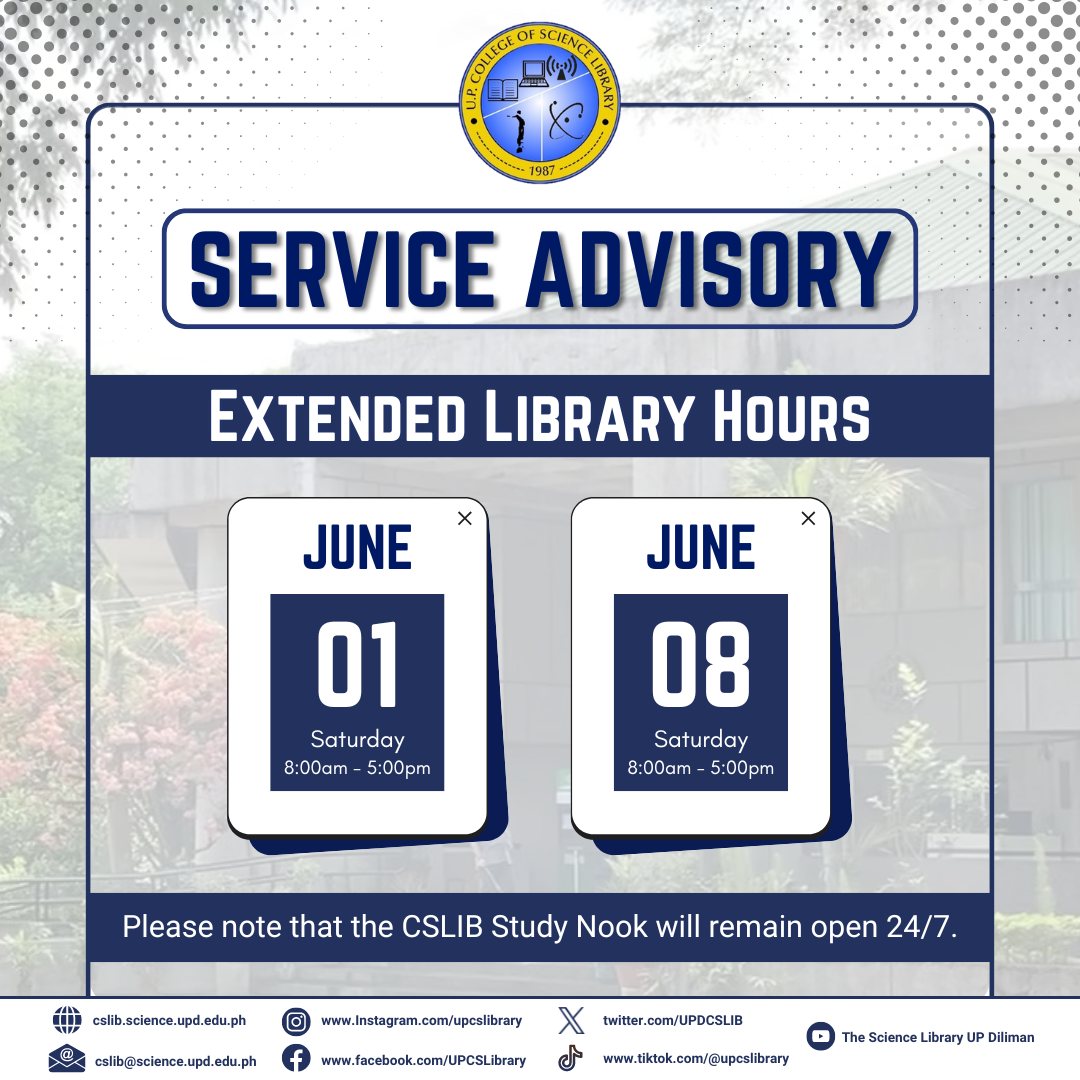
CS Library Extends Library Hours from 8:00 AM – 5:00 PM for June 1 and 8 2024​

CS Library Extends Library Hours from 8:00 AM – 5:00 PM for June 1 and 8 2024

Finals week is coming! 🙂
 
Ready na ba kayo students? Dahil ang CSLIB ay ready na rin para sa inyo.
 
CS Library extends library hours from 8 am to 5 pm for two Saturdays, June 1 and 8, to give you a place to study.
 
The CSLIB Study Nook remains open 24/7.

UPD College of Science Kickstarts Innovation-Research Fair 2024

UPD College of Science Kickstarts Innovation-Research Fair 2024

Published: May 09, 2024

By: Harvey L. Sapigao

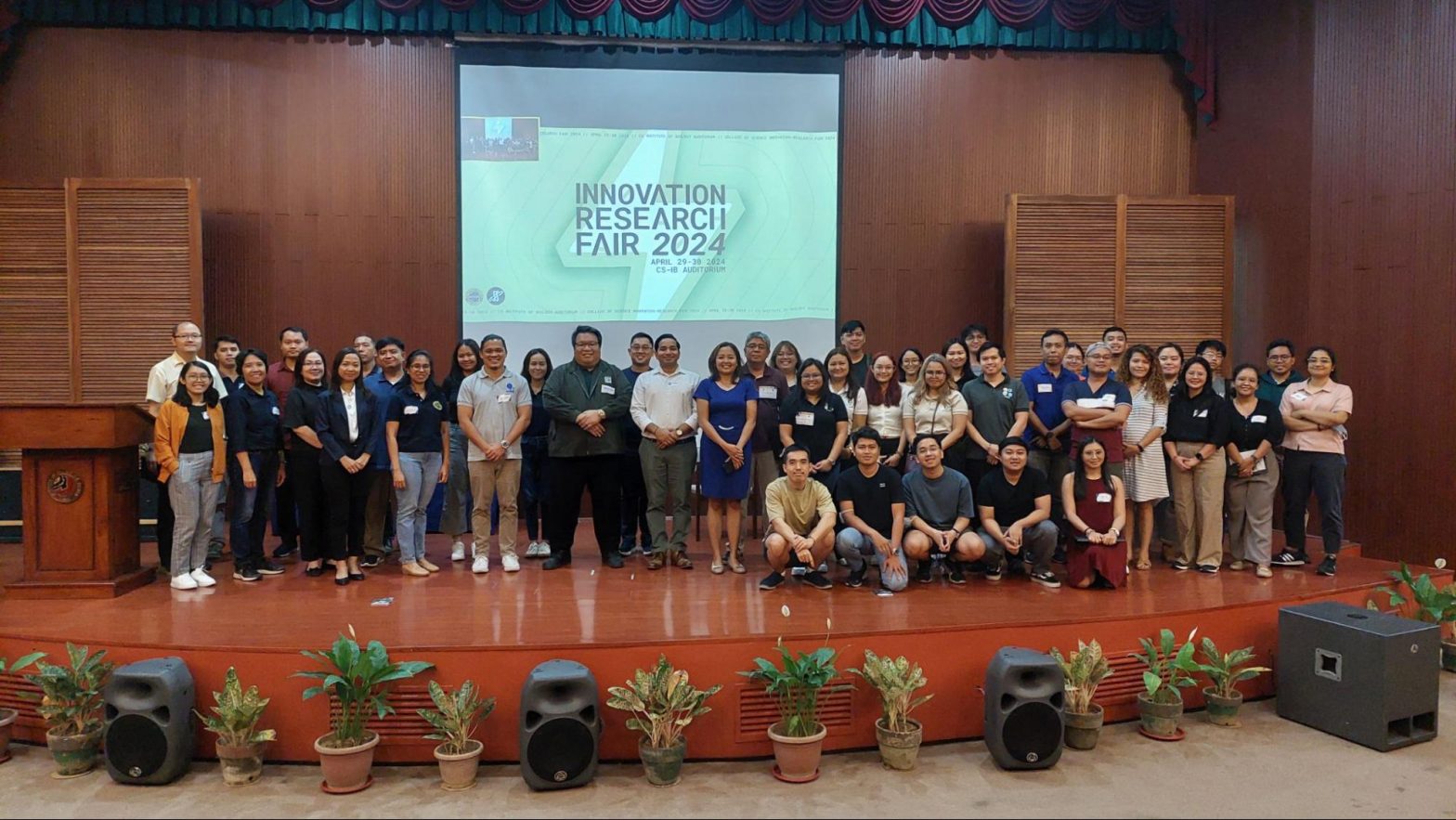
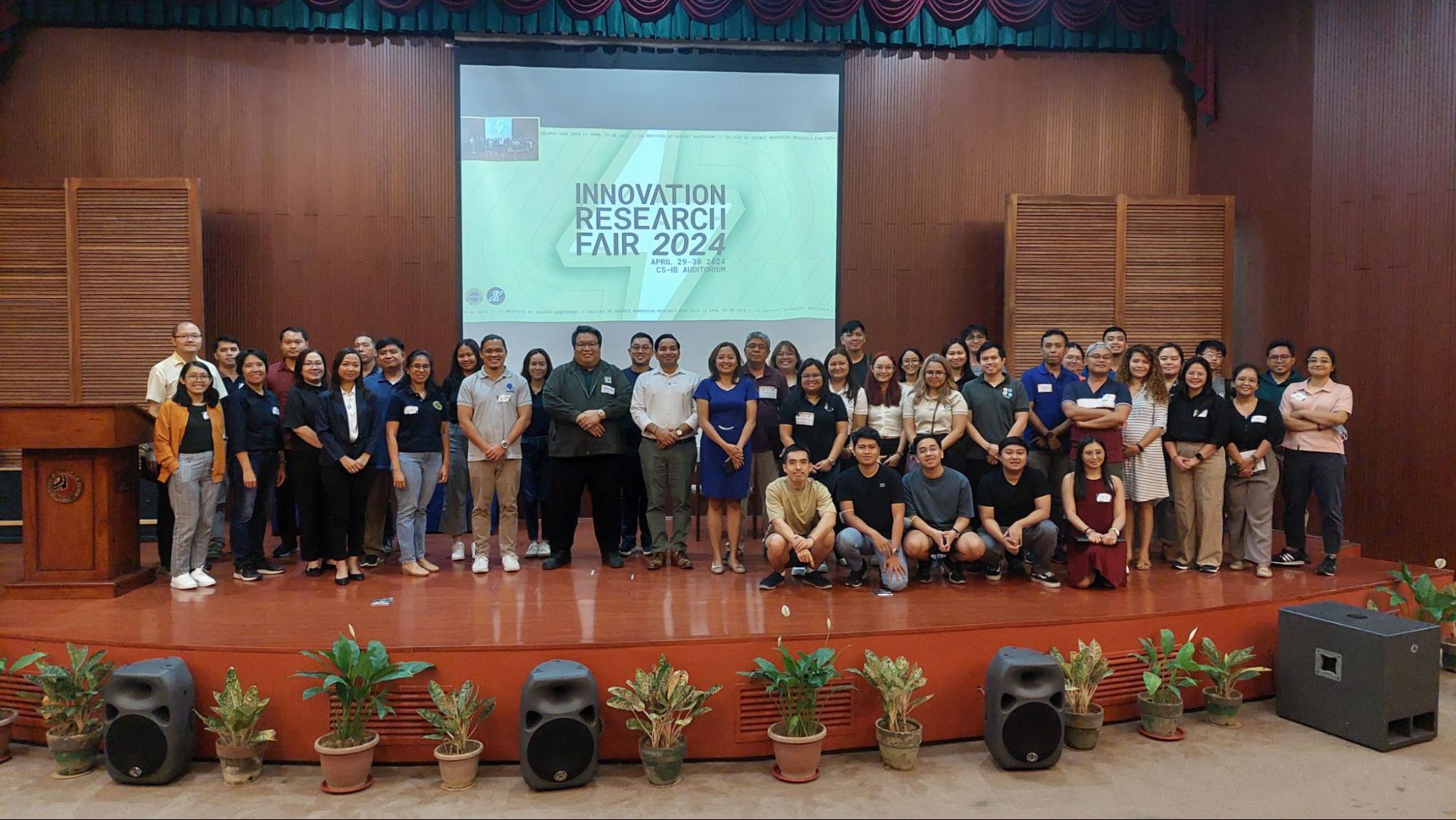
Organizers and participants of the Innovation-Research Fair 2024 (Photo credit: Craig Soroño).

The UPD College of Science (UPD-CS) Innovation Committee, under the Science and Society Program (SSP) and led by SSP Director Dr. Lerrie Ann Ipulan-Colet, hosted the two-day Innovation-Research Fair on 29 and 30 April 2024 in celebration of World Creativity and Innovation Day.


The Innovation-Research Fair is an initiative to bridge the gap between scientists who develop novel inventions and entrepreneurs who produce these inventions for public use. The key players, UPD-CS Dean Giovanni Tapang said in his opening speech, are the innovation officers who bring scientists’ works to entrepreneurs and transmit market demands back to the scientists.


Research adoptors from various industries participated in the event. Among the companies and agencies present were Analog Devices Philippines, Ateneo de Manila University, BioAssets Corporation, Bureau of Plant Industry, Bureau of Soils and Water Management, Osaka University – Institute of Laser Engineering, International Flavors and Fragrances, Maynilad Water Services Inc. – WATERLab, Pathway Technologies Inc., Mandaluyong City Health Office, and the Department of Environment, Natural Resources Environmental Management Bureau (DENR-EMB) Air Quality Management Section, and Vecor Labs Philippines.


Different institutes of UPD-CS showcased their service laboratories and research capabilities to the research adoptors, namely Marine Science Institute (MSI), Institute of Biology (IB), Institute of Chemistry (IC), Institute of Environmental Science and Meteorology (IESM), Institute of Mathematics (IM), National Institute of Molecular Biology and Biotechnology (NIMBB), National Institute of Physics (NIP), Material Science and Engineering Program (MSEP), and National Institute of Geological Sciences (NIGS).


Some CS laboratories and institutes exhibited their value proposition posters to the research adoptors. Among those who participated were UPD-CS IB’s Microbial Ecology of Terrestrial and Aquatic Systems Laboratory, Fungal Laboratory, Pathogen-Host-Environment Interactions Research Laboratory, Developmental Toxicity and Signaling Research Laboratory, Integrative Research Laboratory Philippines, and DNA Barcoding Laboratory and UPD-CS IESM’s Biogeography, Environment, Evolution and Climate Laboratory . UPD-CS IM and MSEP also presented their posters to the research adoptors.

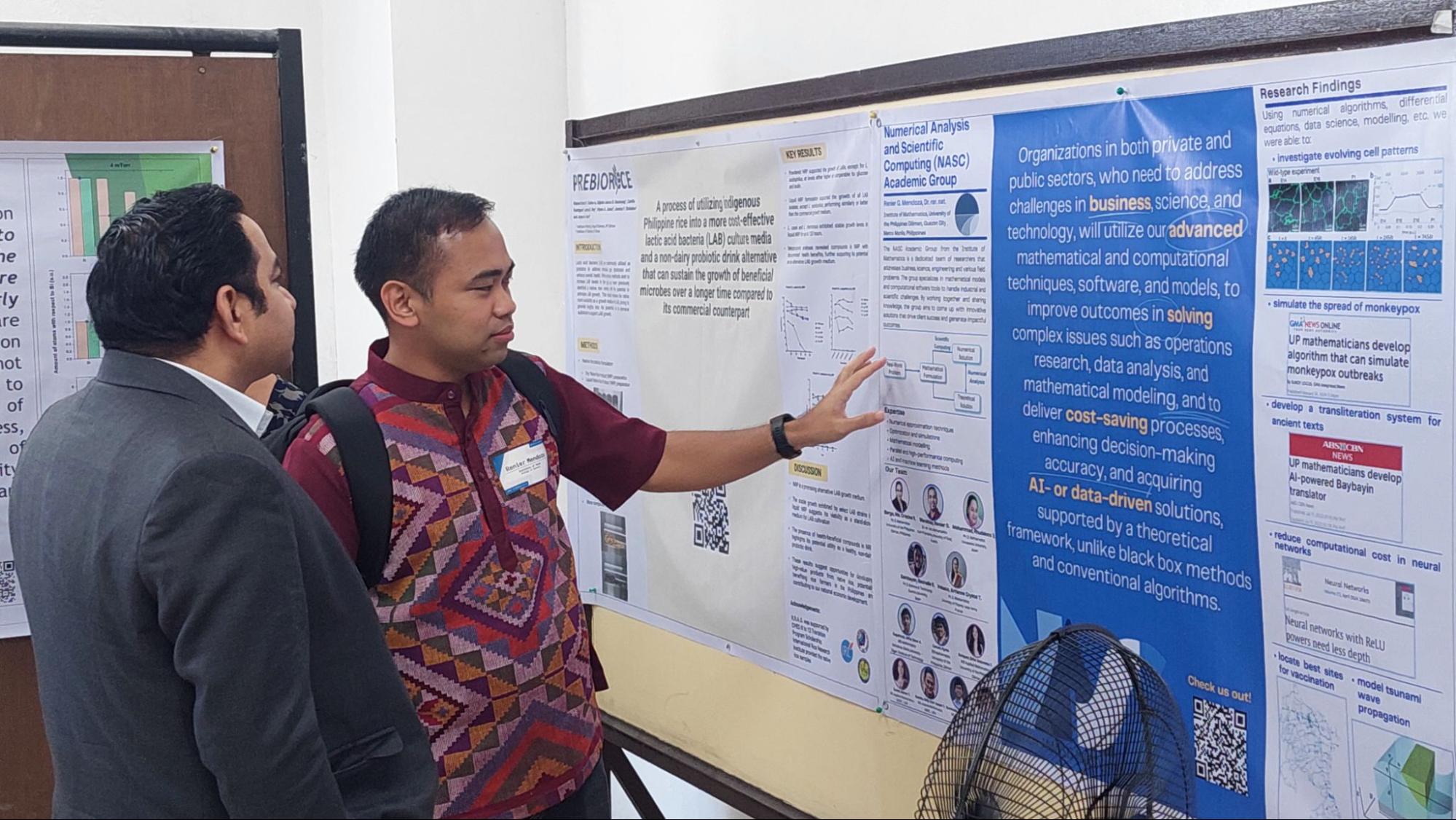
Dr. Renier Mendoza presenting UPD-CS IM’s value proposition poster to a research adoptor (Photo credit: Craig Soroño).

The event included plenary sessions, poster presentations, and panel discussions to stimulate and promote innovation in and out of the academic community. It also aimed to strengthen linkages between students, researchers, and public and private sectors by providing a venue for students and researchers to promote and share their work.


As part of the plenary sessions, Department of Trade and Industry (DTI) Undersecretary Rafaelita Aldaba, Ph.D. presented ways the science community and entrepreneurial industries can collaborate; UP Office of the President Consultant for Innovation Mr. Jose Emmanuel P. Reverente presented his perspective on innovation culture; UP System Technology Transfer and Business Development Office Director Luis Sison discussed technology transfers and customer discovery principles; and IP & Technology Transfer Officer Ms. Ma. Christina Mate of Technology Transfer and Business Development Office discussed the technology transfer in UPD-CS.


The Innovation-Research Fair also included the 10th iteration of iStories, where Dr. Mannix S. Pedro of the UP Los Baños National Institute of Molecular Biology and Biotechnology (BIOTECH) presented the Bio N invention. This technology can convert nitrogen from the atmosphere into a form used in agriculture. The Bio N technology is an example of an invention that has been commercialized and is now widely used nationwide.


Dr. Ipulan-Colet also introduced SSP’s CAPE Innovation Program, an initiative to collate, build awareness, prepare, and expose UPD-CS to innovation opportunities. The program, which started in 2023 and will continue until 2025, is designed to propel researchers toward innovation, connect researchers to industry partners, and develop a system to assist innovators in fulfilling utilizable outputs from their research.


The Innovation-Research Fair is expected to be a regular program of UPD-CS as part of its wider effort to streamline the flow of innovation from scientists to entrepreneurs.


For interview requests and other concerns, please contact media@science.upd.edu.ph.

Novel Explanation for Long-Standing Neutron Lifetime Problem Proposed by UP Nuclear Physicist

Novel Explanation for Long-Standing Neutron Lifetime Problem Proposed by UP Nuclear Physicist

Published: April 25, 2024

By: Harvey L. Sapigao

Atoms are both a wave and a particle, similar to water waves (which are waves) that give rise to water droplets (which are particles) (Photo credit: Zhang Kaiyv on Unsplash)

Neutrons, when plucked from the nucleus of atoms, become unstable and decay after some time. Physicists know that these unstable neutrons die after about 14 minutes, but they cannot pinpoint the exact seconds in which the neutrons last, even as today’s experiments are at their most precise. 


This problem, known as the neutron lifetime anomaly, arises because two different but equally rigorous experimental methods – the beam method and the bottle method – produce different results. A popular reason is that some undiscovered phenomenon might be at play.


But Dr. Denny Lane Sombillo of the UP Diliman College of Science National Institute of Physics (UPD-CS NIP) thinks the explanation may lie in how time behaves at a quantum level. “If this [theory] is correct,” he said, “we don’t need to modify the known physics and simply focus on the nature of time in quantum mechanics.”


Dr. Sombillo’s theory involves a separate problem called the quantum time of arrival (QTOA) problem. His theory is built upon the works of Dr. Eric Galapon of UPD-CS NIP. By employing Einstein’s concept of causality in Dr. Galapon’s work, Dr. Sombillo provides an intuitive picture of the quantum time of arrival problem, one that can be used to explain other mysteries such as the neutron lifetime anomaly.


Time of Arrival in Classical vs. Quantum Mechanics


In classical mechanics, a car traveling at 40 kilometers per hour will arrive at the destination 40 kilometers away in exactly one hour. So long as the speed of the car and the distance to the destination do not change, we can be sure that the car’s time of arrival will always be one hour.


A different story emerges in quantum mechanics. An atom traveling at some speed will reach its destination – say, a detector – after some time. However, a weird quirk of an atom is that we can prepare its exact position or exact speed, but not both at the same time. That is, we can prepare it with an exact speed, but we cannot set how far away it is from the detector, and vice-versa. As a result, we cannot be sure of the atom’s time of arrival; we can only know the probability of it arriving after a certain time.


This feature called the Heisenberg uncertainty principle, owes its weirdness to the duality of atoms as both a wave and a particle. Naturally, atoms are clouds of probabilities with no definite properties, much like the ambiguity of a wave. When measured or prepared, however, atoms instantaneously acquire exact properties, much like the distinctness of a particle.


Dr. Galapon’s theory on QTOA posits that right after the atom is prepared, it collapses into a specific type of wave. After some time, this wave will evolve and turn into a particle. This process is aptly named the Galapon collapse mechanism (GCM).


Employing Causality


However, Dr. Sombillo noticed that the theory allows for a situation where the atom instantaneously arrives at the detector. That is, the atom can “teleport” to the detector, rendering no time to travel, which is physically impossible. This also violates the concept of causality, which states that one event (a cause) must first happen before another event (an effect).


“You can think of causality as the proper ordering of events,” Dr. Sombillo explained. In the traveling atom, for example, the proper order of events would be that the atom must be prepared first (a cause) before appearing at the detector (an effect). That is, the atom should not be detected by the detector if it has not yet been prepared.


Dr. Galapon’s theory allows for the reversed ordering of events where the detection of the atom precedes its preparation.  “Intuitively, this reversed ordering should not be in the theory, but it is not easy to identify this loophole using mathematics alone,” Dr. Sombillo said. “One needs to evaluate the physical implications of the formalism.”


By employing causality, Dr. Sombillo and his collaborator, Dr. Neris Sombillo of Ateneo de Manila University, were able to fix the issue. “We found that the instantaneous arrival time can be removed if we impose causality in the formulation of the time of arrival operator theory,” he said. “Even if we remove the causality-violating part, the quantum correction to time remains.” Their improved formulations can now be used to explain physical phenomena such as the neutron lifetime anomaly.


Neutron Lifetime Anomaly


When an unstable neutron dies, it changes into a proton, emitting an electron and antineutrino. But exactly how long before this process happens is still unknown. The beam experiment suggests that the unstable neutron lasts an average of 14 minutes and 48 seconds, while the bottle experiment suggests 14 minutes and 39 seconds – a nine-second difference.


Dr. Sombillo believes that the difference comes from how the neutrons are initially prepared, which would have affected their lifetime. Just like in the quantum time of arrival problem where the atom’s particle-like state affects how it will evolve into a wave, the neutron’s initial state affects how it will decay.


The beam and bottle experiment, he theorizes, sets the neutrons with dissimilar quantum characteristics. Plugging these values into his equations on quantum time of arrival would result in different neutron lifetimes, accounting for the discrepancy in the experiments.


Now published in Physics Letters A, their paper is the first to merge causality and the quantum time of arrival problem, as well as use it to explain the neutron lifetime anomaly. “Our work is the only proposal that presents the anomaly as a quantum correction to a time observable,” Dr. Sombillo said.  “The paper laid the foundation for future work on the neutron lifetime anomaly using the theory of quantum arrival.”


While their work is still at its preliminary stage, he said that they intend to pursue a more thorough investigation of the quantum time theory in the future. Before transitioning as a nuclear physicist, Dr. Sombillo was part of the quantum time operator research group of UPD-CS NIP. He later learned about the neutron lifetime anomaly and how it might relate to the quantum time of arrival problem after his transition.


For interview requests and other concerns, please contact media@science.upd.edu.ph.
 

References:

Sombillo, D. L. B., & Sombillo, N. I. (December 5, 2023). Formulation of causality-preserving quantum time of arrival theory. Physics Letters A, 490, 129205. https://doi.org/10.1016/j.physleta.2023.129205


Galapon, E. A. (2008). Theory of quantum arrival and spatial wave function collapse on the appearance of particle. Proceedings of the Royal Society A: Mathematical, Physical and Engineering Sciences, 465(2101), 71–86. https://doi.org/10.1098/rspa.2008.0278 


Wietfeldt, F. E., & Greene, G. L. (2011). Colloquium: The neutron lifetime. Reviews of Modern Physics, 83(4), 1173–1192. https://doi.org/10.1103/revmodphys.83.1173

Science Majors Participate in Month-long Singapore-PH Leadership Exchange Program

Science Majors Participate in Month-long Singapore-PH Leadership Exchange Program

Published: April 19, 2024

By: Harvey L. Sapigao

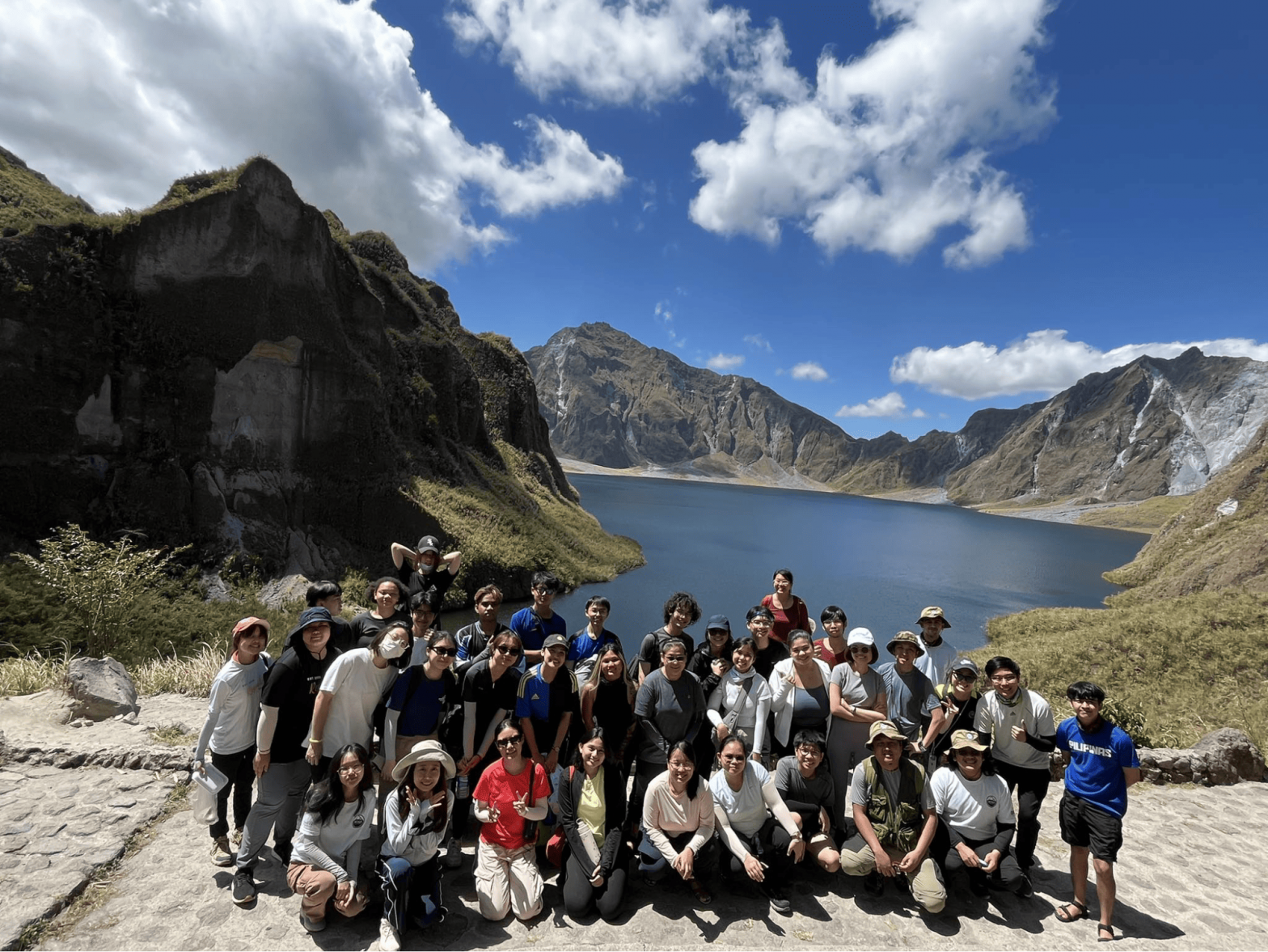
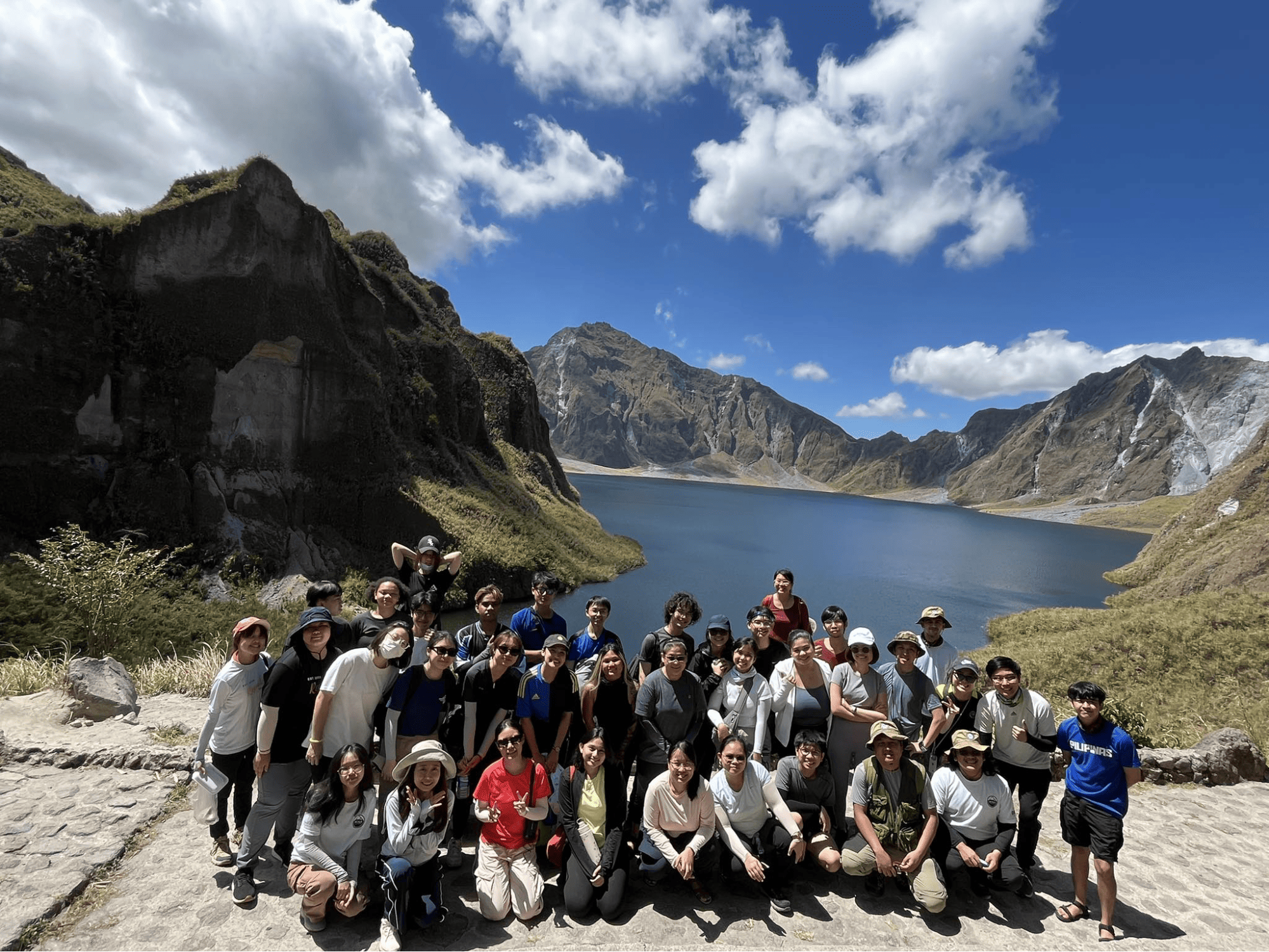
Program participants at Mt. Pinatubo (Photo credit: Lillian Rodriguez).

Students of the UP Diliman College of Science (UPD-CS) and the Republic Polytechnic in Singapore (RP) immersed themselves in the month-long Temasek Foundation International Specialists’ Community Action and Leadership Exchange (TFI SCALE) Programme, the first half taking place in Singapore on September 6 to 19, 2023, and the second half in the Philippines last March 31 to April 8, 2024.


The TFI SCALE Programme aims to promote cultural, cognitive, social, and emotional engagements among Southeast Asian youths. In the 9th iteration of the program, students from the National Institute of Geological Sciences (UPD-CS NIGS), Institute of Biology (UPD-CS IB), and National Institute of Molecular Biology and Biotechnology (UPD-CS NIMBB) collaborated with students from RP’s School of Applied Sciences.


As part of the program in the Philippines, the exchange students visited Mt. Pinatubo, the Las Piñas-Parañaque Wetland Park (LPPWP), and the Parañaque Science High School (ParSci) to explore the country’s climate, biodiversity, research, and sustainability issues.


The participants were divided into three groups: the microplastics group which examined the presence of microplastics in Manila Bay, the coliform group which investigated human and animal waste in the bay, and the mangrove cleanup trash segregation group which surveyed various types of trash found in the protected mangrove area of LPPWP.

Participants performing a clean-up drive at LPPWP (Photo credit: Lillian Rodriguez).

They also conducted a Youth Community Engagement Program for Grade 7 students of ParSci. The outreach program included activities meant to raise awareness of climate change, biodiversity, and sustainability among ParSci students, especially since the school is located right beside one of the major tributaries of Manila Bay.


In her closing remarks, Program Coordinator Dr. Lillian Jennifer Rodriguez underscored the program’s importance in teaching the youth about sustainability, building lifelong ties, and producing future leaders. “You are our future leaders,” she said, reminding them of their responsibility to apply the knowledge they have gained from the program.


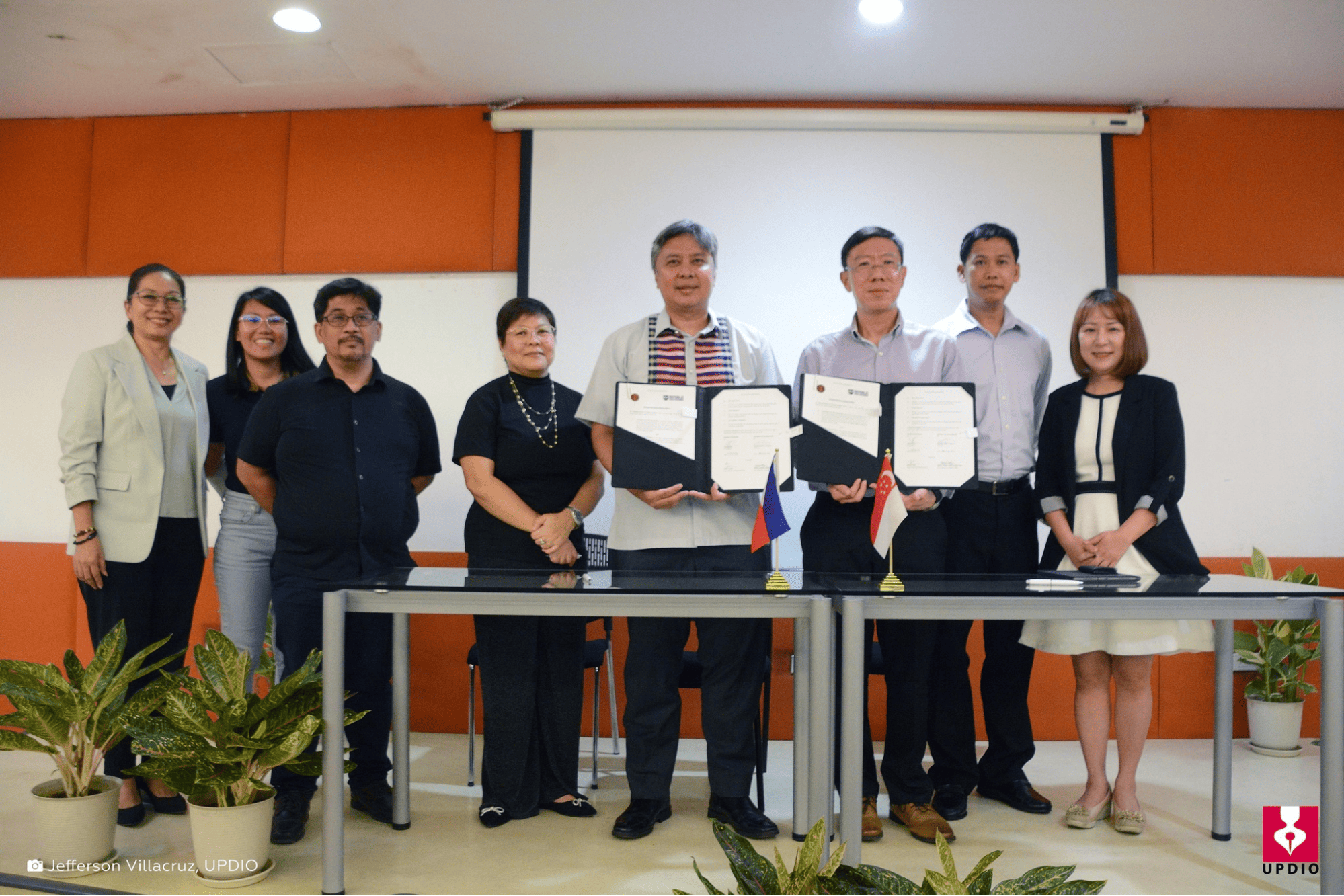
Last April 4, 2024, UPD Chancellor Edgardo Carlo Vistan II signed a memorandum of understanding (MOU)  in the presence of RP officials, solidifying future partnerships between the two institutions. The MOU stated that both parties will collaborate on the “exchange of students, including student internship; joint lectures, research activities, symposia, and projects; exchange of academic materials, publications, and information; and exchange of academic staff.”

MOU signing by UPD Chancellor Edgardo Carlo Vistan II and RP’s Senior Director (Student Services) Mr. Ashley Chua at UPD-CS Administration Building Auditorium (Photo credit: Jefferson Villacruz, UP Diliman Information Office).

“This program fostered a rich exchange of experiences,” said Raymond Gallego, one of the program’s participants and student of UPD-CS NIGS, in his testimonial. “The formalization of this partnership between UP Diliman and Republic Polytechnic definitely paves the way for more students to forge friendships, expand their knowledge, and strengthen relations between our countries.” 


Aside from Gallego, the CS students who completed the program were Francesca Petero, Alena Taladua, Kristina Marie Dela Cruz, Johannah Isabel Sengson, Florence Maryanna Agcaoili, Sabine Alexa Guinto, Martine Gabrielle Rosete, Josef Emil Artiaga, Sean Michael Maghirang, John Daniel Regala, John Nash Guzon, and Glenn Vallespin.


For interview requests and other concerns, please contact media@science.upd.edu.ph.
Two UPD College of Science Professors Win the NRCP Achievement Award

Two UPD College of Science Professors Win the NRCP Achievement Award

Published: April 18, 2024

By: Harvey L. Sapigao

Dr. Cristine Villagonzalo (left) and Dr. Reynaldo Garcia (right) receiving the Achievement Award (Photo credit: DOST-NRCP)

Dr. Cristine Villagonzalo and Dr. Reynaldo Garcia from the UP Diliman College of Science (UPD-CS) received the prestigious Achievement Award from the National Research Council of the Philippines (NRCP) in the recently held Annual Scientific Conference and 91st General Membership Assembly last March 12, 2024.


Dr. Villagonzalo of the UPD-CS National Institute of Physics (UPD-CS NIP) was lauded for her contributions to Physics, and Dr. Garcia of the UPD-CS National Institute of Molecular Biology and Biotechnology (UPD-CS NIMBB) for his contributions to the field of Medical Sciences.


Dr. Villagonzalo served as the President of the NRCP Governing board from 2022 to 2023. She is a Professor and the Deputy Director for Academic Affairs at NIP and the Project Leader of the International Year of Basic Sciences for Sustainable Development (IYBSSD) Philippines. Dr. Villagonzalo received her doctorate of natural sciences at Chemnitz University of Technology in Germany. She is currently working on a research project to integrate a quantum mechanics principle called the perturbation theory in a quantum circuit.


Dr. Garcia founded the Disease Molecular Biology and Epigenetics Laboratory (DMBEL) at NIMBB in 2011. He and his team played a crucial role in detecting and preventing the spread of COVID-19 during the pandemic. Dr. Garcia received his doctorate in Biochemistry and Molecular Biology at the Australian National University and is currently a Professor at NIMBB. He is currently investigating how specific mutations in colon cancer cells affect their resistance to treatments, and how these mutated cells divide, migrate, and survive.


The NRCP started awarding the Achievement Award in 1979 to those who have significantly contributed to the research and development of natural sciences, health sciences, engineering, industry, social sciences, and humanities in the Philippines.


Aside from Dr. Villagonzalo and Dr. Garcia, three professors from UP Los Baños also received the Achievement Awards, namely Dr. Inocencio Buot Jr. for his contributions to Biological Sciences, Dr. Maria Ana Quimbo for Social Sciences, and Dr. Remil Galay for Veterinary Medicine.


The UPD Department of Chemical Engineering was awarded the 2023 NRCP Outstanding Institution Award. It joins the ranks of UPD-CS institutes that have received the award, namely NIP, Marine Science Institute (MSI), and Natural Sciences Research Institute DNA Analysis Laboratory (NSRI-DAL).


For interview requests and other concerns, please contact media@science.upd.edu.ph.
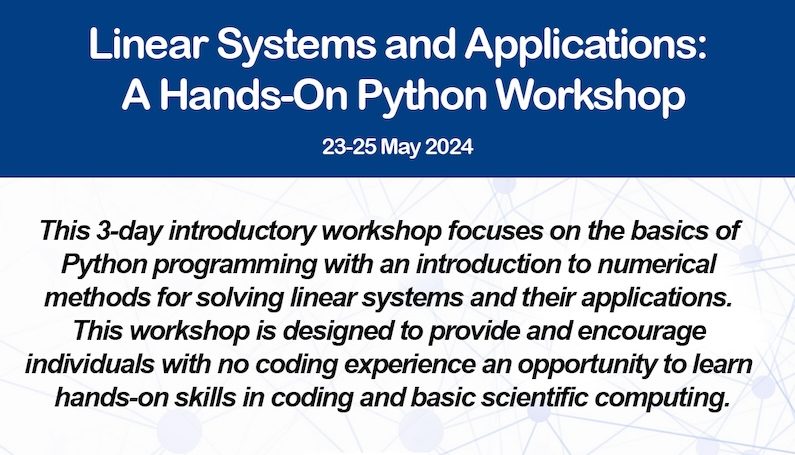
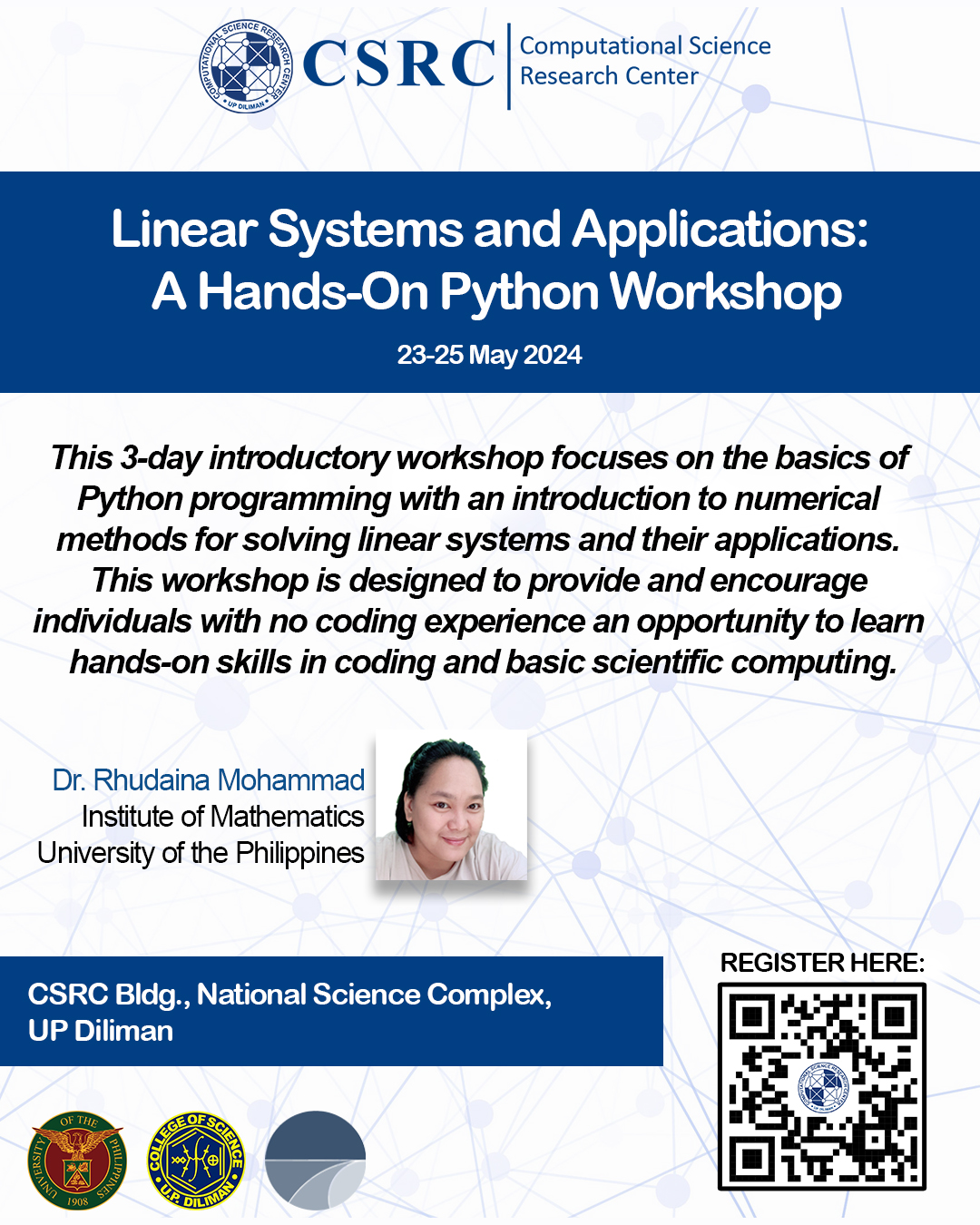
Linear Systems and Applications: A Hands-On Python Workshop

Linear Systems and Applications: A Hands-On Python Workshop

Date: 23-25 May 2024


Venue: CSRC Building, National Science Complex, UP Diliman


Abstract: This 3-day introductory workshop focuses on the basics of Python programming with an introduction to numerical methods for solving linear systems and their applications. This workshop is designed to provide and encourage individuals with no coding experience an opportunity to learn hands-on skills in coding and basic scientific computing.


Speaker:

Dr. Rhudaina Mohammad

Institute of Mathematics

University of the Philippines


Registration:

Please note that slots are limited. Registration will close once we have reached our targeted number of participants. To secure your place, kindly proceed to register using the provided link: https://tinyurl.com/CSRCxPYTHON


Registration Fee: PhP 5,000.00 (inclusions: lunch, snacks, and workshop kit) 


Tentative Schedule:

•           Day 1 – Python Basics and Programming Fundamentals 

•           Day 2 – Introduction to Numerical Methods for Linear Systems and Applications

•           Day 3 – Introduction to Dimensionality Reduction in Data Science


Scientific Committee: 

•           Dr. Renier Mendoza

•           Dr. Fredegusto Guido David

•           Dr. Rachelle R. Sambayan

•           Dr. Rhudaina Mohammad


Organizing Committee:

•           Rolly Czar Joseph Castillo

•           Reynan Diaz

•           Roberto Eugenio, Jr.

•           Augusto Gayon, Jr. 

•           Ace Reario

•           Edison Pizarra


Acknowledgement:

This event is supported by the Computational Research Laboratory of the Institute of Mathematics, University of the Philippines Diliman.


Contact Information:

csrc@science.upd.edu.ph

09277727710

https://www.facebook.com/CSRCUPD/

“Making the Invisible Visible” with Bird Window Strike PH

“Making the Invisible Visible” with Bird Window Strike PH

Published: April 11, 2024

By: Maria Alexandra Marmol

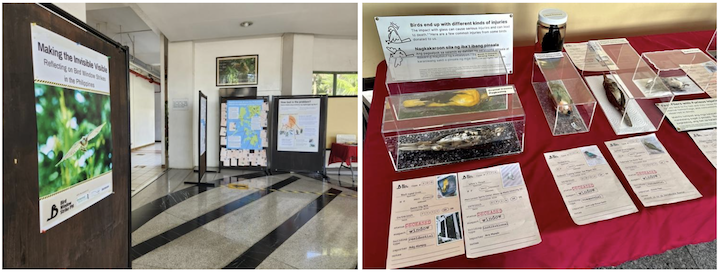
(Left to right) Panels featured in the “Making the Invisible Visible” pop-up exhibit. Bird displays serve as an example of the harm caused by window collisions. (Photo credits: Bird Window Strike PH & Marmol, 2024)

In February 2024, the UP Diliman College of Science Institute of Biology (UPD – CS IB) housed the “Making the Invisible Visible” pop-up exhibition of the citizen science project, Bird Window Strike Philippines. 


Featuring the feathered remains of unlucky birds that had collided into windows, the displays served as poignant and striking visuals for this strange, but common phenomenon. Infographics and posters provided possible solutions and detailed accounts of incidents from up to 290 citizen reports from all around the Philippines.


Bird Window Strike PH first started as a research initiative and passion project under Janina Castro of the Ateneo Institute of Sustainability, the school’s hub for sustainable development, and Jelaine Gan of The UP Wild, an online educational community raising awareness on UP Diliman’s wildlife and green spaces. 


The two had long been avid bird watchers—or “birders”—when the idea formed after Janina rescued a Coppersmith Barbet that had struck a window in the Ateneo de Manila University. She realized that little to no research was being done on bird collisions with windows despite their somewhat common occurrence. Teaming up with Jelaine, the two discussed how they could bring more attention to this issue and what could be done to prevent further collisions.

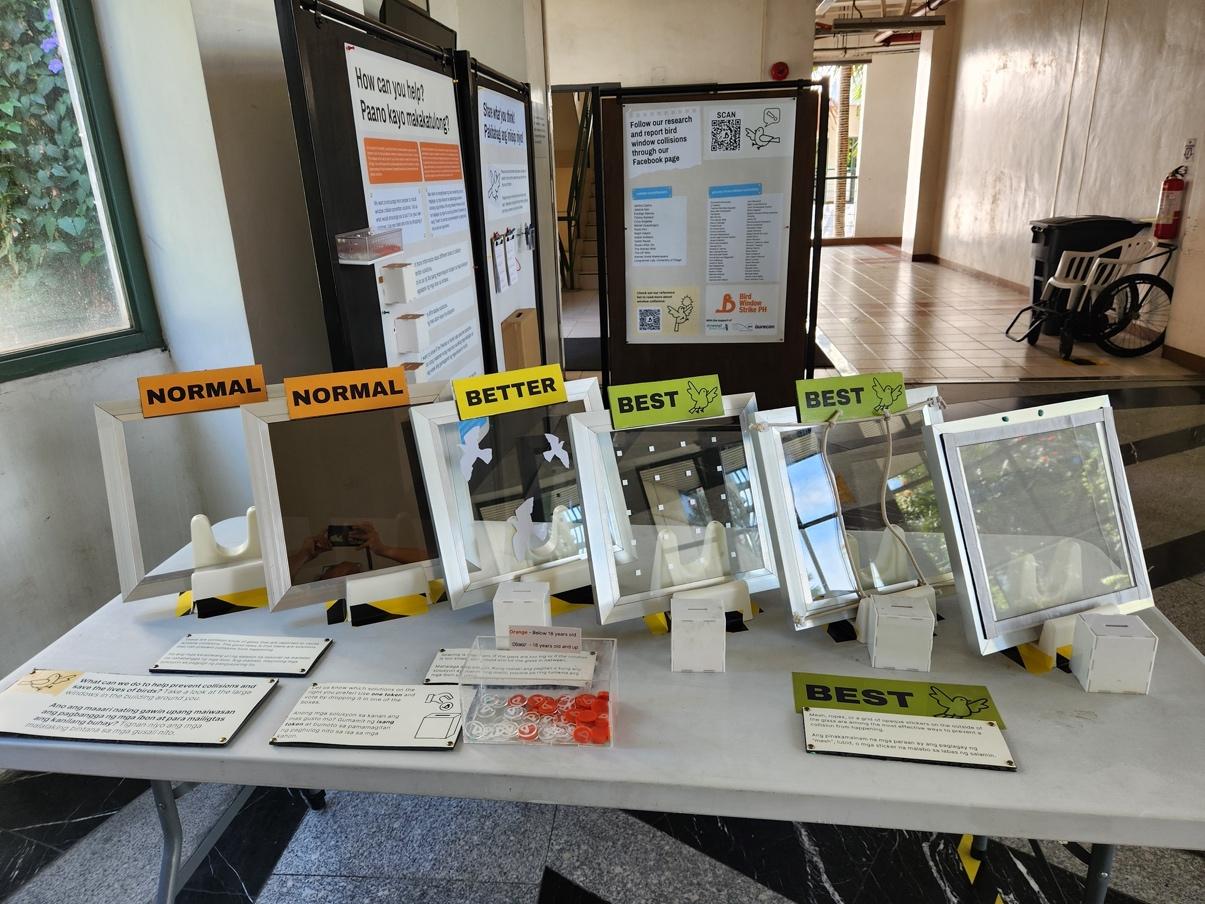
Displays showcasing various installations that can help prevent window collisions, ranging from darker tinted glass, to stickers, to ropes and mesh. (Photo credit: Bird Window Strike PH, 2024)

Bird collisions with windows can happen when they are misled by either the reflections of trees and the sky on the glass surface or by the view of the environment through the glass. Based on studies by various researchers and the American Bird Conservancy (ABC) database, the most efficient means of prevention involved breaking up the reflection. This could be done by installing stickers at least 1 cm in size, ideally spaced around 5 cm apart. The “Making the Invisible Visible” pop-up exhibition showed other solutions, such as ropes and wire mesh screens for windows. 


“[These solutions are] among the most effective, but this doesn’t mean that these are the only choices,” the Bird Window Strike PH team emphasized. “In the ABC database, there are a number of DIY solutions and commercial solutions that people can choose from.” 

(The ABC database can be found here.)


Citizens from across the country aid in raising awareness on the endangerment of various species, as the Bird Window Strike PH regularly receives incident reports and photos—some of which were part of the exhibit. Pigeons (Columbidae), kingfishers (Alcedinidae), barbets (Megalaimidae), and pittas (Pittidae) were among the most common victims of window collisions.


“In particular, we get a lot of Common Emerald Dove (Chalcophaps indica) and Hooded Pitta (Pitta sordida) in the reports,” they explained. “We don’t know why these birds seem to be colliding more, but some of the explanations in literature are related to increased blue light pollution in cities and to birds’ behavior of moving around different forest patches.”


The citizen science and conservation initiative plans to set up more pop-up exhibitions in the future. By showcasing solutions through these displays and serving as an avenue for incident reports, they hope to reach more people and encourage them to take action in preventing any further accidents.


Keep an eye out for the Bird Window Strike PH’s next exhibit and work on their FB page.


For interview requests and other concerns, please contact media@science.upd.edu.ph.

Hiring – Senior Office Assistant

Hiring - Senior Office Assistant

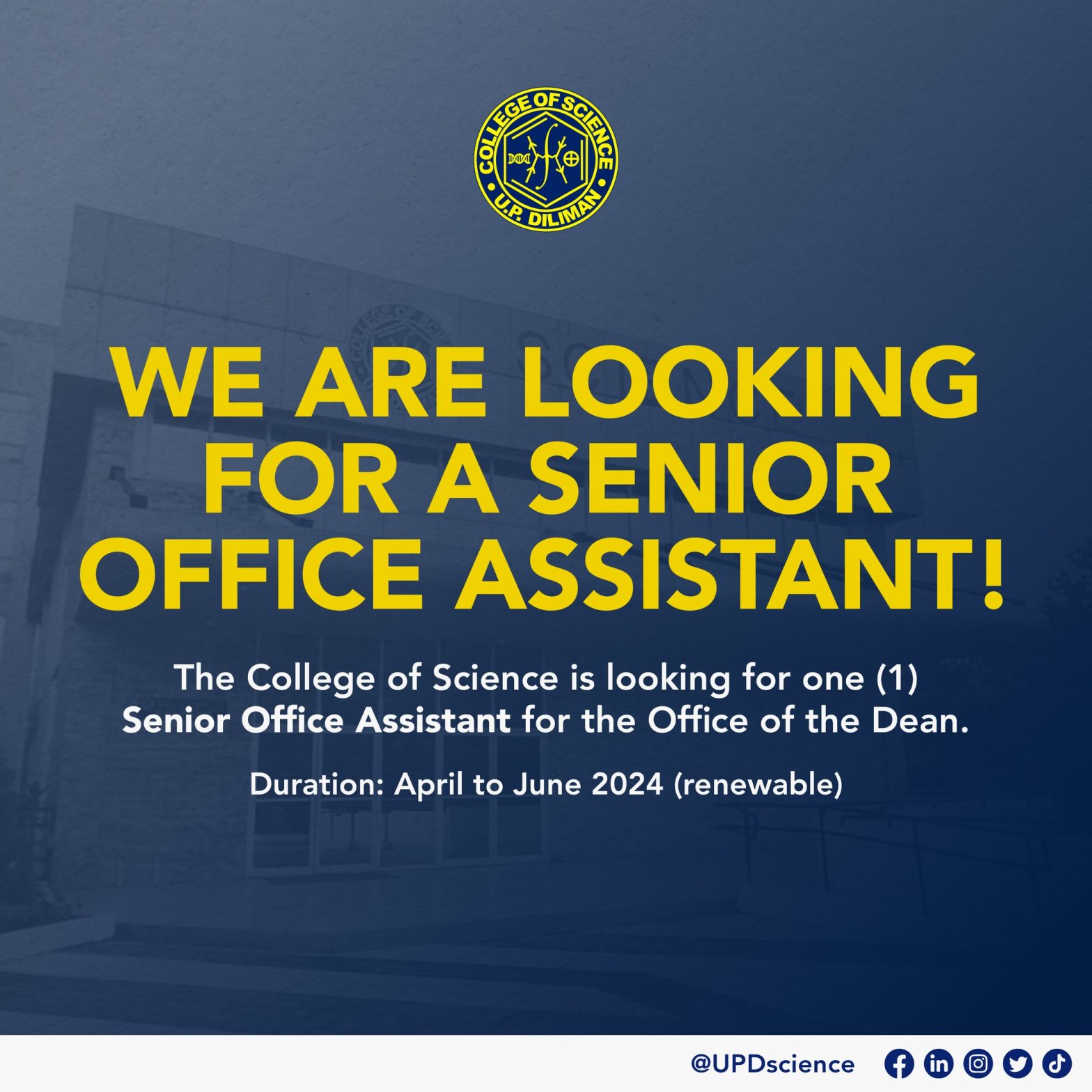
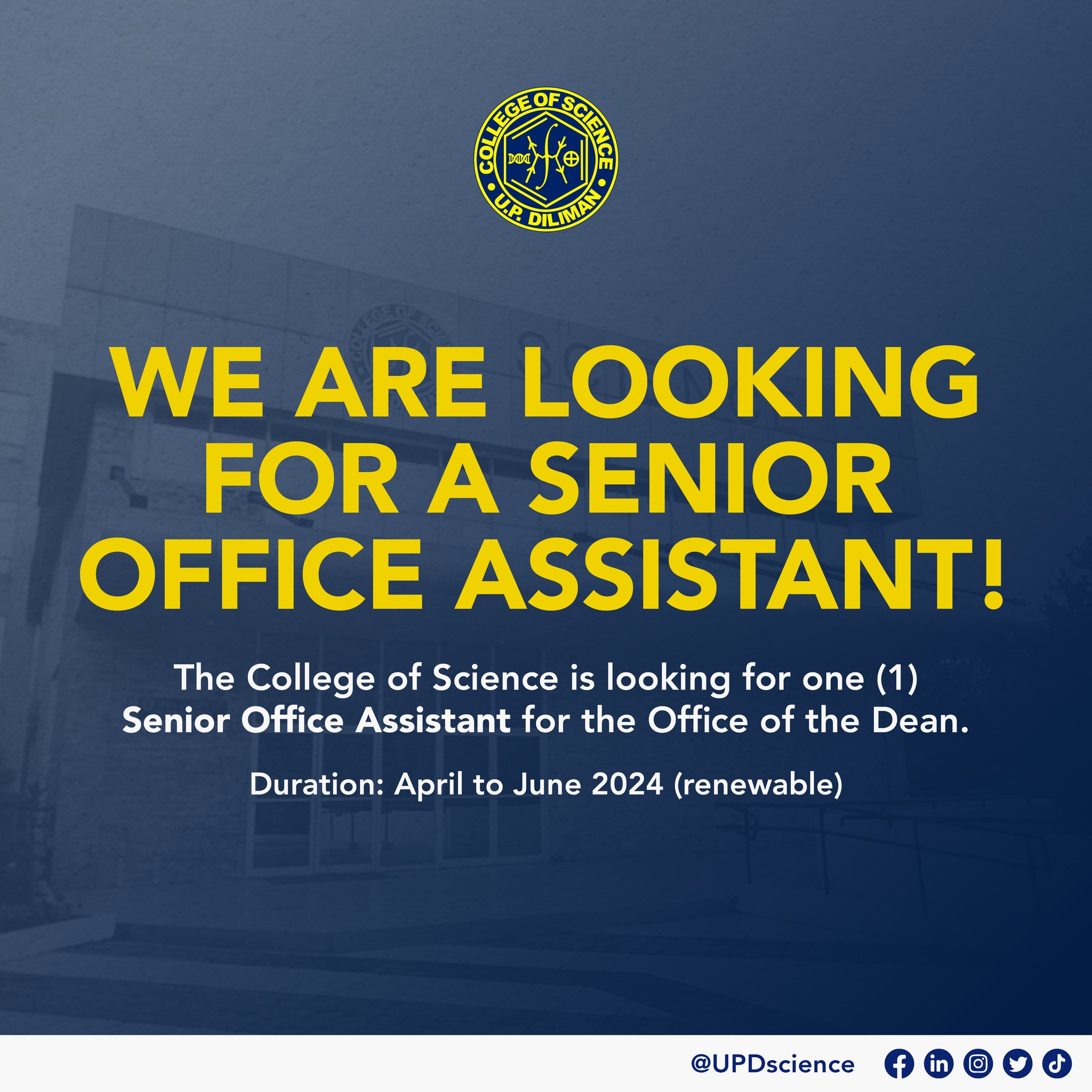
We are looking for a Senior Office Assistant! 📄
The Office the Dean of the College of Science is looking for one (1) Senior Office Assistant for the period of April to June 2024 (renewable).
 
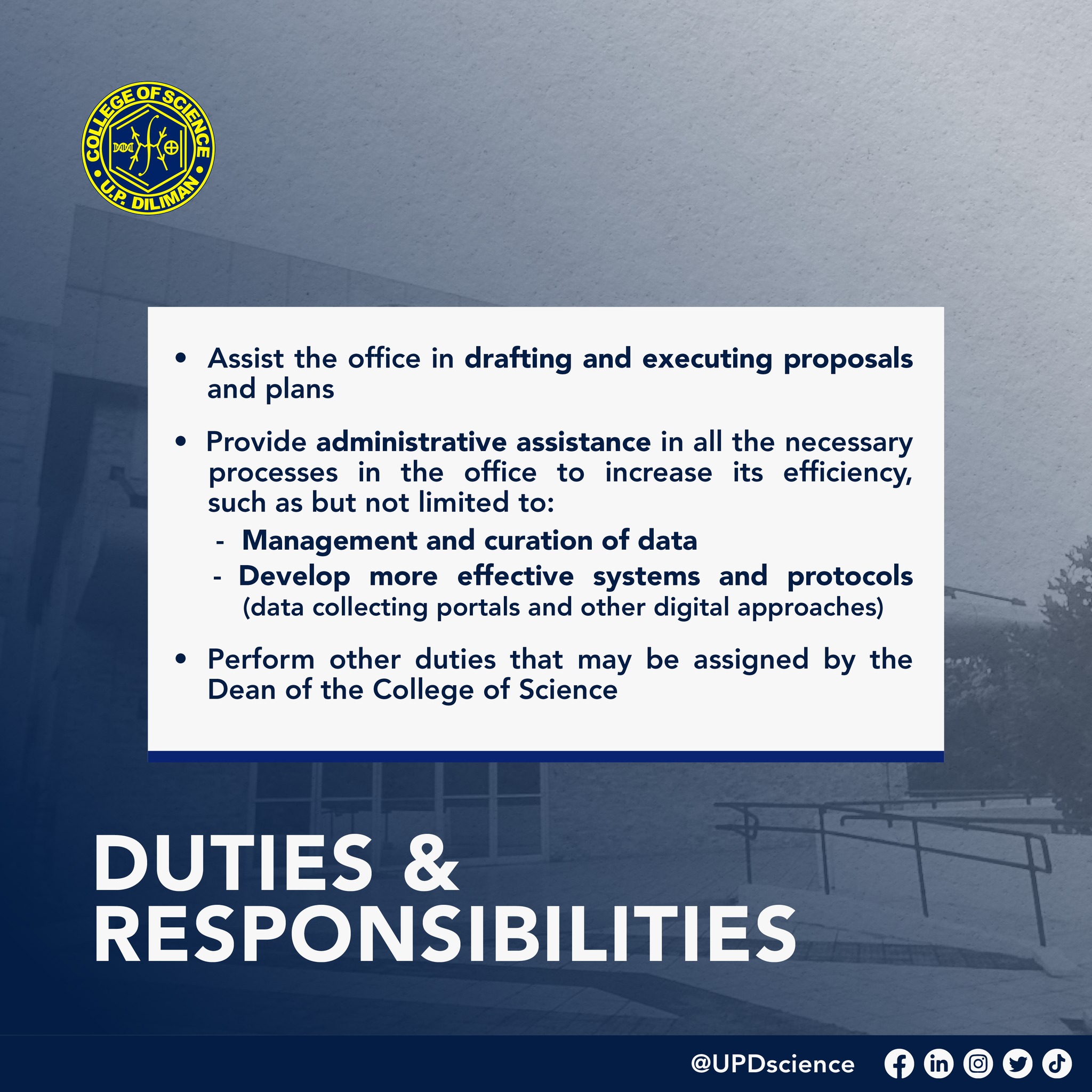
Duties and Responsibilities of the position include:
– Assisting the office in drafting and executing proposals and plans
– Providing administrative assistance in all the necessary processes in the office to increase its efficiency (management and curation of data, development of effective systems and protocols, and more)
– Performing other duties that may be assigned by the Dean of the College of Science
 
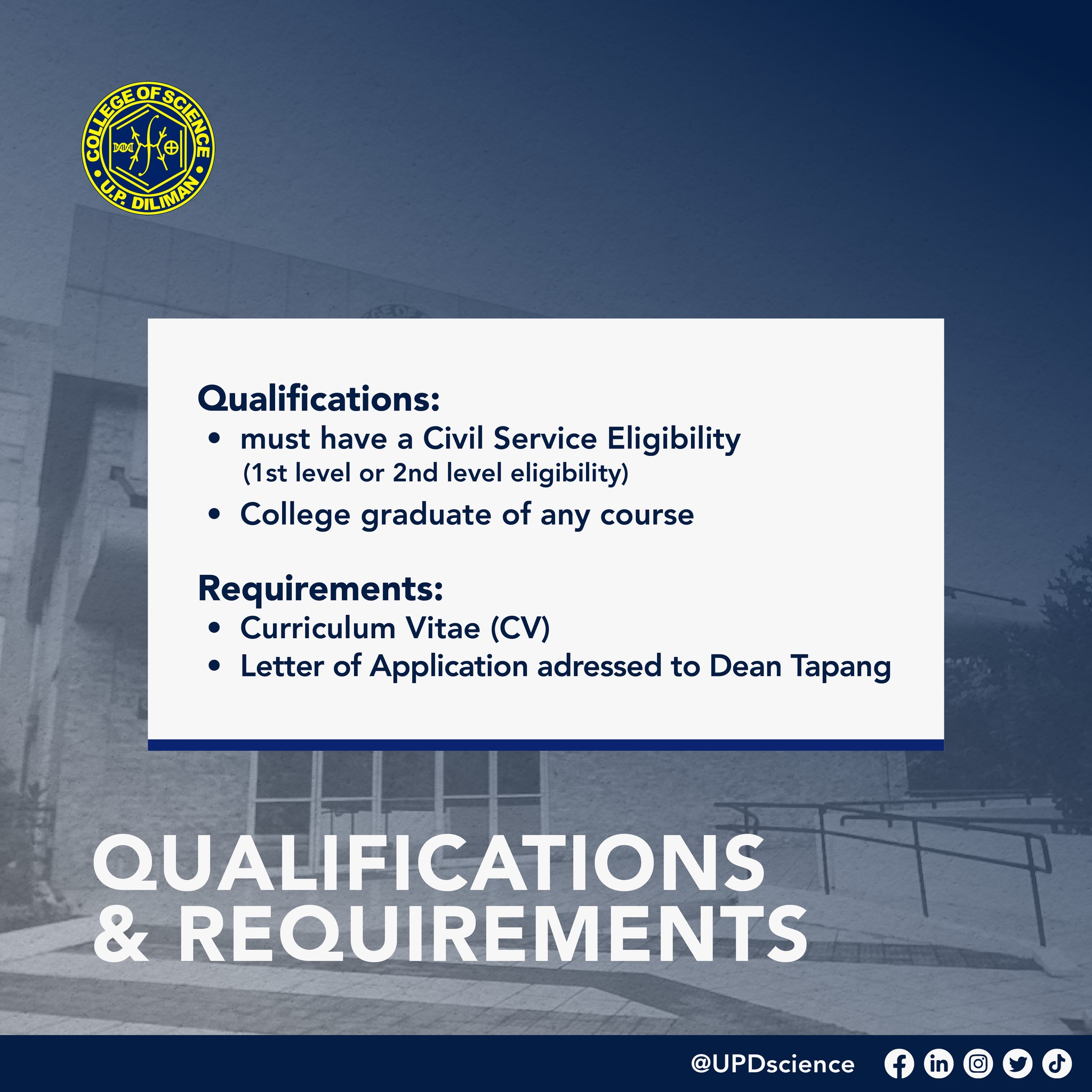
Qualifications needed:
– Must have a Civil Service Eligibility (1st or 2nd Level Eligibility)
– College graduate of any course
 
Requirements for Application:
1. Curriculum Vitae (CV)
2. Letter of Application addressed to Dean Giovanni A. Tapang, Ph.D.
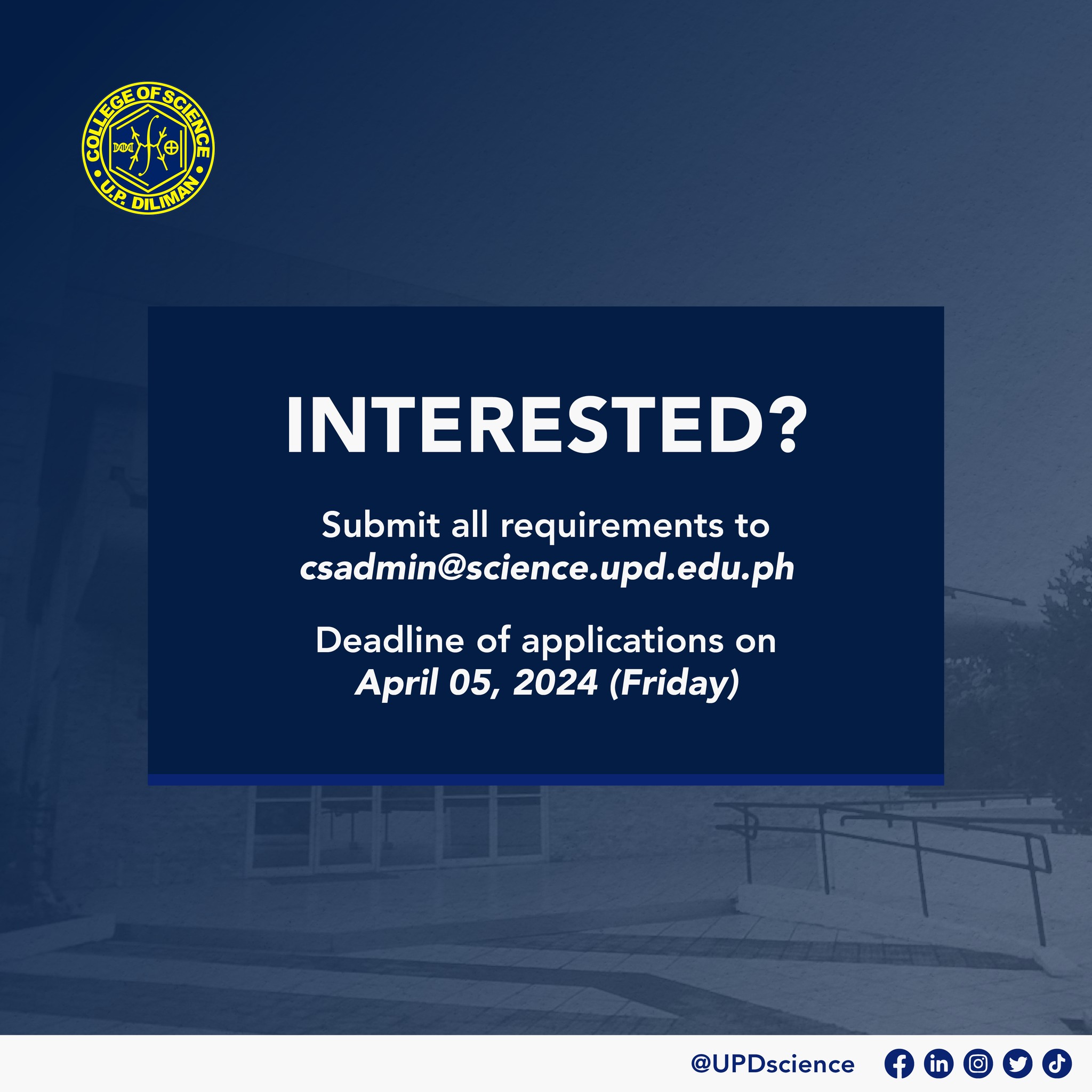
Interested? Please submit all the requirements to csadmin@science.upd.edu.ph
Deadline of applications on April 05, 2024 (Friday).

UK Recognizes UP Scientists’ Contributions to Philippine Research and Development

UK Recognizes UP Scientists’ Contributions to Philippine Research and Development

Published: March 19, 2024

By: Harvey L. Sapigao

Students using VISSER, a portable learning device CS Dean Giovanni Tapang helped commercialize (Photo credit: making.technology)

Pamela Louise Tolentino of UP Diliman College of Science National Institute of Geological Sciences (UPD-CS NIGS) and CS Dean Giovanni Tapang are among the Filipino scientists highlighted by the UK in their decadal recap of joint scientific achievements with the Philippines.


Since 2014, Filipino scientists have been collaborating with UK scientists through the scientific partnership between the two countries. In 2016, the Newton Agham Fund was launched, aimed at providing £3 million (about ₱180 million) of funds for key research projects in health and life sciences, environmental resilience, and energy security.


Tolentino is one of the lead investigators in their project examining where rivers flow and how they change landscapes. By understanding the geomorphological processes behind river systems, their work provides evidence-based solutions for a more effective flood risk assessment and planning. Tolentino and colleagues’ work is under the “Understanding the Impacts of Hydrometeorological Hazards in Southeast Asia Programme” and is funded through the Newton Agham Fund.


In 2016, Dean Tapang was a Leaders in Innovation Fellow, a program that trains and mentors scientists in bringing their inventions to the market. Last year, he spearheaded the commercialization of the Versatile Instrumentation System for Science Education and Research (VISSER), a portable learning device that allows students to conduct 120 experiments in chemistry, biology, environmental science, and physics. At the end of the year, the company distributed 43 VISSER units and generated ₱3.4 million in total revenue. Read the VISSER press release here.


“Every project should have collaboration and inclusion at its core to have impacts that last way beyond its lifetime,” said Tolentino in UK’s Science Snapshot. “I honestly believe that more than the outputs such as methods and data developed from the project, it is truly the conversations where the common goal of providing a better future for everyone that will drive the changes.”


To express interest in continuing the partnership, the UK and the Philippines held the first Joint Committee Meeting (JCM) at The Manila Peninsula Makati City on February 22, 2024. The JCM would now be held every two years to bolster cooperation between both parties.


For interview requests and other concerns, please contact media@science.upd.edu.ph.