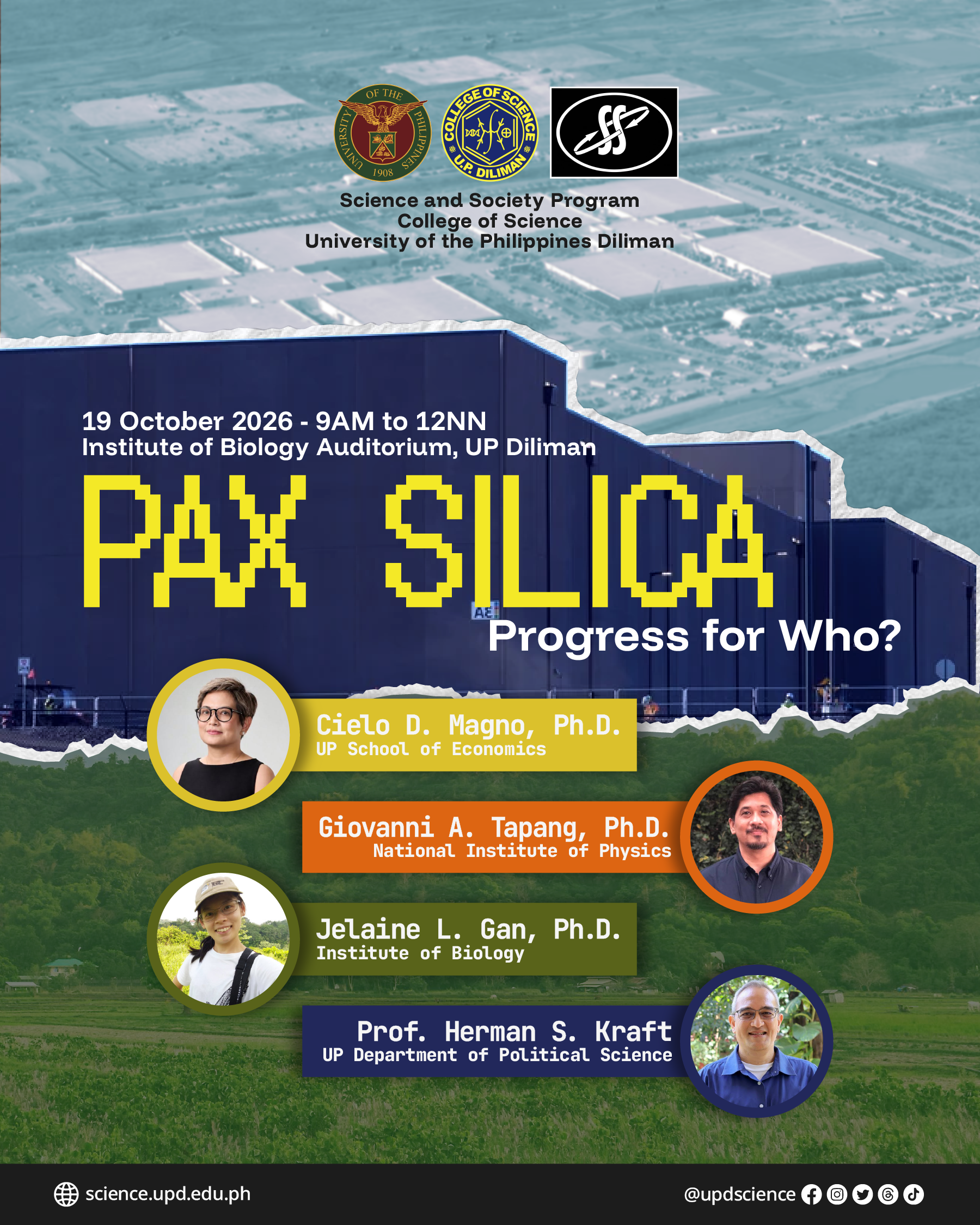
The UP Science and Society Program of the UP Diliman College of Science invites everyone to the "Pax Silica: Progress for Who?" Public Forum on Monday, 19 October 2026, from 9:00 AM to 12:00 NN at the Institute of Biology Auditorium.
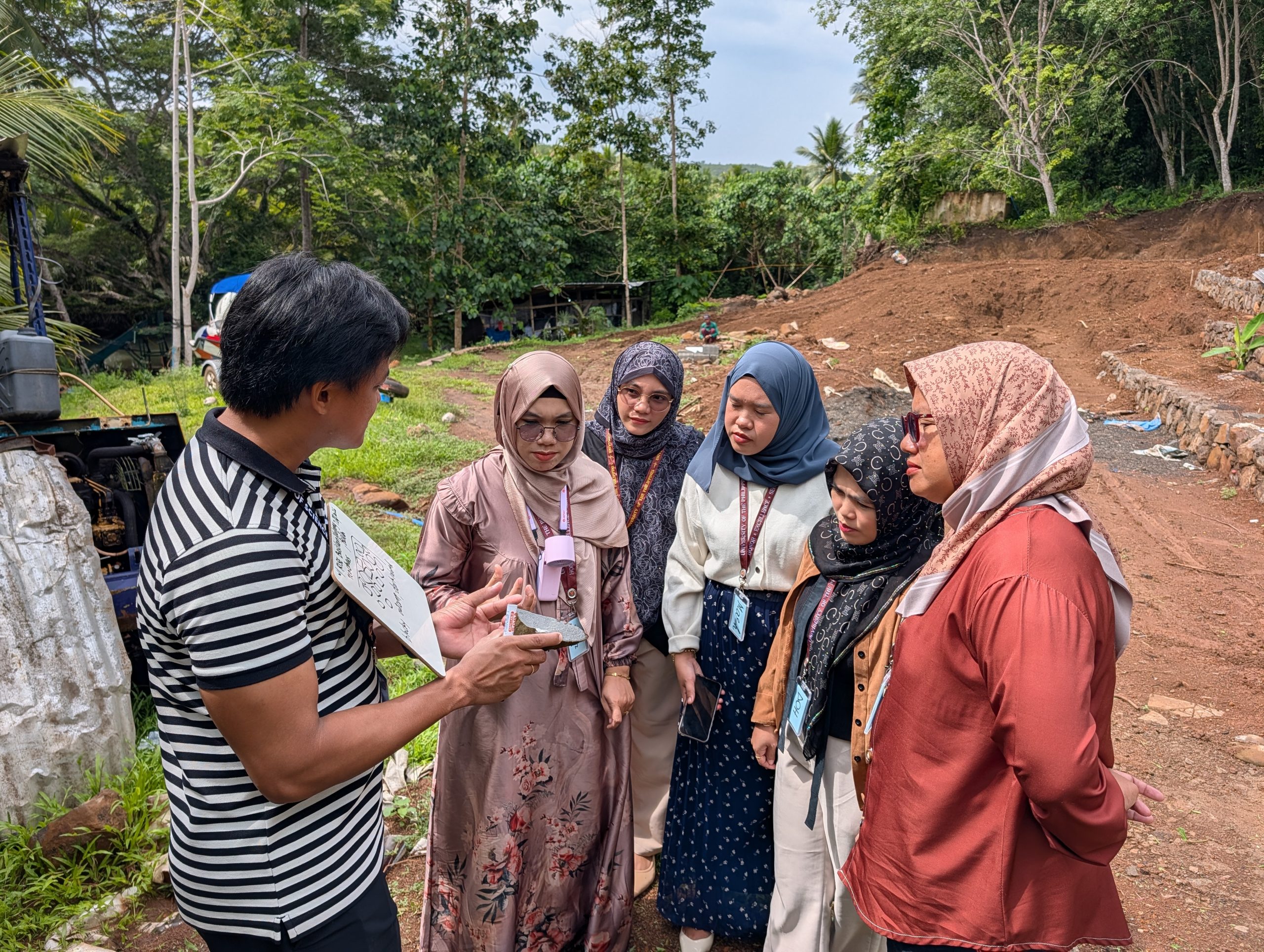
Ang mga mag-aaral sa mga lalawigan na malayo at mahirap ang kalagayang pangkabuhayan sa Pilipinas ay madalas na nahaharap sa mga hamon upang makakuha ng mataas na marka sa mga college entrance exam, lalo na sa agham. Marami sa kanila ang nakatuntong sa senior high school nang may kulang sa batayang kaalaman, sanhi na rin ng limitadong pagkakataon sa patuloy at nakatutok na pagpapaunlad ng propesyon para sa mga guro. Kapag mismo ang mga guro ay nahihirapan sa mga pangunahing konsepto ng agham, nagiging mas mahirap ding patatagin ang pag-unawa at kasanayan sa paglutas ng problema ng mga mag-aaral.
Students in geographically remote and economically disadvantaged provinces in the Philippines often face barriers to performing well in college entrance exams, particularly in science. Many enter senior high school with gaps in foundational knowledge, partly due to limited access to sustained, content-focused professional development for teachers. When teachers struggle with core scientific concepts, it can be challenging to strengthen students’ understanding and problem-solving skills.
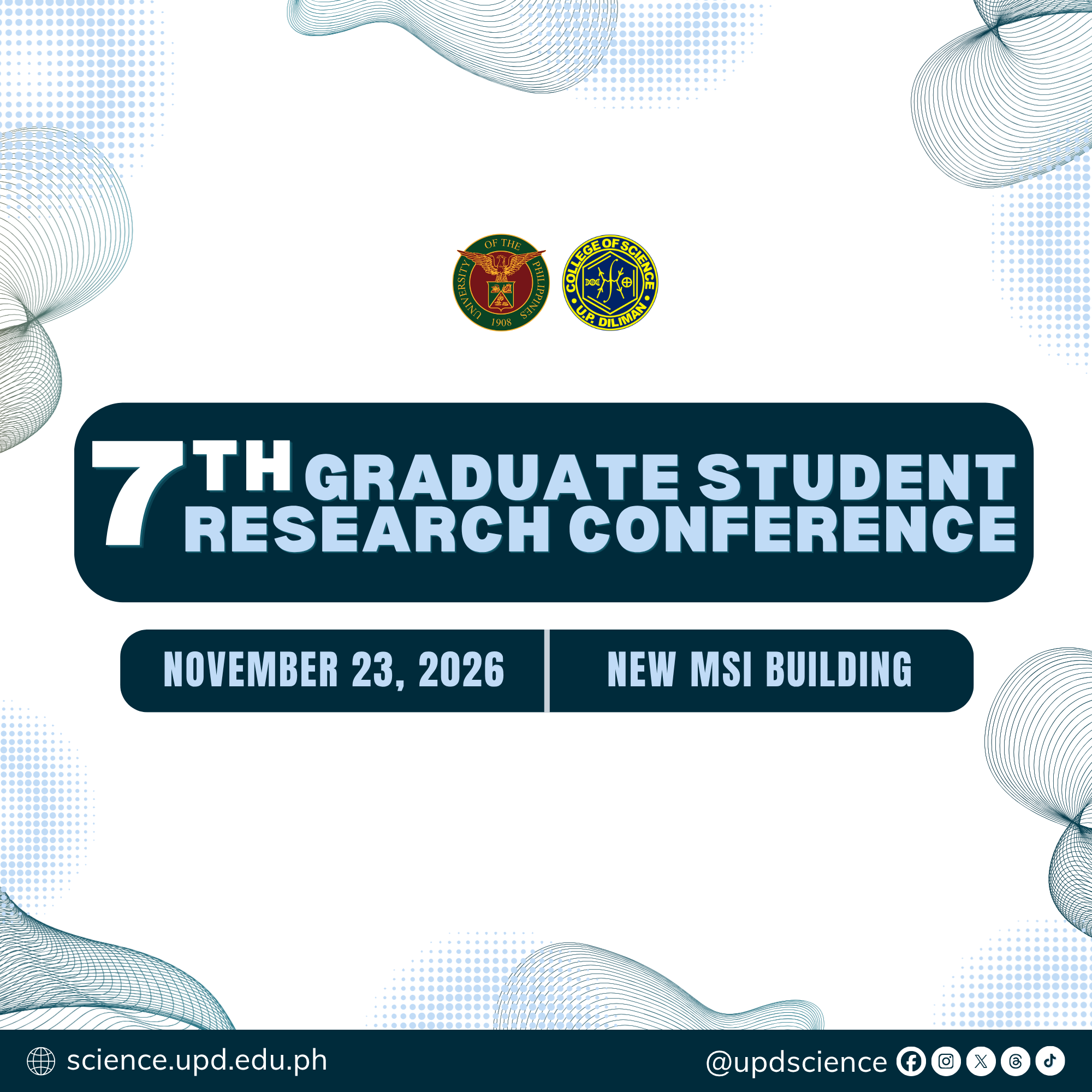
The College of Science of the University of the Philippines Diliman (UPD-CS) invites its current graduate students and recent graduates to present their research works during the GSRC2026 to be held on November 23, 2026 (Monday), at the New MSI Building. Aside from showcasing your research, the GSRC is also a venue to link and promote collaboration among other graduate students and faculty members from the different institutes within UPD-CS.
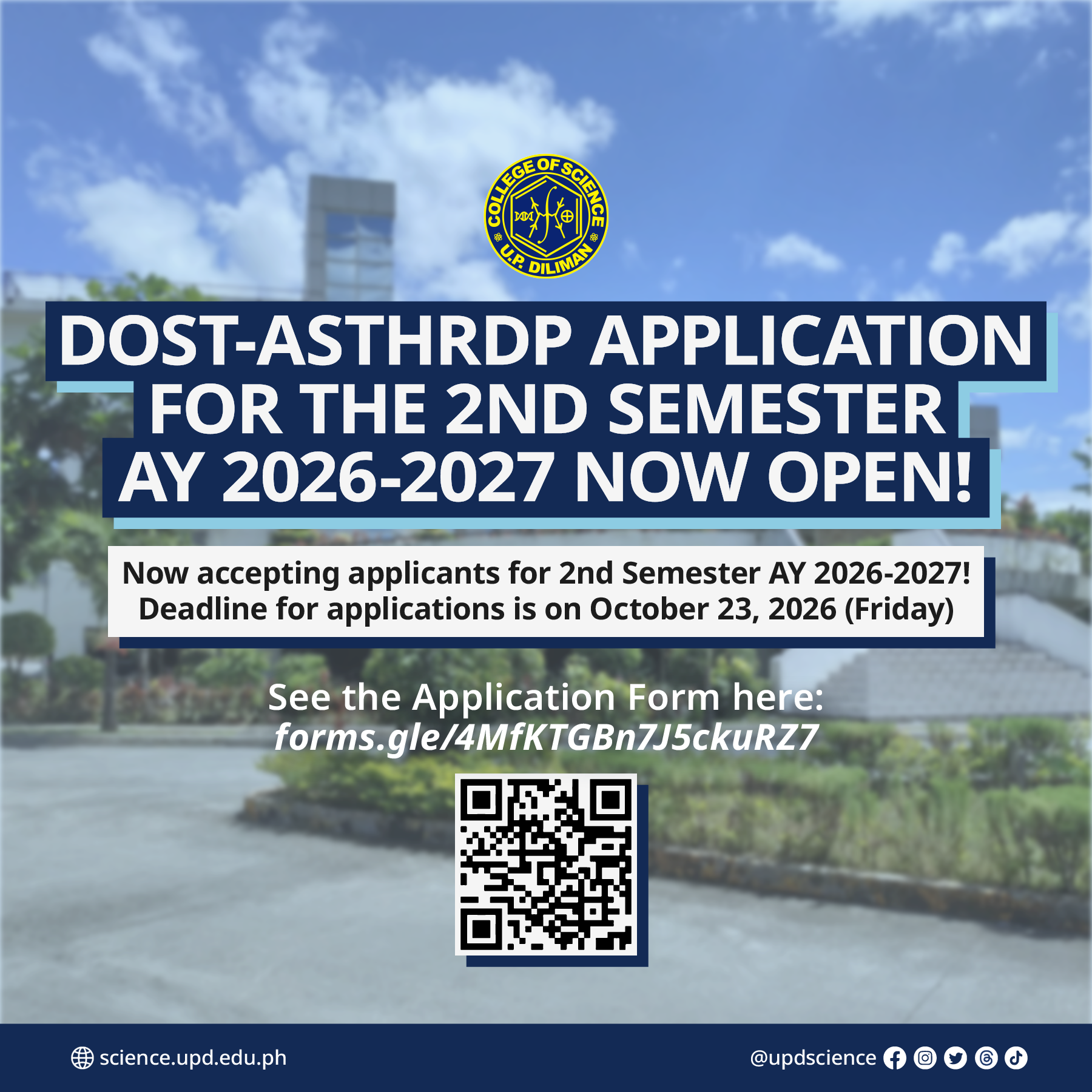
DOST-ASTHRDP Application for the 2nd Semester AY 2026-2027 is now open! Deadline of applications is on October 23, 2026 (Friday).
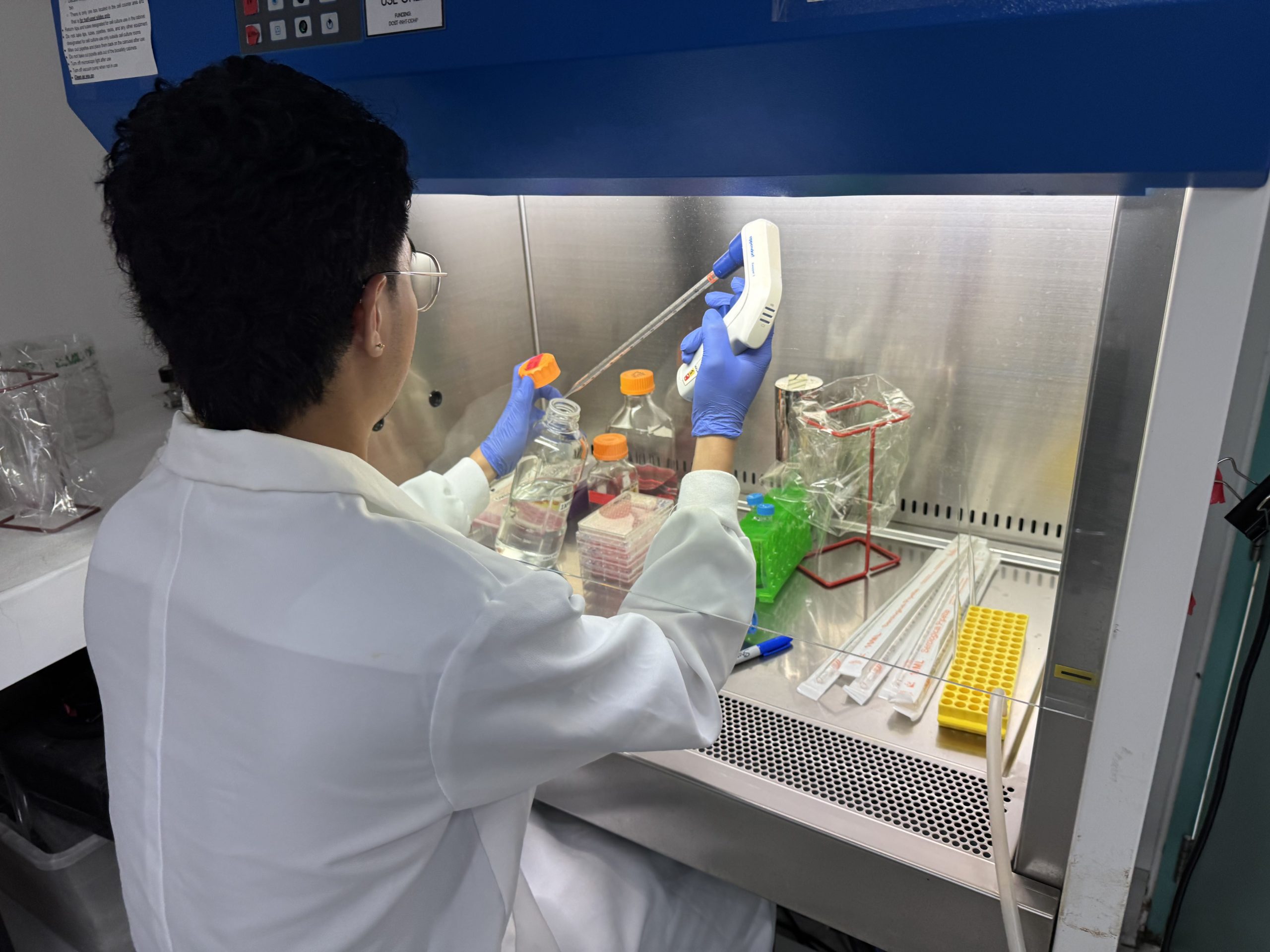
Naglabas ng mga bagong ebidensya ang mga siyentipiko mula sa University of the Philippines Diliman (UPD) ukol sa tumorigenic effects ng vaping na nagiging sanhi ng hindi kontroladong pagdami ng mga selula, at iba pang abnormalidad na nakikita sa kanser. Nakatulong ito upang bigyang linaw ang mga ulat kamakailan na nagpapakitang ang usok ng e-cigarettes ay maaaring magdulot ng malaking pagbabago sa transcriptome ng respiratory epithelia.