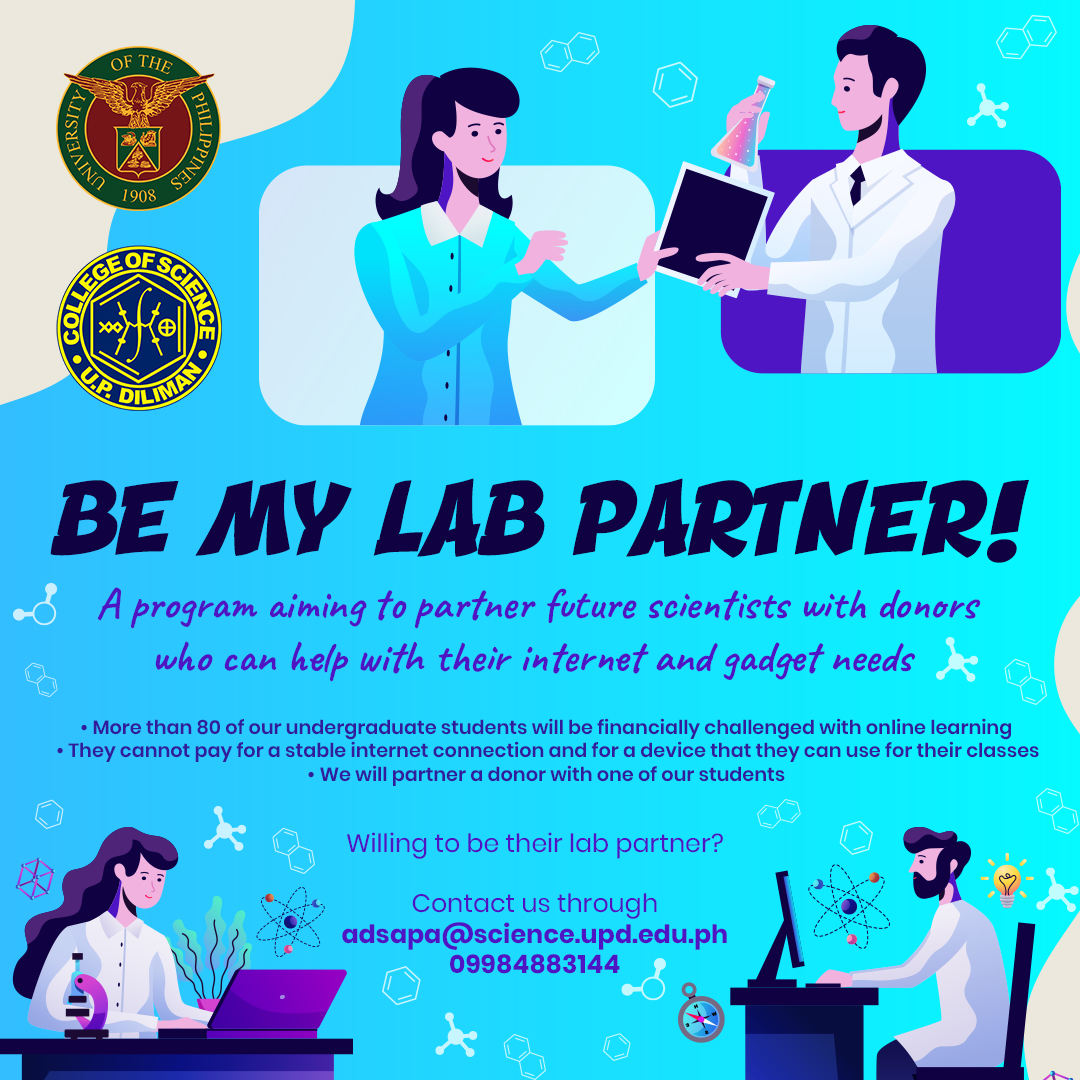
Be my Lab Partner Program
SCIENCE – University of the Philippines Diliman
1. Apply for Clearance from Office for Student Ethics (OSE) https://bit.ly/sdcclearance
2. Fill in completely the necessary information here https://bit.ly/applicationforGMC
3. The certificate will be emailed back to you in 1-2 days.
1. Apply for Clearance from Office of Student Ethics (OSE) https://bit.ly/sdcclearance
2. Fill up College Property Clearance Form.
3. Email College Property Clearance Form to the following:
Institute of Biology – biology.upd@up.edu.ph
Institute of Chemistry – lsbagarino@up.edu.ph
National Institute of Geological Sciences – egaviera@up.edu.ph
National Institute of Molecular Biology and Biotechnology – mmatmat@mbb.upd.edu.ph
National Institute of Physics – nippropertyclearance@nip.upd.edu.ph
College of Science Library – cslib@science.upd.edu.ph
OADSAPA (LAST SIGNATORY) – adsapa_staff@science.upd.edu.ph
Requirement: Clearance from Office of Student Ethics (OSE)
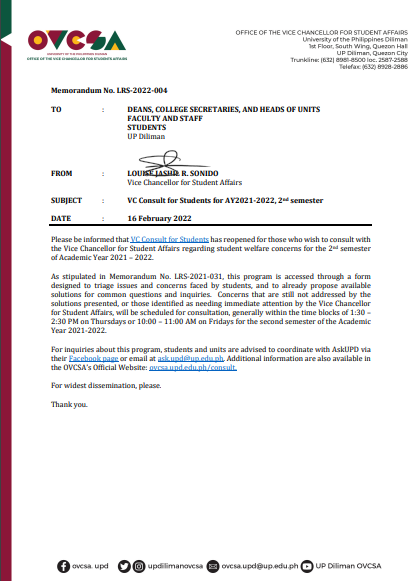
Please be informed that VC Consult for Students has reopened for those who wish to consult with the Vice Chancellor for Student Affairs regarding student welfare concerns for the 2nd semester of Academic Year 2021 – 2022.
As stipulated in Memorandum No. LRS-2021-031, this program is accessed through a form designed to triage issues and concerns faced by students, and to already propose available solutions for common questions and inquiries. Concerns that are still not addressed by the solutions presented, or those identified as needing immediate attention by the Vice Chancellor for Student Affairs, will be scheduled for consultation, generally within the time blocks of 1:30 – 2:30 PM on Thursdays or 10:00 – 11:00 AM on Fridays for the second semester of the Academic Year 2021-2022.
For inquiries about this program, students and units are advised to coordinate with AskUPD via their Facebook page or email at ask.upd@up.edu.ph. Additional information are also available in the OVCSA’s Official Website: ovcsa.upd.edu.ph/consult.
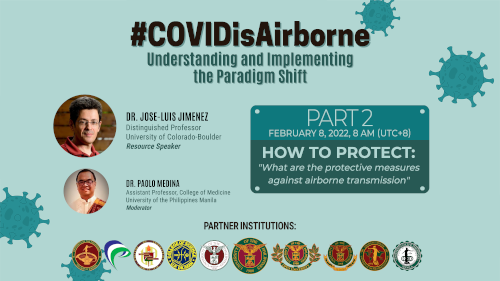
Established safety protocols are not enough to reduce the growing number of COVID-19 cases
In the second part of the #CovidIsAirborne webinar, resource speaker Prof. Jose-Luis Jimenez emphasized the insufficiency of the current preventive measures that are in place to mitigate the spread of COVID-19. Filipinos continue to suffer from the spread of the virus especially with the presence of the more infectious Omicron variant. That being said, Prof. Jimenez stresses that the safety designs implemented are flawed and built around the belief that the virus is transmitted through surfaces and droplets despite the truth of it being airborne.
Where do we go from here?
Many have grown accustomed to the sense of safety that is given by the current protocols but the rise in cases to around 3.6 million, according to the most recent report from WHO, shows the inadequacy of these conventions in preventing the spread of disease. Current policies enforced by DOH may be outdated and require improvement around the basis of airborne transmission to alleviate the growing number of cases. Proper public dissemination of the airborne transmission of COVID-19 and the use of proper equipment should also be made a priority.
Social distancing is not enough
One of the current policies provided by WHO recommends at least a one-meter distance but data from the U.S. Environmental Protection Agency (U.S. EPA) shows that airborne transmission of the virus can occur at distances greater than six feet and the virus can remain in a room or linger for hours despite the absence of the infected person.
Proper Equipment
Prof. Jimenez also mentioned that many are misled by false information regarding masks and their efficiency in filtering out the virus, when in fact, many factors contribute to its filtration efficiency. Most critical is the mask fit, as gaps on the sides or beneath the mask still allow particles to get in without filtration. The best recommended mask is the N95, however, the use of surgical masks is still widely acceptable to prevent transmission. Meanwhile, cloth masks are ineffective and should not be allowed in high prevalence areas.
Ventilation
Because COVID is an airborne disease, the risk of contracting it is higher indoors. Prof. Jimenez suggested that activities be performed outside, where ventilation is the greatest. Supporting this, a historical example that he mentioned was that in 1907, when tuberculosis was rampant in American cities. Doctors from Rhode Island proposed open-air schoolrooms to mitigate the spread of the disease among children, later proving successful when none of the children got sick.
To monitor ventilation, he also suggested the use of carbon dioxide (CO2) meters to indicate how much exhaled air there is in an area. The amount of CO2 can be correlated with the amount of viral particles present and can help determine if an area is properly ventilated. A device that Prof. Jimenez uses to detect the amount of CO2 is an NDIR (nondispersive infrared sensor).
Preventive measures and equipment can be costly but can and will help contribute in alleviating the spread of disease. However, as Prof. Jimenez says, improvements of safety protocols are still met with resistance by government officials as a reflection of our current COVID response.
For now, proper information dissemination is critical for the public to improve safety conditions on their own and for the unaware to be better informed. As the improvement of COVID responses are met with resistance, many of us need to take into account individual safety and our obligation to the safety of others. Simple deeds such as wearing proper masks and talking less to prevent the spread of aerosols can still make a big difference in this long standing battle with COVID-19.
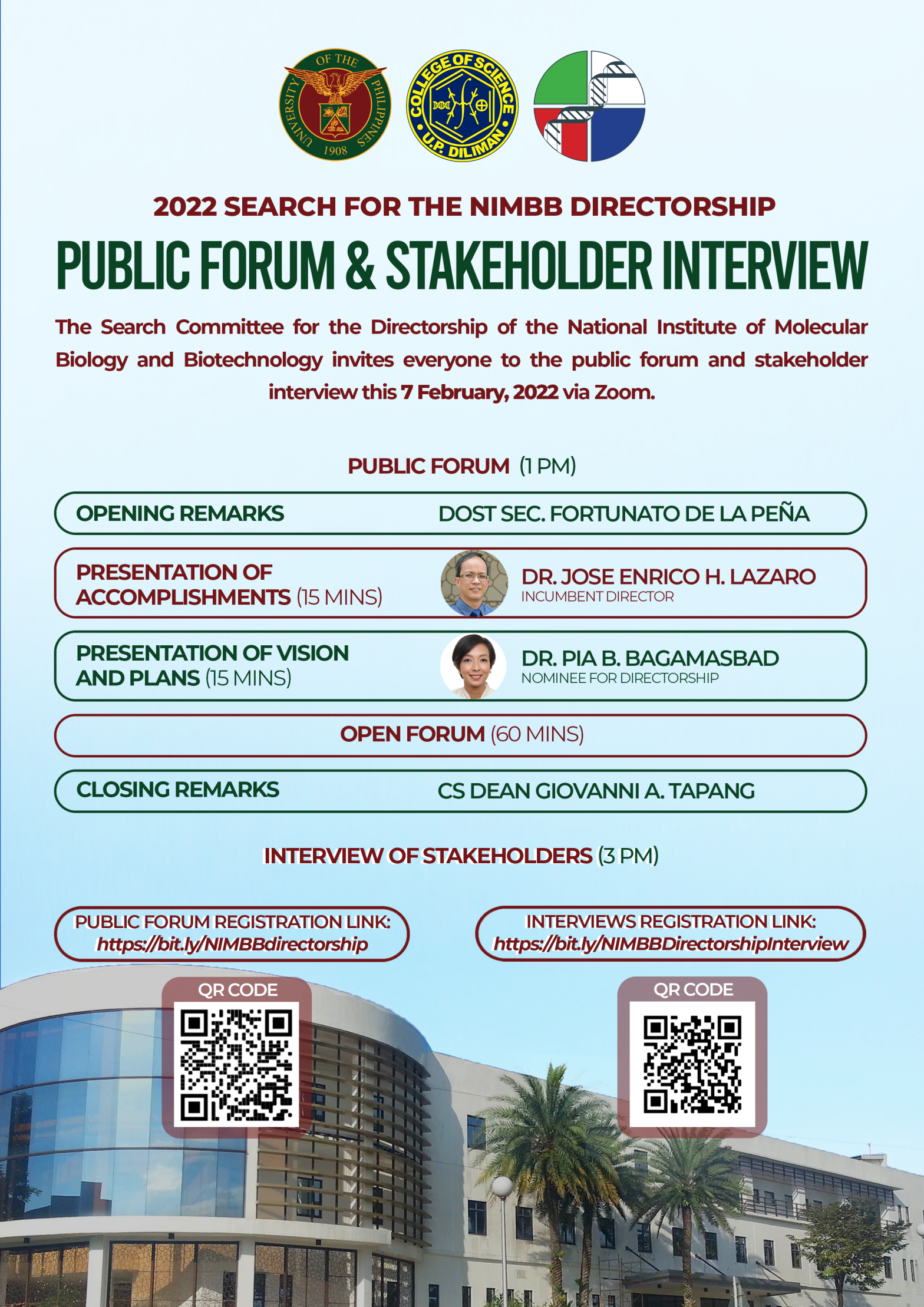
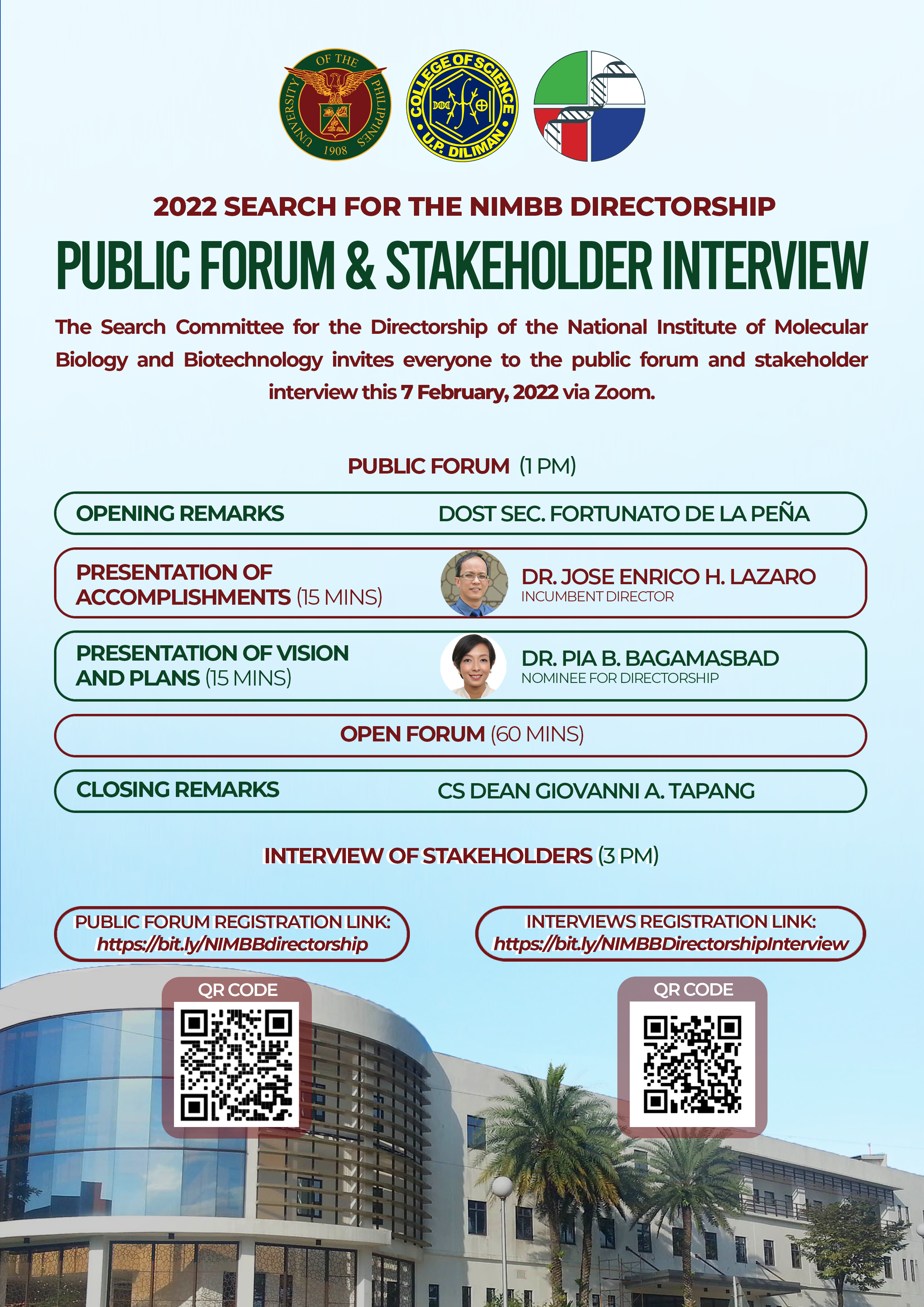
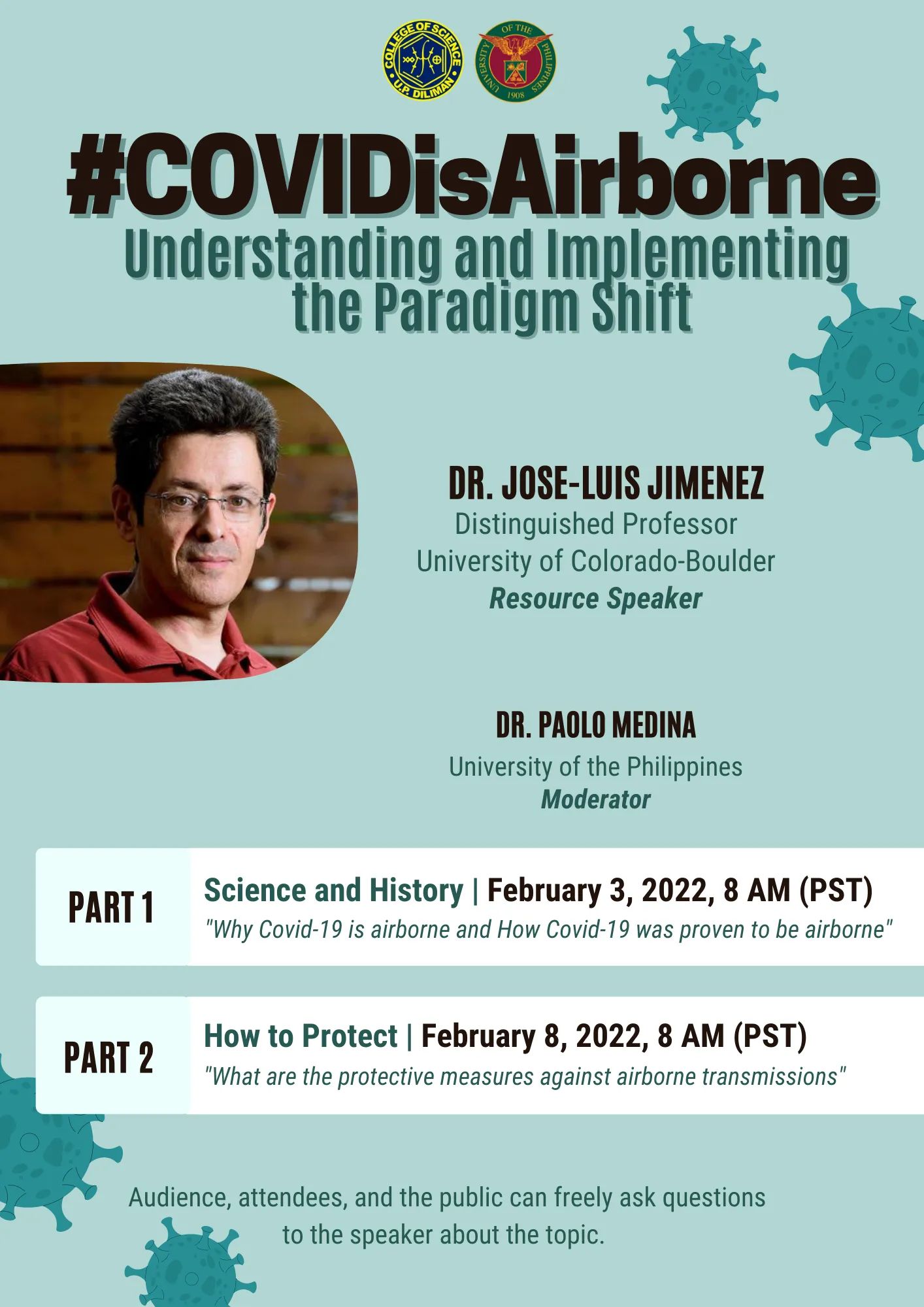
Everyone is invited to join the first part of the “#COVIDisAirborne: Understanding and Implementing the Paradigm Shift” on 3 February 2022, 8:00 AM (PST).
Dr. José Luis Jiménez, a professor of Chemistry at the University of Colorado Boulder and one of the most highly-cited authors in 2021, will discuss the science and history behind airborne transmissions, focusing on equipping people with the necessary tools to adapt to the paradigm shift.
Visit https://tinyurl.com/airbornepart1 to register. See you!