Category Archives: Latest News
UPD-CS celebrates 40 years with Science Film Festival in partnership with Goethe Institut
Published: October 24, 2023
By: Eunice Jean C. Patron
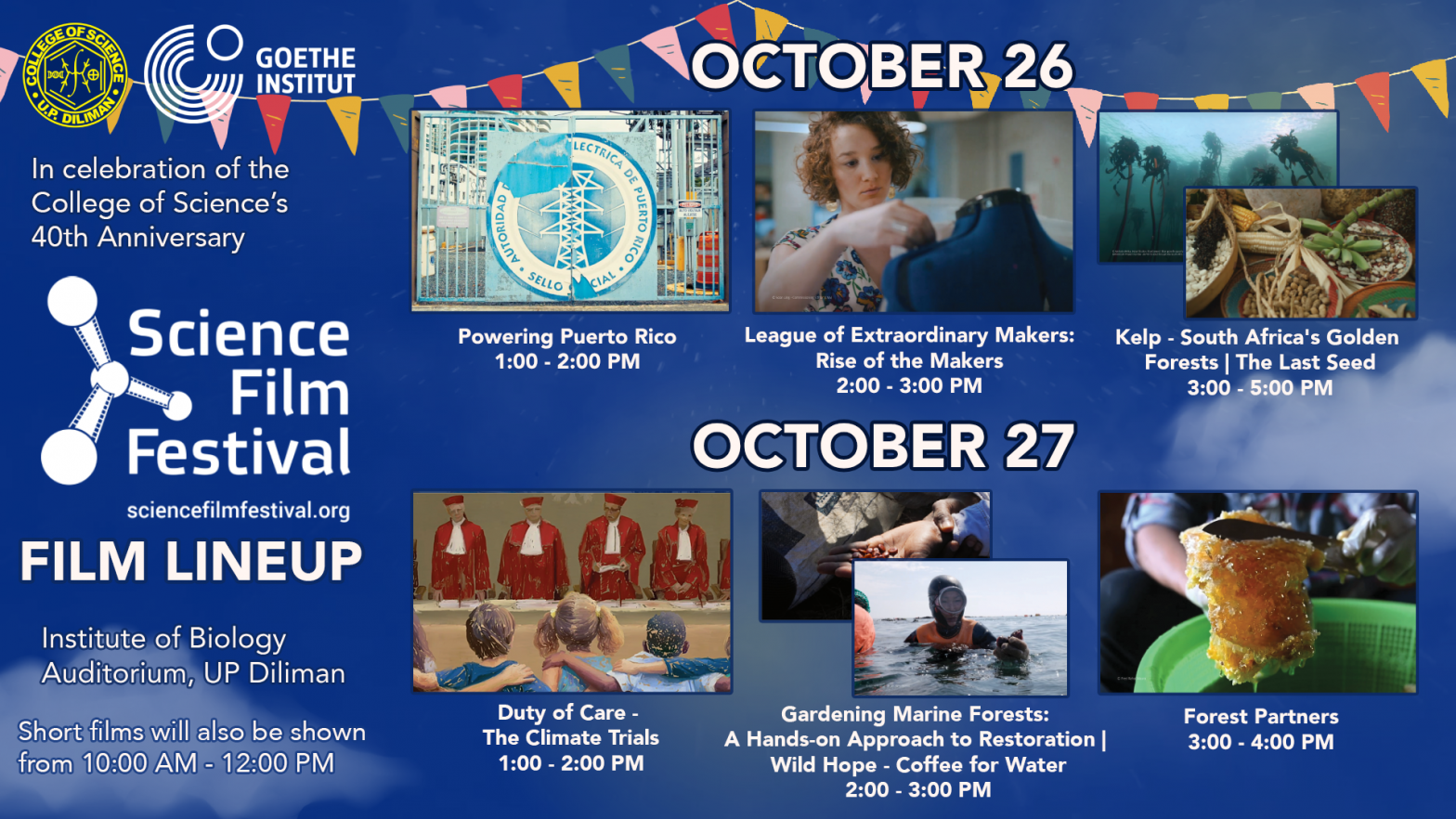
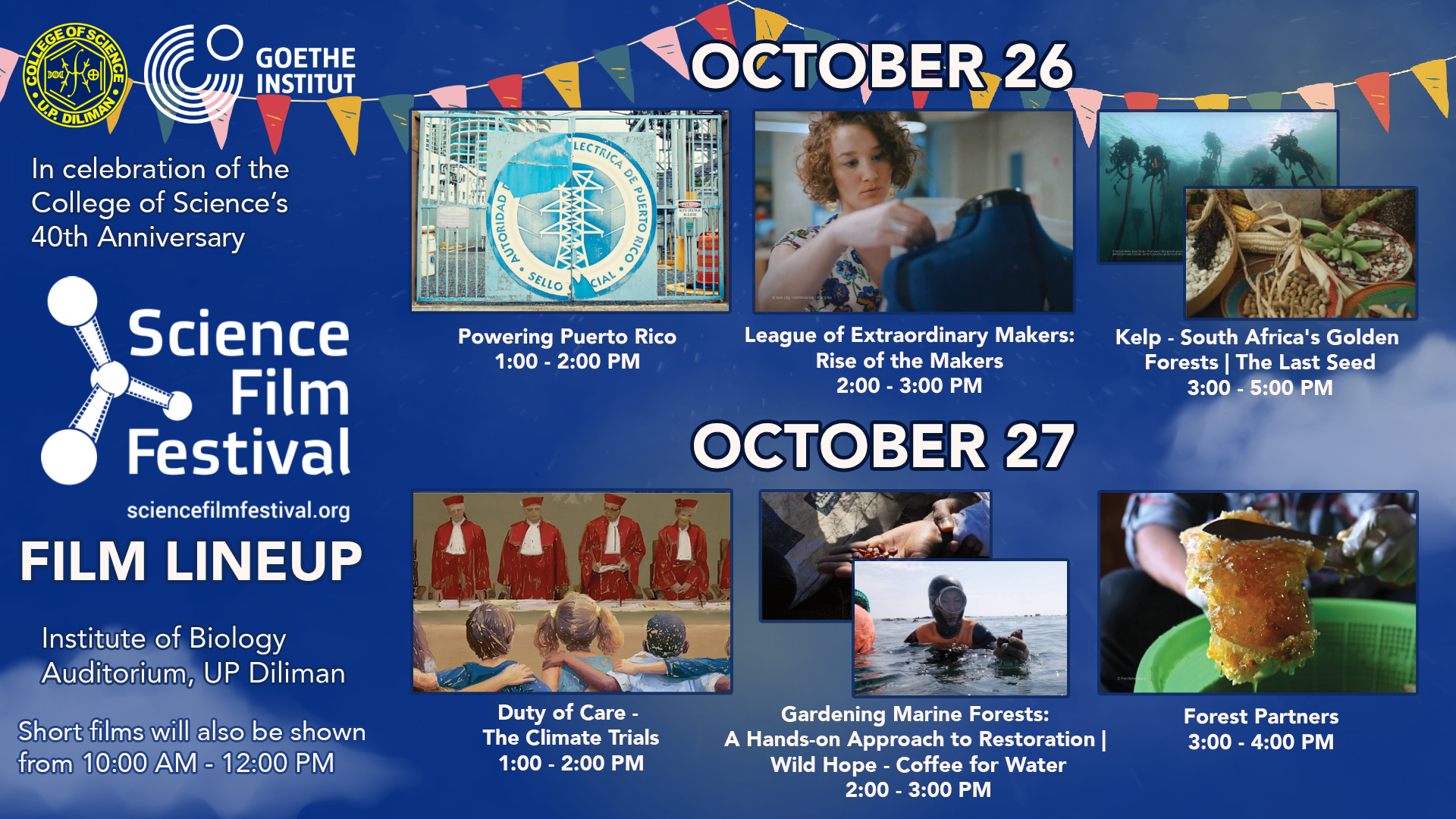
In celebration of its 40th Anniversary, the UP Diliman College of Science in partnership with the Goethe-Institut is providing free university and public screenings of the Philippine Science Film Festival Philippines 2023.
The two days of screenings (see schedule below) will kick off on the College’s Anniversary on Thursday, October 26, and will be held at the UPD-CS Institute of Biology Auditorium at the National Science Complex, UP Diliman. Students and members of the public are free to attend but may be asked to show a valid university or government ID for security purposes.
Founded in 1983, the UP Diliman College of Science is the country’s premier generator of new scientific knowledge and the leading producer of PhD and MS graduates in the basic and applied sciences and mathematics. In 2023 alone, the College graduated 19 PhDs, the most in its four-decade history.
The Science Film Festival Philippines, now in its 14th year, will be held from October 25 to December 01, 2023. Celebrated as one of the biggest and longest-running science events in the Philippines, the festival offers a roster of 34 science-related films in support of the United Nations Decade on Ecosystem Restoration.
FILM SCHEDULES
DAY 1 (October 26, Thursday)
Short Film Entries
10:00 AM – 12:00 PM
Ranging in length from 6 minutes to 10 minutes, these brief documentaries cover a range of topics from “The Forgotten Forest” to “Redesigning the Wheel”.
Powering Puerto Rico
1:00 PM – 2:00 PM
This is a film about a Northeastern University professor’s innovative solution to provide affordable renewable power to Puerto Rico using reconditioned hybrid car batteries after Hurricane Maria left millions without electricity.
A League of Extraordinary Makers: Rise of the Makers
2:00 PM – 3:00 PM
A documentary exploring the rise of the Maker Movement, highlighting individuals who create, innovate, and hack a wide range of products and technologies, from everyday items to groundbreaking innovations, as they become the heroes of this movement.
Kelp – South Africa’s Golden Forests | The Last Seed
3:00 PM – 5:00 PM
“Kelp” explores the hidden beauty and importance of the Great African Seaforest on South Africa’s Western coastline, emphasizing its contributions to livelihoods, conservation, and cultural heritage while advocating for its sustainable management in the face of climate change.
“The Last Seed” is a close-up look at the challenges facing food and agriculture in 21st-century Africa, with a central focus on the control of seeds, while raising questions about lost values and the search for sustainable solutions, using music, dance, visuals, and the experiences of small-scale food producers and experts.
DAY 2 (October 27, Friday)
Short Film Entries
10:00 AM – 12:00 PM
Ranging in length from 6 minutes to 10 minutes, these brief documentaries cover a range of topics from “The Forgotten Forest” to “Redesigning the Wheel”.
Duty of Care – The Climate Trials
1:00 PM – 2:00 PM
Lawyer Roger Cox’s pioneering legal actions against the Dutch government and Shell resulted in landmark climate rulings that sparked a global wave of climate cases, with a cast of characters and experts exploring the principles of justice in addressing humanity’s greatest climate challenge.
Gardening Marine Forests: A Hands-on Approach to Restoration | Wild Hope – Coffee for Water
2:00 PM – 3:00 PM
In “Gardening Marine Forests,” two marine scientists explore how a hands-on approach to marine restoration is reviving kelp forests in South Korea by emphasizing the deep connection between people and the ocean, showcasing inspiring examples of community involvement and sustainable practices.
“Coffee for Water” showcases the inspiring change-makers who are actively restoring and safeguarding the environment. With a focus on growing coffee to preserve Mozambican rainforests, this film emphasizes the power of local actions and offers a hopeful perspective.
Forest Partners
3:00 PM – 4:00 PM
This documentary explores the symbiotic relationship between public and private organizations, local communities, and tropical forests, showcasing innovative solutions that blend technology and traditional knowledge to protect and sustainably manage these landscapes, with a focus on success stories from South America, Africa, and Asia.
For further inquiries, please message media@science.upd.edu.ph
UP scientists make composite flowers to fight cancer-causing dyes
Published: October 6, 2023
By: Timothy James M. Dimacali
Scientists from the University of the Philippines – Diliman College of Science (UPD-CS) have simplified the process of making microscopic composite flowers that can neutralize the highly carcinogenic azo dyes widely used in food, clothes, and medicines.
Azo dyes are synthetic colorants that come in a variety of vivid colors, including red, orange, and yellow. They were commonly used in everything from denim and leather to soft drinks and jams. However, it was discovered that some azo dyes are closely linked to bladder cancer. Moreover, the regulated use and safe disposal of these carcinogenic azo dyes remain a global concern.
A new material that may help to safely degrade azo dyes was recently investigated by Enrico Daniel R. Legaspi, Prof. Michelle D. Regulacio, and Leila Andrea E. Pineda from the Institute of Chemistry (UPD-CS IC); Luce Vida A. Sayson of the Material Science and Engineering Program (UPD-CS MSEP); and colleagues from Singapore’s Agency for Science, Technology, and Research (A*STAR).
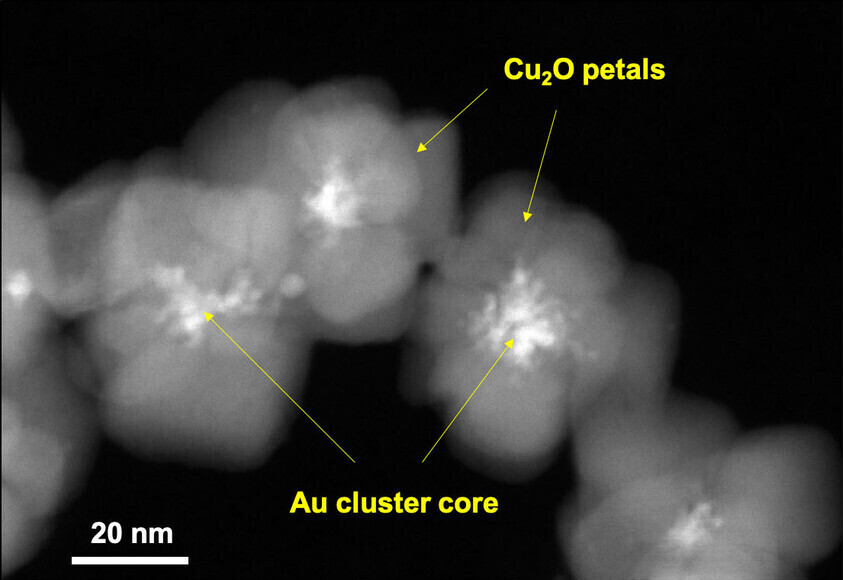
The nanocomposite material exhibits a flower-like structure, each just around 50 nanometers in diameter or less than half the width of a human hair, with a gold (Au) center surrounded by petal-like copper oxide (Cu2O) crystals. It was found that this configuration greatly enhances Cu2O’s ability to catalyze the breakdown of azo dyes into harmless chemicals.
The researchers said that this is the first time that this flower-like configuration has been synthesized in a single manufacturing setup, thereby paving the way for easier and more affordable production.
“The one-pot synthesis protocol presented in this work is a more straightforward and less laborious approach that does not require a separate pre-synthesis step. Furthermore, the synthesis can be conveniently performed at ambient conditions using nontoxic reagents,” the researchers explained in their paper.
“The uniquely designed Au-Cu2O nanoflowers were found to effectively catalyze the borohydride-mediated degradation of synthetic azo dyes. The hybrid exhibited superior catalytic activity relative to pristine Cu2O, underscoring the significance of creating a nanocomposite,” they added.
For interview requests and other concerns, please contact media@science.upd.edu.ph.
References:
Legaspi, E. D. R., Regulacio, M. D., Pineda, L. A. E., Sayson, L. V. A., Jiang, W., Heng, J. Z. X., Wu, W., & Ye, E. (2023). Facile One‐Pot Synthesis of Uniquely Designed Au−Cu2O Nanocomposites for Effective Catalytic Degradation of Azo Dyes. ChemistrySelect, 8(25), e202300904. https://doi.org/10.1002/slct.202300904
Bee nests inspire UP scientists to make new ‘smart’ materials
Bee nests inspire UP scientists to make new 'smart' materials
Published: September 25, 2023
By: Timothy James M. Dimacali
Bee nests are a marvel of natural engineering that have inspired human engineers and inventors for centuries. Now, Filipino researchers are investigating ways to create porous materials that not only mimic the strengths of beehives but are also able to selectively trap microparticles. These new materials have potential uses in everything from water purifiers to medical sensors.
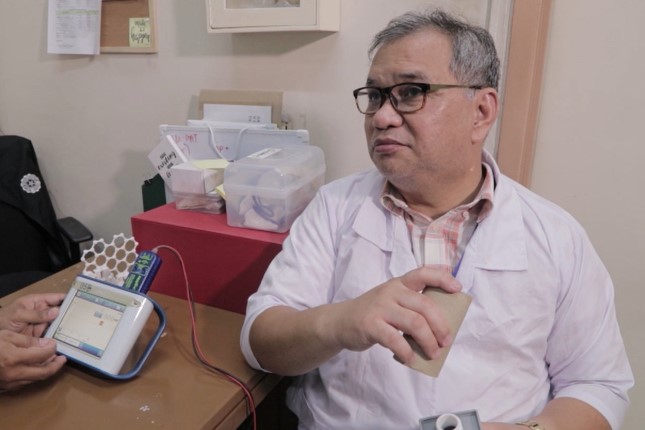
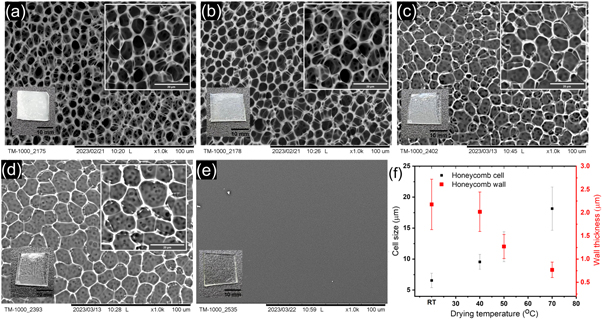
Jonathan Patricio, Gillian Kathryn Yap, Jose Jesus Gayosa, and Dr. Susan Arco of the UP Diliman College of Science’s Institute of Chemistry (UPD-CS IC) and colleagues from the Ateneo de Manila University (ADMU) were able to control the physical properties of porous polyvinyl chloride (PVC) films by adjusting the drying temperature used in the manufacturing process.
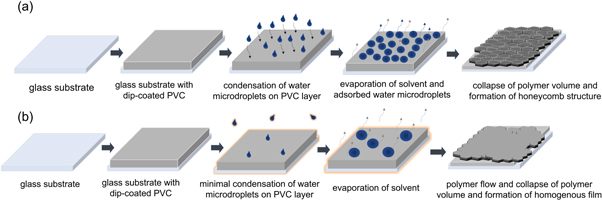
The PVC is formed around droplets of water which, when they evaporate, leave a pattern of microscopic holes reminiscent of a bee’s nest. Such honeycomb structures have long been recognized for their engineering applications:
“One of the most interesting structures inspired by nature is the honeycomb pattern… Its unique properties and structure inspired the construction of light and robust aircraft and spacecraft, protection gear, panels, packaging, and cushioning because of an ability to absorb impact and energy,” the researchers explained in their paper.
“The repeating units of a honeycomb pattern can also effectively trap particles and impurities thus making them a promising structure for air and water filters,” they added.
The researchers also explored the wettability of the various honeycomb PVC materials they created, as well as the potential of selectively trapping microparticles by subjecting the honeycomb to an electric charge.
The study “opens the possibility of integrating polymeric honeycomb structures into substrates used for microparticle trapping, sensing, and other related applications,” the researchers concluded.
For interview requests and other concerns, please contact media@science.upd.edu.ph.
References:
Budlayan, M. L. M., Patricio, J. N., Yap, G. K. B., Gayosa, J. J. A., Arco, S. D., Diaz, J. M. A., & Guerrero, R. A. (2023). Honeycomb pattern formation on poly(Vinyl chloride) films: Electrically-driven microparticle trapping and the effect of drying temperature. Materials Research Express, 10(8), 085304. https://doi.org/10.1088/2053-1591/acefb1
Investigating the role of bird perches in reforestation
Published: September 12, 2023
By: Timothy James M. Dimacali
Reforesting damaged forests is crucial for fighting climate change and protecting wildlife. One common way to do this is by planting trees, but this can be expensive and labor-intensive. A cheaper and more effective approach is Assisted Natural Regeneration (ANR), which can involve the use of bird perches to attract fruit-eating birds that can help spread tree seeds and speed up the natural regeneration of the forest.
Researchers from the University of the Philippines – Diliman College of Science Institute of Biology (UPD-CS IB), the Norwegian Institute for Nature Research, and the UK’s Newcastle University aim to embark on a systematic review and meta analysis of previous studies and observations to figure out how well artificial and natural perches work in increasing seed dispersal and seedling growth on degraded areas.
“The results will synthesize available evidence on the topic, identify knowledge gaps we need filling to upscale the strategy, and inform their use in concert with other ANR strategies,” the researchers said in their paper. “The search strategy was informed through a literature scan and discussions with stakeholders and experts,” they added.
The meta study aims to see if perches help bring in more seeds and seedlings in terms of numbers and types. The researchers hope to learn how to use perches better and combine them with other strategies to bring damaged forests back to life.
The results of the meta study are expected to be available in 2024.
References:
Gan, J. L., Grainger, M. J., Shirley, M. D. F., & Pfeifer, M. (03 August 2023). How effective are perches in promoting bird-mediated seed dispersal for natural forest regeneration? A systematic review protocol. Environmental Evidence, 12(1), 15. https://doi.org/10.1186/s13750-023-00308-z
Beyond Einstein: Pinay physicist investigates exotic subtonic particles
Beyond Einstein: Pinay physicist investigates exotic subatomic particles
Published: September 5, 2023
By: Timothy James M. Dimacali
Building on Albert Einstein’s work, a Filipina physicist and an international team of researchers recently discovered that a special class of subatomic particles can be described using concepts from the famous scientist’s Theory of Relativity.
UP Diliman College of Science National Institute of Physics (UPD-CS NIP) associate professor Dr. Gennevieve Macam and her colleagues were investigating Weyl fermions, exotic subatomic particles that are similar to electrons but have no mass. They found that the behavior of these particles can be understood by adapting Einstein’s ideas on causality.
Causality refers to how one event can directly lead to another event in a cause-and-effect relationship. Einstein took this idea further when he realized that nothing can travel faster than light. This led to the concept of “light cones,” which represent all the possible paths that light—or any signal moving at the speed of light—can take from a given event in space and time. Anything inside the light cone of an event could potentially be influenced by that event, while anything outside the light cone cannot be affected by it due to the limitation imposed by the speed of light. The outer boundary of this cone is called the “event horizon.”
Dr. Macam collaborated with Prof. Guoqing Chang of Nanyang Technological University and his team. They found that these concepts, which normally apply to space and time, could also be used to describe the behavior of Weyl fermions in terms of energy and momentum.
“Our work shows how Einstein’s equations can be adapted to describe quantum materials,” Dr. Macam said. “This paves the way to a better understanding of how the strange quantum world and our everyday reality are intertwined.”
Weyl fermions were first theorized by German physicist Hermann Weyl in 1929 but their existence was only proven almost a century later, in 2015. Due to their charged but massless nature, Weyl fermions may have future applications in electronics and computers.
References:
Chiu, WC., Chang, G., Macam, G. et al. Causal structure of interacting Weyl fermions in condensed matter systems. Nat Commun 14, 2228 (2023). https://doi.org/10.1038/
Gold Eagle College Scholarship Grant for STEM – AY 2023-2024
Gold Eagle College Scholarship Grant for STEM - AY 2023-2024
The Gold Eagle College Scholarship Grant for STEM aims to support intelligent and deserving students who need financial assistance to have access to the best education they need to improve their lives, their homes, and the country.
Who can apply?
The scholarship program will choose eleven (11) students from UP Diliman: two (2) for BS Mathematics, four (4) for BS Statistics, and five (5) from any Science, Technology, and Engineering courses, including the following:
- Applied Physics
- Biology
- Chemistry
- Geology
- Mathematics
- Molecular Biology and Biotechnology
- Physics
What are the scholarship benefits?
- Financial assistance every semester to cover for the stipend, and transportation and book allowance.
- Scholars who graduate with honors will receive cash incentives from Insular Foundation.
- Scholars and alumni of the program will have access to Insular Foundation’s network, leadership training, and other capacity-building programs.
How will I know if I am qualified?
- You must be a bona fide student at UP Diliman, enrolled in any of the courses previously listed;
- You must be an incoming 1st year college student, and must have passed UPCAT;
- You must have a general weight average (GWA) of 85% in Grade 11 and Grade 12 up to the first term or second grading period;
- You must be enrolled in at least 15 units at the time of the award of the grant;
- Your parents’ annual gross income must not exceed P500,000.00;
- You must not have been liable for any disciplinary action worse than a five-day class suspension in Senior High School; and
- You must not be a recipient of any other scholarship grant at the time of the grant.
What are the requirements?
- Duly Accomplished Application Form – https://tinyurl.com/GoldEagle2023ApplicationForm
- 2×2 photo in white background
- Certified True Copy of Grade 11 and Grade 12 Report Card with General Weighted Average (For the Grade 12 Report Card, available grades should be up to the first term or second grading period at the minimum.)
- Certified True Copy of BIR Latest Income Tax Return (ITR). If not available, submit a Notarized Affidavit of Source of Income.
- Note: Both parents, legal guardian (if applicable), and siblings (if working) should have an ITR or notarized affidavit of source of income. Download template here: https://tinyurl.com/GoldEagle2023AffidavitIncome
- Certified True Copy of Certificate of Registration/Admission in UP Diliman
What are the dates I should remember?
- September 10, 2023: Deadline of submission of applications
- November 2023: Announcement of Newly Admitted Scholars and Scholar Onboarding
Where can I submit my application?
- Submit your application to https://tinyurl.com/GoldEagle2023ApplicationForm.
For more information, visit https://www.insularfoundation.com.ph/news/gold-eagle-college-scholarship-grant-for-stem-ay-2023-2024-183 or email Insular Foundation at info.foundation@insular.com.ph.
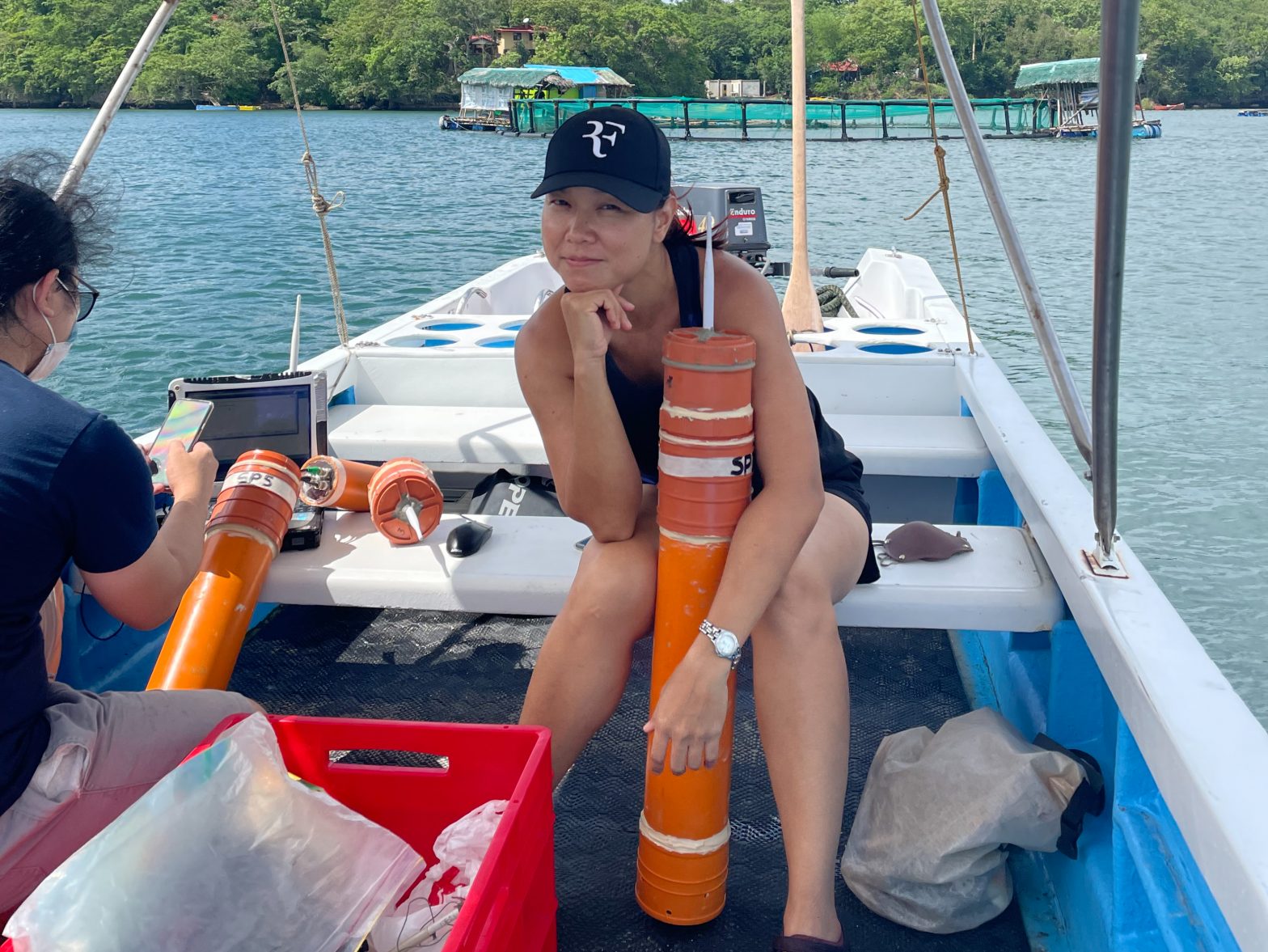
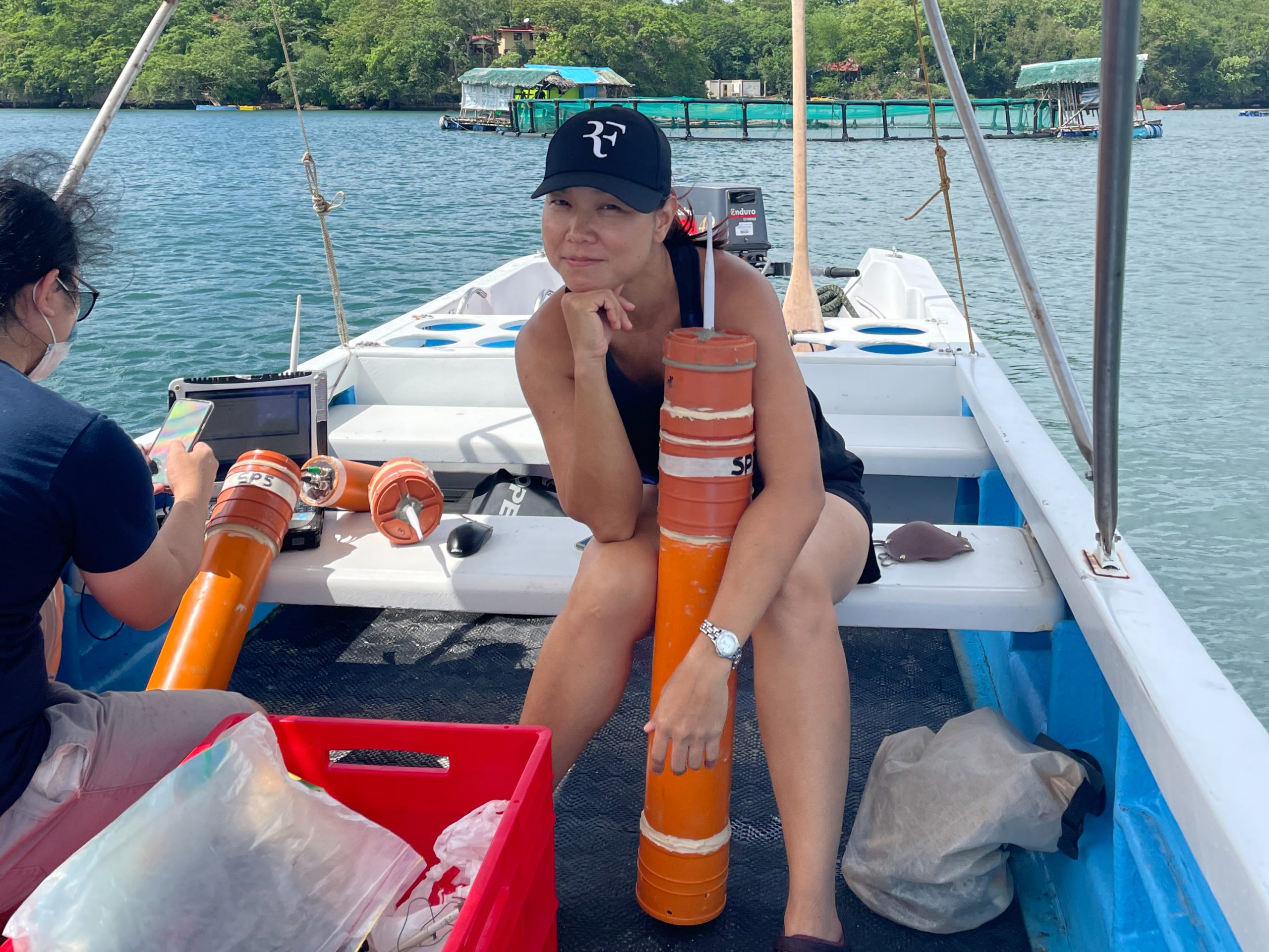
Tañon Strait dolphins declining and in peril
Published: August 16, 2023
By: Timothy James M. Dimacali
Researchers from the University of the Philippines – Diliman College of Science (UPD-CS) are warning that unchecked ecotourism and overfishing are threatening the cetacean biodiversity of the famous and richly diverse Tañon Strait.
A narrow passage of water between Cebu and Negros islands, Tañon Strait is renowned worldwide for its rich marine life. It is home to numerous cetaceans, including 15 species of dolphins and whales. However, recent findings suggest that the populations of these marine creatures are on a fast decline.
“We encountered only between 80 and 90 individual spinner dolphins throughout our four-day survey. This is in stark contrast to surveys in previous years, where we might spot as many as 100 to 500 individuals in just one day,” said Dr. Lemnuel Aragones, head of the UPD-CS Institute of Environmental Science and Meteorology’s Mammal Research and Conservation Laboratory (UPD-CS IESM MMRCL).
Tañon Strait, designated as a protected seascape in 1998 under Presidential Proclamation No. 1234, has been a sanctuary for a diverse array of marine species. A popular destination for ecotourism, particularly dolphin and whale watching, the strait has attracted numerous visitors eager to witness these remarkable animals in their natural habitat.
Dr. Aragones spearheaded the survey from July 20 to 23, focusing on dolphin populations within the southern part of Tañon Strait. The initiative revealed deeply concerning trends, such as a decrease in dolphin numbers, a reduction in species diversity, and evasive behavior possibly linked to increasing human activity in the area.
In the past, these surveys witnessed vibrant gatherings of diverse species of cetaceans—including numerous kinds of dolphins and species of whales, with groups of as many as 100 individuals spotted in a single day. However, the recent survey was starkly different, showcasing only three species: spinner dolphins, common bottlenose dolphins, and dwarf sperm whales.
Of particular concern was the notably evasive behavior of the dolphins, a possible sign of stress or disturbance due to the persistent presence of aggressive dolphin watching boats. Dr. Aragones and his team, who have been monitoring the region since 1997, noted a significant increase in the number of dolphin watching boats, even notwithstanding the destruction caused by Super Typhoon Odette in 2021.
The area now hosts around 60 boats, down from the original 260. Nevertheless, Dr. Aragones fears that this may still be too much: “Too many dolphin watching boats in the area disrupts the cetaceans’ habits,” he said.
Dr. Aragones also warned against the overutilization of the area’s resources. “There should also be a comprehensive assessment of fisheries resources in the entire Strait as there is clearly less food now for these creatures,” he explained.
To preserve the delicate ecosystem and to safeguard the remarkable marine mammals in Tañon Strait, the scientists have proposed several measures. First, they recommend a moratorium on adding more boats to the already existing fleet. Second, a comprehensive assessment of fisheries resources including fishing activities in Tañon Strait is essential, as a decline in food availability may be exacerbating the dolphins’ struggles. Furthermore, strict monitoring and regulation of illegal unreported and unregulated (IUU) fishing practices in the area are necessary.
Dr. Aragones emphasized the importance of educating boat operators on responsible dolphin watching protocols. A certification process that trains operators to navigate around dolphins without causing stress could play a pivotal role in protecting these charismatic animals. Research also suggests that previous ecotourism activities negatively impacted dolphin behavior, reinforcing the need for responsible and sustainable tourism practices.
The findings from this survey underscore the critical situation facing dolphins in Tañon Strait. Urgent action is imperative to ensure the survival of these magnificent creatures and to maintain the delicate balance of the marine ecosystem they inhabit.
For interview requests and other concerns, please contact media@science.upd.edu.ph.
‘Huwag bibitiw’: UP professor emeritus urges new scientists to shape PHL’s future
Published: August 3, 2023
By: Eunice Jean C. Patron
In the face of a future yet to be written, beset by Promethean technologies and an Apolakian climate, one of the country’s foremost Filipino writers calls on a new generation of Filipino scientists to stay grounded—and stand their ground.
“Ihahabilin ko ito nang may pakiusap: huwag sanang magbago ang isip ninyo. Kailangan ng bansa natin ng higit pang maraming scientist,” distinguished writer Dr. Rosario Torres-Yu exhorted the University of the Philippines – Diliman College of Science (UPD-CS) graduating class of 2023, noted for having the most number of PhD graduates in the College’s 40-year history.
A professor emeritus and former dean of the College of Arts and Letters (UPD-CAL), Dr. Torres-Yu expressed cautious optimism for the future in her keynote address delivered at the UPD-CS Special Recognition Program last July 29. She also underscored the fundamental role of Filipino scientists in safeguarding the country’s future.
UPD-CS’s newly-minted graduates should never forget why they became scientists, Dr. Torres-Yu said, waxing poetic: “Ang kinang ay dapat timplahin ng kabuluhan para higit na maging kapakinabangan sa bayan at sambayanan. Samakatwid, hindi tayo nabubuhay para sa sariling kinang lamang.”
Hopeful vigilance for the future
Dr. Torres-Yu said she would be remiss as a professor and mentor if she did not urge vigilance and caution amid the celebration. She reminded UPD-CS’ new scientists that their lives and work are not isolated from the rest of the world:
“Anuman ang laboratoryong piliin, hindi ito maitatago sa nangyayari sa mundo. Kumbaga sa bagyo, literal at metaporikal, umaabot sa atin ang unos, baha, lindol, pagkawasak ng kapaligiran, kabuhayan at kapayapaan… Gusto ko mang iwasan ang pagbanggit tungkol dito, dahil ang pagtatapos ninyo ay dapat na maging masaya, magkukulang naman ako bilang guro kung hindi ko man lang mabanggit ang tungkol dito,” she told the gathered crowd of over 400 graduates.
“Ang mahalaga ay manatili ang ugaling mapagmatyag na taglay na ninyo dahil mga scientist kayo; maging mapanuri, makilahok at pumanig sa pagbabagong makabubuti sa ating bayan at sa sangkatauhan,” she added.
She also touched on the need to inspire Filipino children to pursue science, technology, engineering, and mathematics (STEM) through literature. Dr. Torres-Yu’s non-profit organization, Supling Sining, Inc. (SSI), collaborated with UPD-CS to create the Sulong-Agham multilingual children’s books series.
UPD-CS’s Class of 2023 produced a total of 454 graduates. This number consists of 19 PhD graduates, 108 MS graduates, seven MA graduates, three Professional Masters, five diploma recipients, and 312 BS graduates. The number of the College’s PhD graduates for 2023 is also almost double that of the previous year, the most number of PhD graduates UPD-CS has had in its 40 years of existence.
The full text of UP Diliman Professor Emeritus Dr. Rosario Torres-Yu’s keynote address to the UPD-CS Class of 2023 can be found here: https://science.upd.edu.ph/cs-
For interview requests and other media inquiries, please email media@science.upd.edu.ph
CS 2023 Recognition Day Inspirational Message
by College of Arts and Letters Professor Emeritus Dr. Rosario L. Torres-Yu
July 29, 2023, 3pm UP Theatre
Pagbati at Pasasalamat
Isang mapagpalayang hapon sa mga magsisipagtapos. Sandali na lang, malaya na kayo.
Mainit na pagbati sa Kolehiyo ng Agham na nasa 21.9 ektaryang Complex, ang kolehiyong may pinakamaraming regular na fakulti at konsentrasyon ng PhD scientists, idineklarang Center of Excellence, at pinakamaraming publikasyon sa national at international refereed scientific article. National Center of Excellence din ito sa advanced education and research sa natural at mathematical sciences. Wow!
Pagbati sa magigiting na fakulti at magagaling na bumubuo sa administrasyon ng Kolehiyo ng Agham!
Isang napakalaking karangalan ko na magpabaon ng inspirasyon sa inyong mga mag-aaral, na ilang tulog na lang ay sasama na sa hanay ng mga siyentista ng ating bayan. Pambihira itong pagtatapos na ito, dahil hindi kayo nasindak sa Covid 19 Pandemya .
Pagbati sa lahat ng magulang at pamilya ng magsisipagtapos . Pwede na kayong huminga nang malalim. Matutuldukan na ang panahon ng inyong pag-aalala .Napatunayan na nila sa pagkakataong ito, na kaya nilang tumawid, sa pagmamahal at gabay ninyo.
Mabuhay! at masigabong palakpakan para sa isa’t isa.
Pambungad
Mga mahal na magsisipagtapos, una sa lahat, hindi ako UPCAT qualifier. Sa Philippine Normal College ako mag-aaral ng pagkaguro kasi doon ako nakapasa. Hindi ang mga parents ko ang nagdecide na sa UP ako mag-enrol. Hindi rin ako.
Nagtapos ako sa Arellano Public High School (AHS) sa Maynila, dating Manila North High School. Dito nagsipagtapos ang naging guro ko sa UP, tulad ni Teodoro Agoncillo, ang National Artist Amelia Lapena Bonifacio at iba pang iskolar. Tandang Sora Leadership Awardee ako at 3rd Honorable mention sa 2,000 estudyanteng grumadyet noong 1967.
Hindi ko naisip man lang na mag-kokolehiyo ako. Manggagawa sa pabrika ng sigarilyo ang Tatay ko. At hindi nakapagtrabaho ang Nanay ko sa pagpapalaki ng siyam na anak. Pero ang adbayser ng Section 1, si Ma’am Librada Santos ang nagsabi sa aking burahin mo yang vocational; academic tract ang ilagay mo”, sa form na ipinasabmit sa amin. Sa tulong din niya ay tumanggap ako ng AHS Alumni Association Scholarship para sa apat na taong kurso sa Edukasyon.
Ang AHS Alumni Foundation ang pumiling sa UP Diliman ako mag-aaral. Sigurado sila dito.
Entrance scholar ako, sabi nila. Pero isang semestre lang ang bisa nito. Dapat kong patunayang maipapasa ko ang mga sabjek ko. Sinikap ko ito sa abot nang makakaya. May mga semestreng College Scholar ako at paminsan-minsan ay University scholar. Nakatipid ang AHS sa akin ng matrikula dahil pag – CS, 50% lang ang bayad sa tuition, at pag -US, 100% libre. Ang mga sabjek na pang-major at pang-minor ay sa College of Arts & Sciences kinukuha. Noong 4th year na ako, medyo nagrelaks na ko. Naging Presidente ako ng student org. naming Education Circle. Grumadweyt pa rin ako nang may karangalang cum laude. Ganyan ang pagpasok sa UP Diliman noong 1960’s.
UP na ang Pinili Ko
Bago pa ko grumadweyt, inalok ako ng Prinsipal ng UPIS na magturo doon.
Nag-isip -isip pa ko. Dumating ang isa pang alok. Inimbita ko sa College of Arts & Sciences, sa Filipino Department bilang Instructor. Ang Chair noon ay si Dr. Ernesto Constatino ng Department of Linguistics. Sa unang pagkakataon, pumili na ako. Pinili ko na, na magturo sa College of Arts & Sciences ng UP Diliman.
Paano ako pinalaki at kinalinga ng tradisyon at misyon ng UP?
Wala akong kamalay-malay sa mangyayari sa akin sa pagtuturo. Ito ang inalok sa akin ng kapalaran at tinanggap ko.
Naging tulay ko ang magagaling na mga guro ko sa College of Education at College of Arts & Sciences o AS. Hindi ko na sila mababanggit dahil sa limitadong oras. Nagpugay ako sa kanila sa isang panayam ko.
Sa mga naging guro ko sa AS, napakalaking impluwensya sa akin si Amado V. Hernandez.
Noong umpisa ay muntik nang hindi ko siya naging guro dahil umaapaw na ang klasrum sa estudyante. Wala nang mauupuan. Nakiusap ako sa harap ng klase na tanggapin na niya ako dahil hindi ako pwedeng ma-underload; may scholarship ako. “Di baleng nakatayo na lang ako, Sir ” , pakiusap ko. Aakalain ko bang ang pagtanggap niya sa akin ang magbubukas ng pagkakataong makilala siya, hindi noong guro ko sya kundi noong pumanaw na siya. Una siyang kinilala na Pambansang Alagad ng Sining sa Panitikan (kasabay ni Jose Garcia Villa) nang simulan ang gawad na ito noong 1973, Martial Law na. Pumanaw siya noong Marso 24, 1970, estudyante pa niya ako at ibang naka-enrol sa mga klase niya noon.
Ang buhay at panitikan niya ang naging paksa ng MA thesis ko. Hinangaan ko ang pagiging lider niya ng pinakamalawak na pederasyon ng mga obrerong maka-mangagawa at makabayan, ang Congress of Labor Organization (CLO), noong dekada 50. Peryodista muna si Amado V. Hernandez bago siya naging lider ng CLO. Naging napakalakas ng pederasyon sa kanilang mga kampanya para sa manggagawa kaya kasama siya sa mga pinaghinalaang komunista. Mahaba pang kuwento ito, pero ang dapat ninyong malaman ngayon ay ito. Hindi siya makapagtuturo sa UP at Ateneo noong 1967 kung hindi siya binigyan ng parole habang dinidinig ang kanyang kaso. At kasama na sa kasaysayan ng jurisprudence ng Pilipinas ang pagpiit sa kanya para matakot at manahimik. Matapos ang 13 taon, nagpasya ang Supreme Court na idismiss ang kasong ” Rebellion complex with other crimes” laban sa kanya dahil walang ganitong batas na nilabag niya.
Ito rin ang simula ng edukasyon ko at paghanga sa Tatay kong unyunista. At dahil dito, naintindihan ko ngayon, kung bakit noong mga bata pa kami at nagwelga sa pabrikang pinapasukan niya at nagsara ay inabot namin ang malipasan ng gutom. Gayundin, sinaliksik ko ang panitikang likha ni Ka Amado na natipon ko sa tatlong librong inilathatala ng UP Press. Siya rin at Tatay ko ang mga naging inspirasyon ko, sa pagbuo ng disertasyon ko tungkol sa kilusang manggagawa noong panahon ng Martial Law, .
Klimang Intelektuwal sa UP at Edukasyon ko
Namumuo ang sigwa sa klimang intelektuwal sa UP at sa bansa sa bisperas ng pagtuturo ko. Isang senyales nito ang pagkansela sa General Commencement noong 1971. Nagprotesta ang mga magsisipagtapos noong 1970 bilang pagtutol sa kolonyal na edukasyon. Kaya sa bawat kolehiyo na lang ginawa ang seremonya, kasama ang College of Education.
Bago pa ako nagturo, nagsimula na ang edukasyon ko sa pagdaan-daan sa 2nd floor lobby ng AS
sa pag-uusyoso ko, pakikinig sa talumpati ni Senador Ninoy Aquino o kaya ni Senador Jose (Pepe) Diokno sa AS steps, ang tinawag na Plaza Miranda ng UP Diliman. Madalas na topic ang nakaambang deklarasyon ng Martial Law para manatili sa puwesto si President Ferdinand Marcos na matatapos na ang term of office at hindi na maaaring tumakbong muli sa pagkapresidente, ayon sa Konstitusyon.
At sa mga klase ko sa Kasaysayan, sa General Education at sa Panitikan, unti-unti kong naintindihan ang tungkol sa neokolonyalismo, imperyalismo at nasyunalismo. Naiugnay ko rin ang mga nangyaring rebolusyon sa ating kasaysayan, lalo na ang tungkol sa Katipunan nina Andres Bonifacio na mababasa sa librong The Revolt of the Masses ni Teodoro Agoncillo.
Nang tumagal na ko sa pagtuturo, luminaw sa akin kung ano ang layunin nito. Ang magturo tungkol sa kasaysayan at kritisismo ng panitkan ng Pilipinas ay may dalang kabuluhan kung nakaugat sa tungkulin sa bayan. Ang pagtuturo ay pagsasabuhay ng paninindigang ang edukasyon ay siyentipiko dahil mapanuri, makabayan dahil anti-kolonyal at mapagpalaya dahil dito uunlad ang sambayanan.
Ang mahirap na tanong na ” Para kanino ka magtuturo?”ang sinikap kong masagot.
Kung para sa sambayanan, ang isyu ng pambansang wika ang pangunahing misyon ng Departamento ng Filipino at mga Wika ng Pilipinas o DFPP. Napakasentral nito sa paglaban sa kolonyal na edukasyon at kultura. Wika ng kapangyarihan at pribilehiyo ang wikang Ingles. Kailangang ipaglaban ang katutubo para mabawi ang kapangyarihan at mabuo ang identidad. Naging sentro ng misyon ng DFPP ang pananaliksik, pagtuturo at pangunguna sa kampanya para sa Wikang Filipino. Masalimuot ang karanasan dito, subalit may napagtagumpayan. Kaaakbay ang Departamento ng Lingusitics at mga makabayang delegado, nailugar ang Artikulo 14, Seksiyon 5 ng Konstitusyon ng 1987 na kumikilala sa Wikang Filipino na wika ng pagtuturo. Mabilis na tumugon ang UP sa pamumuno ni Presidente Jose V. Abueva. Batay sa dokumentong resulta ng malawak na konsultasyon, umpisa sa University Council, binuo ang patakarang pangwikang multilinggual na pinagtibay ng BOR, na tinawag na UP Palisi sa Wika, noong Mayo 1989.
Kung para sa sambayanan, hindi sapat na magturo’t magsulat lamang. Kailangang bumaba sa toreng garing na ibig sabihin ay purong salita, kulang sa gawa. Sa sarili kong pag-iisip ay kailangan ang “salitang tinimpla ng gawa” Sumapi ako sa samahan ng mga guro sa pamantasan o SAGUPA na binubuo ng mga pinakamatitinik na intelektuwal sa iba-ibang akademikong disiplina: science, social sciences, arts and humanities. Bukod sa mga diskasyon tungkol sa teorya at praktika ng pagbabago ng lipunan, kaunlaran, kasaysayan atbp, gumawa kami ng pananaliksik sa antas ng suweldo sa mga fakulti sa UP at sa ibang Unibersidad at isinulong ang pagtataas ng napakababang pasuweldo sa UP Faculty. Nariyan din ang pagsali sa rali ng mga fakulti sa pangunguna ni Pres. Salvador P. Lopez, awtor ng klasikong Literature and Society, na inapoynt ni Pres. Ferdinand Marcos sa posisyong ito. Kuntodo nakasuot kami ng toga, nagmarcha kami mula sa Plaza Miranda patungo sa Malakanyang para ipahayag sa Pangulo ng Pilipinas ang mga usapin sa edukasyon.
Kung para sa sambayanan, matabang lupa ng tradisyong liberal sa UP ang nagpa-usbong at nagpalusog sa akademikong kalayaan. Ito naman ang nagbunga ng klimang intelektuwal ng pagtatanong, pagsalungat, pakikilahok. Tinulungan pa ito ng nangyayari sa labas ng pamantasan katulad ng “Unang Sigwa “o First Quarter Storm at ang marami pang kilos-protesta ng kilusang makabayan at radikal, ng mga kabataan. Nasubok ang liberal na posisyon ni Pres.S.P. Lopez nang idepensa niya ang karapatang pantao ng mga estudyante at integridad ng UP nang napigil ang pagpasok ng militar sa Diliman Campus. Sa panahon ng Diliman Commune, walang nangyaring karahasan laban sa mga estudyante at fakulti at sa pakikipag-usap ng ilang Senador na naglakad sa loob ng kampus para makipag-usap sa mga lider ng barikada, sa pangunguna ni Eva Estrada Kalaw. Nasundan ito ng pakikipagnegosasyon ni Pres. Lopez sa mga lider-estudyante ang pasyang ihinto na ito. Nagpatuloy ang pagsusulong ng Omnibus Demands ng mga mag-aaral lalo na ang pangangalaga sa karapatang pantao. Kung tama pa ang natatandaan ko, isang simpleng kahilingan ang agad natupad, ang ilagay ang mga pangalan ng fakulti na magtuturo at sabjek na ituturo sa panahon pa lang ng rehistrasyon para sa kalayaang pumili kung kanino gustong mag-enrol ng mga estudyante. Sa mga panahong ito, lampas na ko sa pag-uusyuso.
Maupo sa isang tabi o maki-isa?
Nangyari ang babala ng mga nagsuri sa nagaganap na tunggalian sa mga taon ng dekada 70. Ipinailalalim ang buong bansa sa Batas Militar sa bisa ng Proclamation 1081 na may petsang Setyembre 21, 1972. Naging parang kampong militar ang Arts and Sciences Bldg. na sa umpisa ay may nakaharang na barb wire sa pagpasok dito. Klima ng takot ang pumalit sa dati; lalo na’t mabilis kumalat ang mga balitang “dinampot” ang ilang propesor ng nag-aabang sa pinto ng klasrum. Mas marahas ang laman ng mga balita sa alternatibong midya, sa nangyayari sa labas at sa kanayunan. Pagkamalikhain ang pinairal ng mga aktibista sa pamantasan para huwag lubos na manaig ang takot at magpatuloy. Sa tulong ng mga dulang subersibo noong panahon ng Kastila o di kaya ay orihinal na dula, naitawid ang mga mensahe ng pagtutol at paglaban sa Batas Militar. Halimbawa nito ang dula ni Bonifacio Ilagan at dinirek ni Behn Cervantes, ang ” Pagsambang Bayan” na naitanghal sa Wilfrido Ma. Guerrero Theatre noong Setyembre ng 1977.
Kasaysayan na rin ang naging saksi sa tagumpay na maibalik ang demokratikong espasyo sa bansa kasunod ng pag-aalsa sa Edza Uno na ang mitsa ay pagpaslang kay Senador Ninoy Aquino. Hindi sapat na ang mga salitang ito para ilarawan ang kabuuang nangyari sa buong bansa sapagkat napakamasalimuot ng danas ng pagbabago. Nais ko lamang bigyang diin na pinatunayan dito na ang naghawan ng landas ay ang nagkakaisang damdamin at pagkilos ng sambayanan para sa katarungan at kalayaan.
Nagpatuloy ako sa pagtuturo at paglilingkod bilang administrador sa iba’t ibang kapasidad, sa UP Diliman hanggang umabot ng mandatory retiremet age na 65. Hindi ako tumawid sa kabilang bakod kahit na ang baba ng suweldo namin at madalang pa sa patak ng ulan sa tag-araw ang promosyon. Alam nyo ba na noon, 50 pesos lang ang diperensya sa suweldo ng one step promotion? Kung kabaliwan man ito, pinili ko ang UP dahil dito nabuo ang pagkatao ko, nadama ko ang kabuluhan ng pagtuturo ko sa mga iskolar ng bayan, kapit-bisig ko ang komunidad ng mga propesor na nagkakaisa sa paninindigang may pananagutan sa sambayanan ang pamantasan.
“Hindi Bumubukol ang Pagod”
May ilang taon pa bago ang pagreretiro, pinag-isipan ko na kung paanong ang mga klasrum na iiwan ko ay papalitan ng mas malaki, malawak na klasrum. Kasama ng ilang mejor sa DFPP na naging mga estudyante ko sa undergrad at nagsisipagtrabaho na sa iba’t ibang NGO tulad ng Save the Children Philippines, YMCA, at sa ibang paaralan, nagawa namin ang pagbubuo ng isang NGO. Ito ang Supling Sining Inc. na may layuning marating ang mas maraming batang Filipino sa pamamagitan ng literatura. Inorganisa namin ang Supling Sining Inc. na naging platform sa social media ang Facebook. Dito namin nakasama ang iba’t ibang bata sa labas ng eskuwelahan, sa komunidad ng mahihirap, sa bahay ampunan o kalinga, sa paaaralang publiko, sa Kamaynilaan at sa ilang probinsya, sa mga storytelling session at pamimigay ng libreng librong donasyon ng mga mismong awtor at ilang pabliser. Dito na rin nabuklod ang mas maraming manunulat ng kuwentong pambata mula sa iba’t ibang akademikong institusyon, mga premyadong manunulat at mananaliksik sa misyong isali, lalo na ang nasa laylayan ng lipunan sa kanilang mga likha’t saliksik.
Sa kasalukuyan, naumpisahan namin ang isang proyekto na kapartner ang Kolehiyo ng Agham, ang “Sulong Agham.” Inilunsad ang una sa serye, ang kuwentong pambatang isinulat ko na hango sa buhay ni Dr. Deo Onda ng UP Diliman National Marine Science Institute. Nasa wikang Filipino ito at sa Cuyunon. Susunod ang iba pang scientists na may kani-kaniyang adbokasiya. Sana, sa maliit na paraang ito ay mabigyan ng inspirasyon ang ating kabataan na mangarap maging sayantist at dito sa ating bansa maglingkod. Si Dr. Deo ay isa lamang sa marami nang Filipinong sayantist na nagpasyang bumalik matapos ang espesyalisasyon, ginagamit ang siyentipikong kaalaman upang malunasan ang mga problema sa ating kalikasan at lipunan.
Hindi ba ako napapagod? tanong sa akin. Ang sagot ko dito ay ang bukambibig ng Nanay ko sa amin. Kapag nakikita niya noon na parang wala kaming ganang kumilos, sasabihin agad niya : ” Hindi bumubukol ang pagod!” na paraan ng pagtuturo sa amin. Magpahinga kapag natapos nang mahusay, ang dapat gawin. Ito ang nagsanay sa amin sa ugaling “kasipagan at kahusayan.” Ipinasa ko na rin ito sa mga anak ko’t estudyante.
Habilin ng Isang Guro: Padayon
Sa laki ng agwat ng edad natin, hindi ko masabing habilin ng isang lola, o ng magulang ang mga habiling iiwan ko sa inyo. Kaya, ipalagay na lang nating nagtuturo pa ako at ang huling bahagi ng pananalitang ito ay mga habilin ng isang guro.
Sa pagkakataong ito, magsasarili na kayo. Iyan ang ekspektasyon sa inyo.
At siguro, iyan din ang gusto ng karamihan sa inyo. Saan ninyo gustong pumunta? Anong gagawin ninyo doon? Bakit ninyo gusto iyon? Kakayanin nyo ba? Mahihirap na tanong ito ng paglaki at pag-unlad. Baguhin natin nang kaunti ang mga tanong at idagdag sa bawat isa, sa simula ng tanong ang ” Bilang gradweyt ng Kolehiyo ng Agham…”
Bago ninyo sagutin ang mga tanong na iyan, baunin ninyo ang ilang habilin ko, para sa inyong “paglalakbay”.
- Umpisahan ang pagsasabuhay ng misyon ng Kolehiyo ng Agham.
Patunayan ninyo na totoo ang kasabihang ” Awan ti tarong nga, agbunga ti paria.” ( Hindi nagbubunga ang talong ng ampalaya) o ” Ang saguing indi macabunga sang kapyas” ( Hindi nagbubunga ang saging ng papaya). Ibig sabihin, kung ano ang puno, siya rin ang bunga. Nangunguna ang Kolehiyo ng Agham sa maraming bagay, inaasahan naming mamumunga ito ng mahuhusay na siyentistang sasali sa kasalukuyang hanay nila.
Ang kapasidad na inyo na dahil sa apat na taon ng pagsasanay sa CS at UP Diliman ay masustansyang lupang magpapayabong pang lalo sa inyo. Ang kapaligiran dito na malaya kayong nakapag-isip, nakapagmuni-muni, nag- eksperimento, at lumikha ay inaalagaan ng klima ng kalayaang-akademiko. Kaya gayun na lamang ang pagtatanggol dito sa mga panahong hinahamon ito ng Kapangyarihan. Kaya naman, sa paglalakbay ninyo, patuloy ninyong isagawa sa inyong sariling paraan ang pag-aalaga sa kalayaang ito.
- Kumapit sa Katotohanan at Katarungan
Sintanda ng ating kasaysayan ang pagtatanggol sa kalayaan at katotohanan. Panahon pa ng Kolonyalismo ng Espanya sa Pilipinas, pinukaw na ng dakilang makabayang makatang si Francisco Balagtas, ang kalagayang ugat ng hirap at pagkaapi ng mga Filipino. Sa danas na ito tayo laging lumilingon para sa mga aral nito sa kasalukuyan.
Sa madaling salita, inihahabilin kong manatili kayong kumakapit sa Katotohanan at Katarungan saan man kayo mapunta. Kung ang klimang panlipunan at pampolitika ay hindi nag-aalaga sa mga ito, paano aabante ang agham at teknohiya para sa pag-unlad ng sambayanan at bayan?
- Huwag bibitiw
May isa pang tanong, ” Gusto nyo ba ito?” Ihahabilin ko ito at may pakiusap: Huwag sanang magbago ang isip ninyo. Kailangan ng bansa natin ng higit pang maraming sayantist.
May personal na dahilan ang habiling ito. May anak akong gradweyt dito, nagpakadalubhasa sa ibang bansa at bumalik. Naniwala siya sa Balik-Scientist Program ng UP. Salamat sa malikhaing solusyong ito sa problema ng UP noon at ngayon na kulang pa ang mga sayantist na may PhD. Si Prof. Emeritus Gisela P. Concepcion ng UP MSI, VP for Academic Affairs noon, ang masigasig na nagsulong ng programa at naipatupad ito sa suporta ng Unibersidad. Sa ngayon, fakulti na rin ng UPMSI ang anak kong balik-scientist, katulad ni Dr. Deo Onda. ko Ipinagmamalaki ko rin ang ilang naging estudyante ko sa GE courses o PI-100 na mga Fakulti/sayantist na ng CS: Prof. Emeritus Helena Yap, Dr. Ronald Banzon, at Ma. Nerissa Abura.
Kinang na may Kabuluhan
- Kinang at Kabuluhan
At kung nagpatuloy na kayo na isang sayantist, ang pinakamahirap na tanong ay :
“Para Kanino ka bang sayantist?” Sa danas ko, ang mga natutuhan ko sa graduwadong programa sa Philippine Studies at Literatura ng Pilipinas ang nagbukas ng isip ko sa mga realidad ng pamumuhay sa ating bansa. At itong kamalayang ito ay hindi naging hiwalay sa mga gawain ko bilang guro, mananaliksik at manunulat. Katulad nang sinabi ko kanina, ang Kinang ay dapat timplahin ng Kabuluhan para higit na maging Kapakinabangan sa bayan at sambayanan. Samakatwid, hindi tayo nabubuhay para sa sariling Kinang lamang.
Sinasagot nang walang alinlangan ng UP Charter ng 2008, o ng RA 9500 ang tanong para sa mga magtatapos. Bukod sa iba pa, importanteng maisaloob ninyo ang ibig sabihin ng pagiging isang Pambansang Unibersidad; na misyon nito na manguna sa iba’t ibang programa ng serbisyo sa publiko’t komunidad at boluntaryong serbisyo, gayundin ang tulong na iskolarli at teknikal sa gobyerno, pribadong sektor at civil society samantalang napapanatili ang istandard ng kahusayan.
Sa anong konteksto o kapaligiran ninyo pag-iisipan ang pagtugon dito? Narito na tayo sa panlimang habilin.
- Paano pag-iisipan ang mga palaisipan ng kasalukuyan?
Anuman ang laboratoryong piliin, hindi ito maitatago sa nangyayari sa mundo. Kumbaga sa bagyo, literal at metaporikal, umaabot sa atin ang unos, baha, lindol, pagkawasak ng kapaligiran, kabuhayan at kapayapaan. Idagdag pa rito ang Covid 19 Pandemyang nagpalala sa ating sitwasyon. Gusto ko mang iwasan ang pagbanggit tungkol dito, dahil ang pagtatapos ninyo ay dapat na maging masaya; magkukulang naman ako bilang guro kung hindi ko man lang mabanggit ang tungkol dito. Sapagkat ang danas ay magpapatuloy kinabukasan at muling tayong sasamahan ng mga palaisipan.
Sa ngayon, mainit na usaping humahati sa komunidad at publiko ang teknolohiya ng Artipisyal na Karunungan. Sa isang banda, nariyan ang pagtanggap na napakalaking kabutihan ng AI sa pagpapahusay ng mga gawain sa iba’t ibang aspekto ng pamumuhay ng tao. Masaya kayo ngayon sa ChatGPT ng Google, halimbawa. Dito sa bakuran ng CS, sa Institute of Mathematics ay may naumpisahan nang pagdebelop ng AI powered Baybayin translation “converting entire paragraph and even full documents na nakasulat sa ancient Filipino Baybayin. Inaasahang ito ay maging una sa mundo at magbubukas ng oportunidad na malaman ang sinaunang kaalamang mahalaga sa atin, sa ating panahon.
Pero nagulat tayo sa pagbibitiw ni Dr. Geoffrey Hinton. Ginawa niya ito para malayang magsalita tungkol sa panganib ng AI, ayon sa kanya. Sa isang dekada niya sa gawaing ito nabuo nila ang kasalukuyang sistema tulad ng Chat GPT ng AI chatbots. Ngunit nag-aalala siya sa peligrong mangyayari kapag maging mas intelehente ang AI kaysa sa tao. Nagbababala din siya na baka magamit ng mga awtoritaryang lider ang chatbot sa pag-manipulate ng mga botante, halimbawa.
Lumalakas din ang boses ng mga nagbabala sa nangyayari sa ngayon dahil sa maaaring idulot na malubhang kapahamakan sa sangkatauhan. Nangyayari na rin, ayon sa mga nag-oobserve ang pangamba ni Hinton na sa lalong madaling panahon ay hindi na makikita ng mga tao kung ano ang totoo sa hindi dahil sa mga AI generated photos, videos at “text flooding” sa internet. May nagbababala rin sa dystopiang maaaring mangyari sa sangkatauhan tulad ni Yuval Harari, awtor, historian, at critic, at ng iba pa. May panawagan silang magdahan-dahan at suriing mabuti ang mga implikasyon ng kasalukuyang nangyayari.
Sa kontekstong ito, maging mapanuri tayo; una, alamin ang mga katwiran, pabor o kontra, o iba pang posisyong lilitaw at magkaroon tayo ng paninindigan: bilang sayantist, mamamayan, influencer, at maaari ding bilang lider.
Isang halimbawa lamang ang binabanggit ko sa mga palaisipan ng panahon natin kaugnay ng mga usaping global dahil sa limitadong panahon. Umaasa akong malay kayo o aware sa iba pang mga usapin. Ang mahalaga ay manatili ang ugaling mapagmatyag na taglay na ninyo dahil mga sayantist kayo; maging mapanuri, makilahok at pumanig sa pagbabagong makabubuti sa ating bayan at sa sangkatauhan.
Kung gayon, humayo kayong ligtas at nakatanaw sa magandang bukas!
PADAYON!
Wakas