SCIENCE – University of the Philippines Diliman

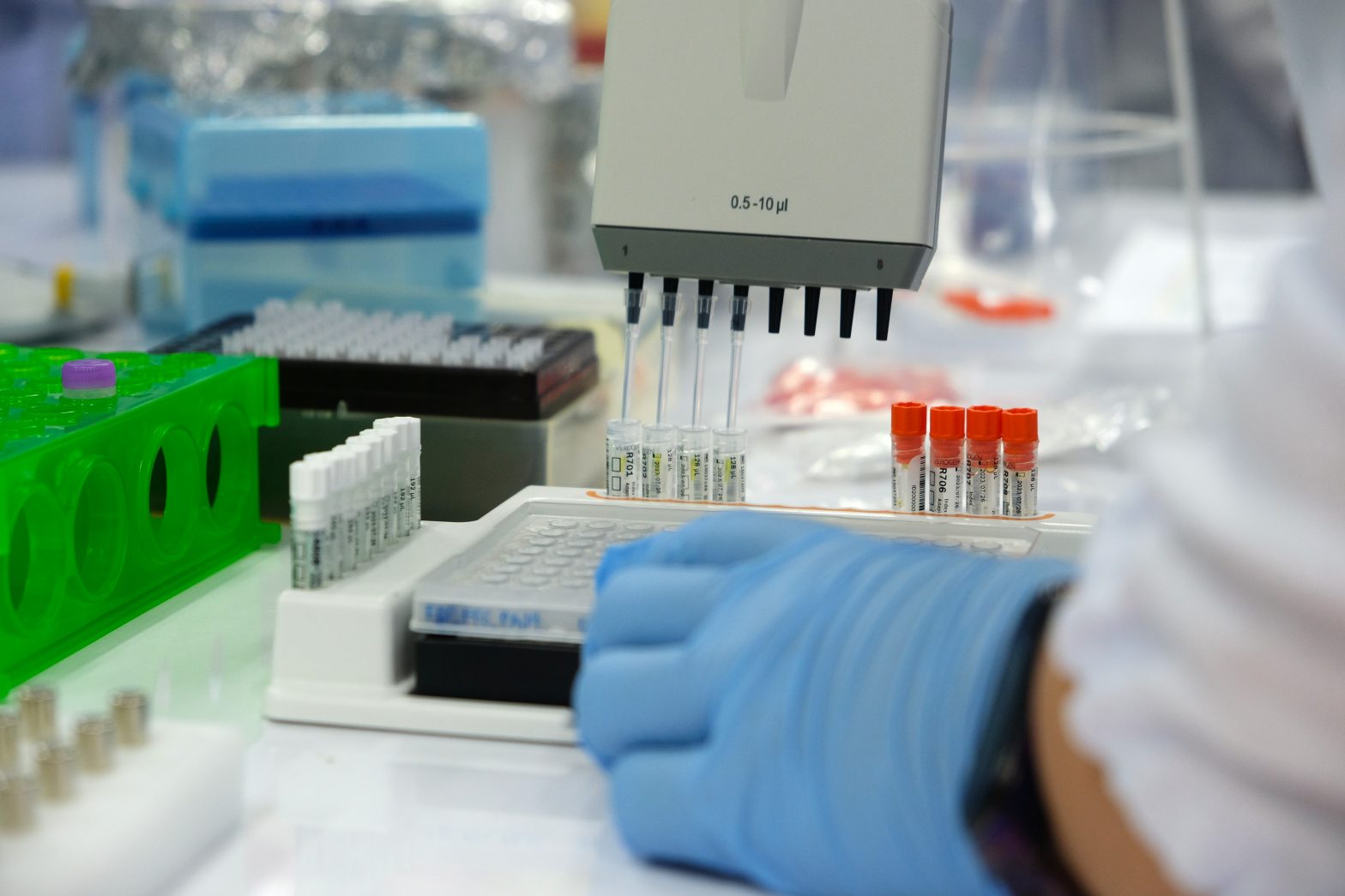
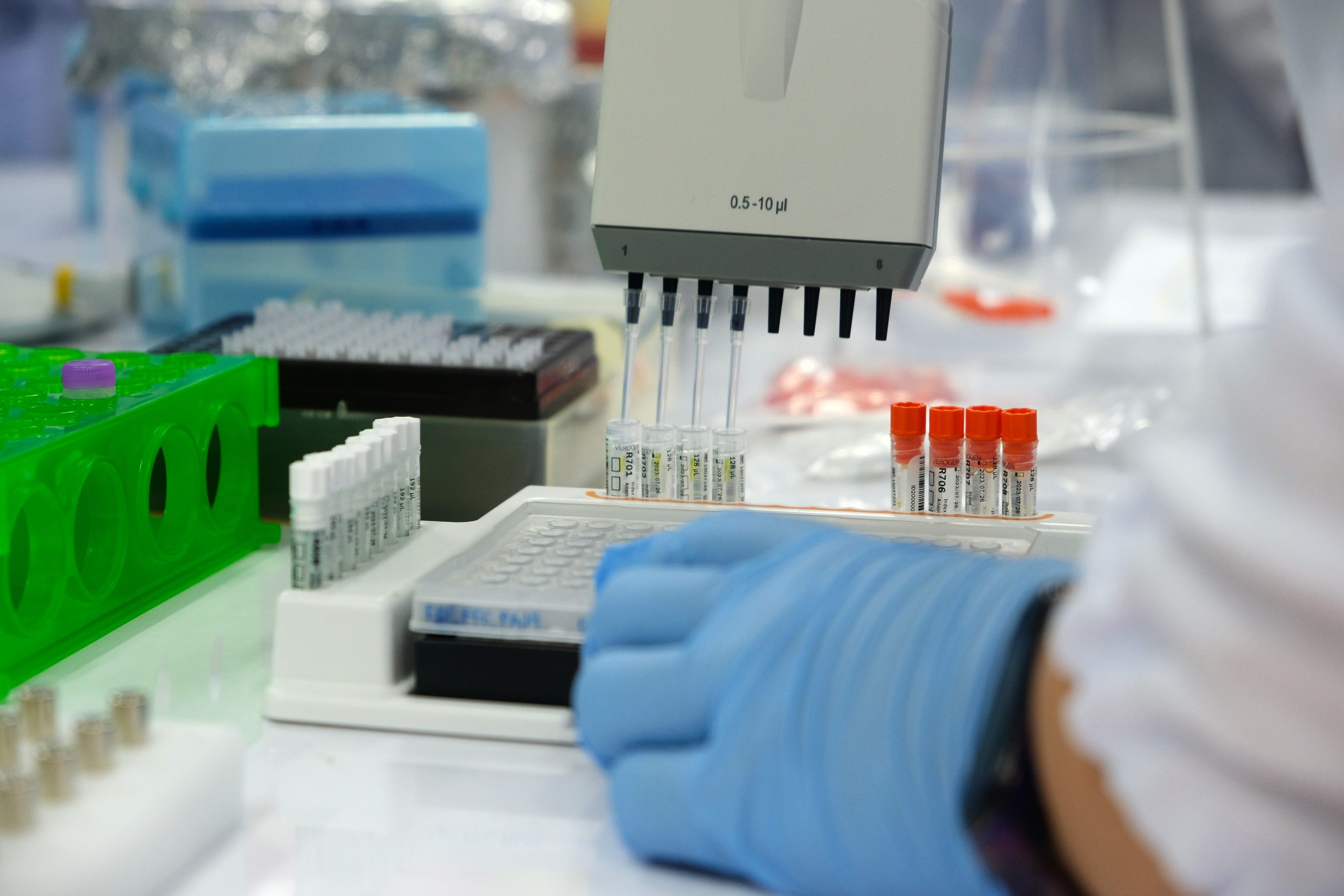
Ang Massively Parallel Sequencing (MPS) ay binago ang forensic DNA analysis sa pamamagitan ng kakayahang suriin ng mga siyentipiko ang maraming DNA markers nang sabay-sabay at sa mas detalyadong paraan kumpara sa tradisyunal na pamamaraan. Gayunpaman, hindi pa rin malawak ang paggamit ng MPS sa mga bansa sa Timog-Silangang Asya.
Kamakailan, sinuri ng mga mananaliksik mula sa University of the Philippines Diliman – College of Science Natural Sciences Research Institute (UPD-CS NSRI) ang paggamit ng MPS sa mga forensic DNA laboratory sa rehiyon upang matukoy ang mga pangunahing hamon sa pagpapatupad nito.
Sa forensic DNA analysis, ang matagal nang ginagamit na standard ay ang Short Tandem Repeat (STR) profiling gamit ang capillary electrophoresis, na nakikilala ang bawat indibidwal sa pamamagitan ng pagsukat ng haba ng partikular na DNA markers. Kaya nga, puwedeng suriin ng MPS ang parehong markers, ngunit binabasa rin nito ang aktwal na DNA sequence sa loob ng mga ito, na nagbibigay ng mas detalyadong impormasyong genetiko.
Mga Hamon sa Paggamit ng MPS
Sinuri nina Christian Estrella, Maylowen Lumayna, Minerva Sagum, Maeviviene Sosing, Gayvelline Calacal, Dr. Maria Corazon De Ungria, at Jazelyn Salvador mula sa University of the Philippines Diliman – College of Science Natural Sciences Research Institute (UPD-CS NSRI) DNA Analysis Laboratory ang mga forensic DNA laboratory sa Brunei Darussalam, Indonesia, Malaysia, Philippines, Singapore, Thailand, at Vietnam sa pamamagitan ng isang online survey.
Ayon kay Estrella, ang pinakamalaking hadlang para sa mga laboratoryong wala pang MPS ay kakulangan sa pondo at pasilidad. “Mahirap magsimula ng ganitong teknolohiya kung walang sapat na suportang pinansyal. Hindi ito nakakagulat para sa mga bansang may mababa o katamtamang kita sa Timog-Silangang Asya,” paliwanag niya.
Para naman sa mga laboratoryong mayroon nang MPS equipment, mas marami ang kanilang kinahaharap na operational challenges, tulad ng kakulangan ng datos tungkol sa populasyon, hindi pare-parehong paraan ng pag-uulat ng resulta, at hirap sa pagsasama ng bagong teknolohiya sa umiiral na DNA databases.
Dagdag pa niya, isa pang mahalagang hamon ay kakulangan ng batas at pagtanggap sa korte. Bagama’t kinikilala na ang tradisyunal na DNA methods sa korte, may pag-aalinlangan pa rin sa MPS, lalo na dahil mahirap ipaliwanag ang ilang laboratory processes sa mga taong walang sapat na kaalaman sa agham.
Hinaharap ng MPS sa Timog-Silangang Asya
Ayon sa mga mananaliksik, may malaking potensyal ang MPS sa Timog-Silangang Asya sa kabila ng mga kasalukuyang hamon sa pagpapatupad nito. Mataas ang interes ng rehiyon sa paggamit ng teknolohiyang ito, at kung gagamitin nang stratehiko, maaari nitong pabilisin ang pagpapalawak ng DNA databases gamit ang mga markers na mas angkop sa rehiyon.
Maaaring simulan ang paggamit ng MPS sa piling forensic casework. Bagama’t epektibo ang tradisyunal na pamamaraan para sa pangkaraniwang kaso, mahalaga ang MPS sa mas komplikadong sitwasyon, tulad ng mga sample ng DNA na nasira dahil sa sunog o sakuna, o sa mga kasong may kinalaman sa malalayong ugnayang pampamilya. Kayang suriin ng MPS ang mas maliliit na DNA markers, kaya maaari pa rin itong magbigay ng kapaki-pakinabang na resulta kahit hindi na sapat ang tradisyunal na pamamaraan.
“Inirerekomenda naming magkaroon ang bawat bansa ng hindi bababa sa isang ganap na MPS laboratory bilang pambansang hub, kung saan maaaring sentralisahin ang forensic services upang mabawasan ang gastos at demand sa resources,” pagtatapos ni Estrella. “Ngunit magtatagumpay lamang ito kung may tuloy-tuloy na suporta sa pondo mula sa gobyerno at matibay na political commitment. Mahalaga ring mahikayat ang pamahalaan na ituring ang MPS bilang pangmatagalang pamumuhunan na nagpapalakas sa pambansang kapasidad sa forensics—hindi lamang para sa mga kriminal na kaso, kundi pati na rin sa disaster response, pagkilala sa tao, at proteksyon ng karapatang pantao.”
Sanggunian:
Estrella, C. S., Lumayna, M. P., Sagum, M. D., Sosing, M. V., Calacal, G. C., De Ungria, M. C., & Salvador, J. M. (2025). Challenges in using massively parallel sequencing technology for forensic DNA analysis in Southeast Asia. Forensic Science International: Synergy, 11, 100638. https://doi.org/10.1016/j.fsisyn.2025.100638
For interview requests and other concerns, please contact media@science.upd.edu.ph.
Massively parallel sequencing (MPS) has transformed forensic DNA analysis by allowing scientists to examine multiple DNA markers at the same time and in much greater detail than older methods. Even so, MPS is still not widely used in Southeast Asian countries. Researchers from the University of the Philippines Diliman – College of Science’s Natural Sciences Research Institute (UPD-CS NSRI) reviewed the use of MPS in forensic DNA laboratories across the region to identify the key challenges to its adoption.
In forensic DNA analysis, the long-standing standard is short tandem repeat (STR) profiling using capillary electrophoresis, which identifies individuals by measuring length variations in specific DNA markers. MPS can analyze these same markers, but it also reads the actual DNA sequence within them, providing far more detailed genetic information.
Obstacles facing MPS adoption
Christian Estrella, Maylowen Lumayna, Minerva Sagum, Maeviviene Sosing, Gayvelline Calacal, Dr. Maria Corazon De Ungria, and Jazelyn Salvador from the UPD-CS NSRI’s DNA Analysis Laboratory conducted an online survey of forensic DNA laboratories in Brunei Darussalam, Indonesia, Malaysia, the Philippines, Singapore, Thailand, and Vietnam.
“For laboratories that do not yet use MPS, the biggest obstacle is funding and infrastructure—it’s difficult even to get started without financial support. This is not surprising for low- and middle-income countries in Southeast Asia,” Estrella explained. “Meanwhile, laboratories that already have MPS equipment face more operational challenges, such as limited population data, inconsistent reporting standards, and incompatibility with existing DNA databases.”
He added that another major challenge is the lack of legislation and court acceptance. Traditional DNA methods are already recognized in court, but for MPS, there is still uncertainty about whether courts will accept the results, especially given laboratory processes that can be difficult to explain to non-technical audiences.
Future directions for MPS in Southeast Asia
According to the researchers, the future of MPS in Southeast Asia holds significant promise despite challenges currently facing its implementation. There is strong regional interest in adopting the technology, which—if used strategically—can significantly accelerate the expansion of DNA databases using markers that are more relevant to the region.
Southeast Asia can start by selectively introducing MPS into forensic casework. While conventional methods work well for routine cases, MPS is valuable for challenging samples, such as degraded DNA from fires or disasters, or cases involving distant family relationships. MPS can analyze smaller DNA markers, so it can still produce usable results when traditional methods fall short.
“We recommend that each country establish at least one fully capable MPS laboratory as a national hub, where forensic services can be centralized to reduce costs and resource demands,” Estrella concluded. “However, this will only succeed with sustained government funding and strong political commitment. Convincing the government that MPS is a long-term investment that strengthens national forensic capacity—not only for criminal cases, but also for disaster response, human identification, and human rights protection—is key to securing that support.”
References:
Estrella, C. S., Lumayna, M. P., Sagum, M. D., Sosing, M. V., Calacal, G. C., De Ungria, M. C., & Salvador, J. M. (2025). Challenges in using massively parallel sequencing technology for forensic DNA analysis in Southeast Asia. Forensic Science International: Synergy, 11, 100638. https://doi.org/10.1016/j.fsisyn.2025.100638
For interview requests and other concerns, please contact media@science.upd.edu.ph.
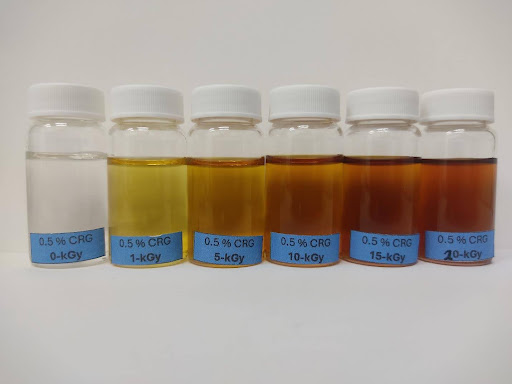
Nagsulong ang mga scientist mula sa University of the Philippines–Diliman College of Science (UPD-CS) ng greener approach sa silver nanoparticle (AgNP) synthesis sa pamamagitan ng paggamit ng gamma irradiation kasama ng natural na seaweed-derived biopolymer ι-carrageenan. Bagaman dati nang naiulat ang mga rutang gamma-radiolytic para sa pagbuo ng AgNP, ang mismong papel ng ι-carrageenan sa pag-stabilize at pag-impluwensya sa pagbuo ng nanoparticle sa ilalim ng proseso ng radiolysis ay nanatiling hindi pa ganap na nauunawaan.
Sa halip na gumamit ng matatapang na kemikal, gumamit ang mga mananaliksik na sina Mon Bryan Gili, Wendell Manuel, at Dr. Marienette Vega ng UPD-CS Materials Science and Engineering Program (MSEP); Dr. Marlon Conato ng UPD-CS Institute of Chemistry (IC); at Rakshith Gowda Shankaregowda at Dr. Manh-Huong Phan ng University of South Florida ng gamma radiation at isang natural na seaweed-derived substance na tinatawag na carrageenan upang makalikha ng mga nanoparticle.
“Sa madaling salita, hinahayaan namin ang radiation na gawin ang ‘trabaho’ ng pagbuo ng mga particle, habang pinapanatili ng seaweed extract ang mga ito na matatag at ligtas. Pagkatapos ay sinubukan namin kung gaano kabisa ang mga particle na ito laban sa mga pangkaraniwang bacteria,” paliwanag ni Gili. Kung ikukumpara sa mga tradisyonal na chemical methods, ang pamamaraan ng mga mananaliksik ay maituturing na mas ‘green’.
Madalas na nangangailangan ang chemical synthesis ng mga malakas na reducing agent at stabilizer, na maaaring nakakalason at mahirap itapon nang hindi nakapipinsala sa kalikasan. Sa kanilang pamamaraan, ganap na pinapalitan ng gamma radiation ang mga kemikal na ito. Nagiging sterilized din ang mga nanoparticle habang sila’y nabubuo, na isang malaking pakinabang para sa mga medical application. “Sa pangkalahatan, nangangahulugan ito ng mas maikling proseso, mas kaunting chemical waste, at mas ligtas na produkto para sa tao at sa kapaligiran,” dagdag ni Gili.
Bilang isang researcher sa nuclear science, nasasabik si Gili na ilapat ang teknolohiya ng radiation sa paraang direktang nakikinabang sa kalusugan at sustainability. Ang pag-aalala para sa kaligtasan sa kapaligiran at ang lumalaking isyu ng antibiotic resistance ay nag-udyok sa kanya at sa kanyang pangkat na maghanap ng mga alternatibong paraan para sa paggawa ng mga silver nanoparticle. Maraming mga nakasanayang proseso ang gumagamit ng mga nakalalasong kemikal na maaaring makapinsala sa mga tao at sa kapaligiran.
“Kabilang sa mga susunod na hakbang ang pagpapabuti ng kanilang long-term stability, pagsubok sa mga ito sa mga real-world products, at pagsusuri kung ligtas silang gamitin ng tao,” sabi ni Gili. “Sa huli, inaasahan namin na ang teknolohiyang ito ay hahantong sa mura at lokal na gawang mga antibacterial material gamit ang likas na yaman ng Pilipinas at kadalubhasaan sa nuclear science.”
Ang kanilang papel, “Antibacterial evaluation of radiolytically synthesized silver nanoparticles with ι-carrageenan stabilizers,” ay nailathala sa Radiation Physics and Chemistry, isang journal na nagtatampok ng mga pag-aaral na nakatuon sa pananaliksik at mga pagpapaunlad gamit ang ionizing radiation sa radiation physics, radiation chemistry, at radiation processing.
References:
Gili, M. B., Manuel, W. A., Guillermo, N. R., Shankaregowda, R. G., Phan, M., Conato, M. T., & Vega, M. M. (2025). Antibacterial evaluation of radiolytically synthesized silver nanoparticles with ι-carrageenan stabilizers. Radiation Physics and Chemistry, 236, 112941. https://doi.org/10.1016/j.radphyschem.2025.112941
For interview requests and other concerns, please contact media@science.upd.edu.ph.
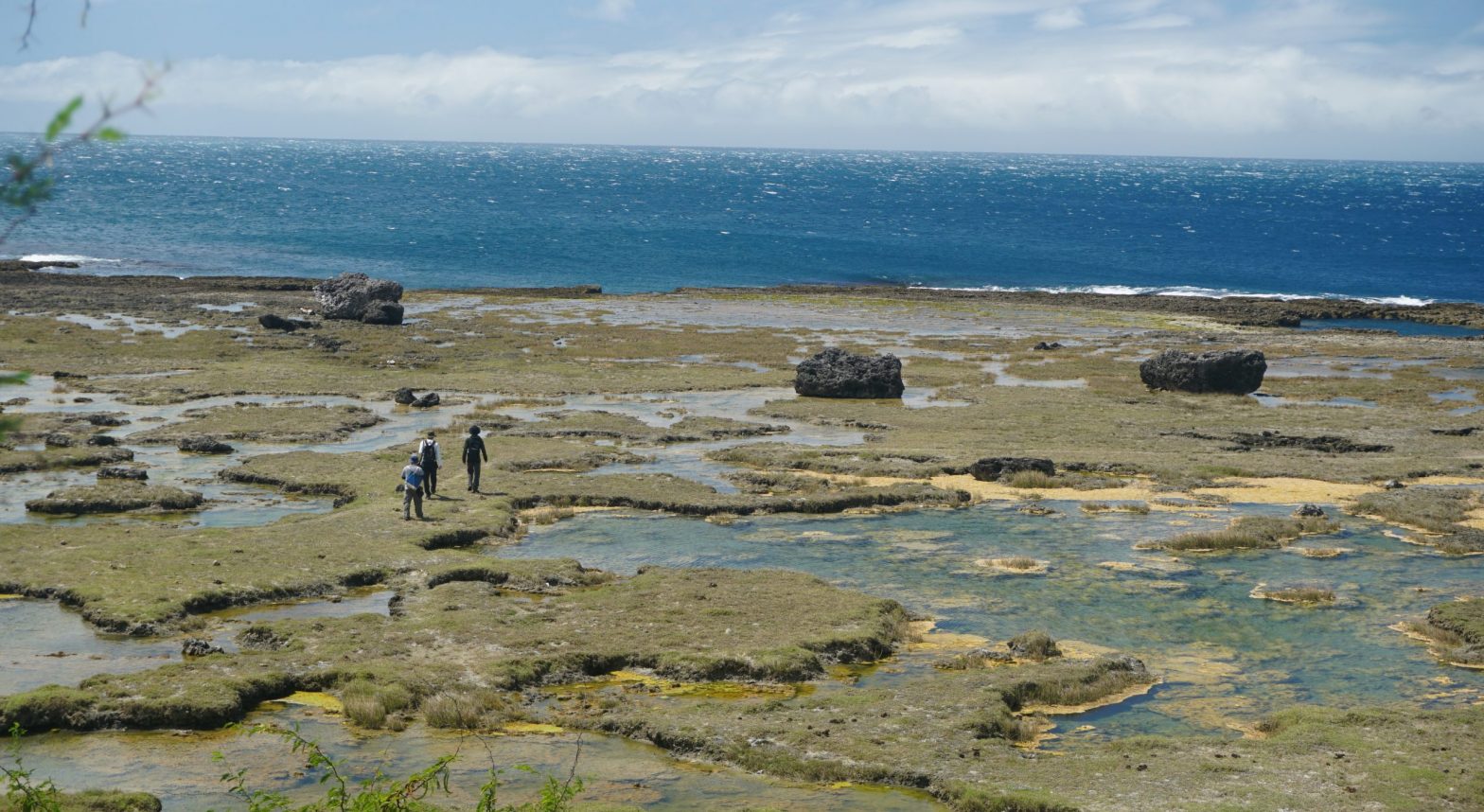
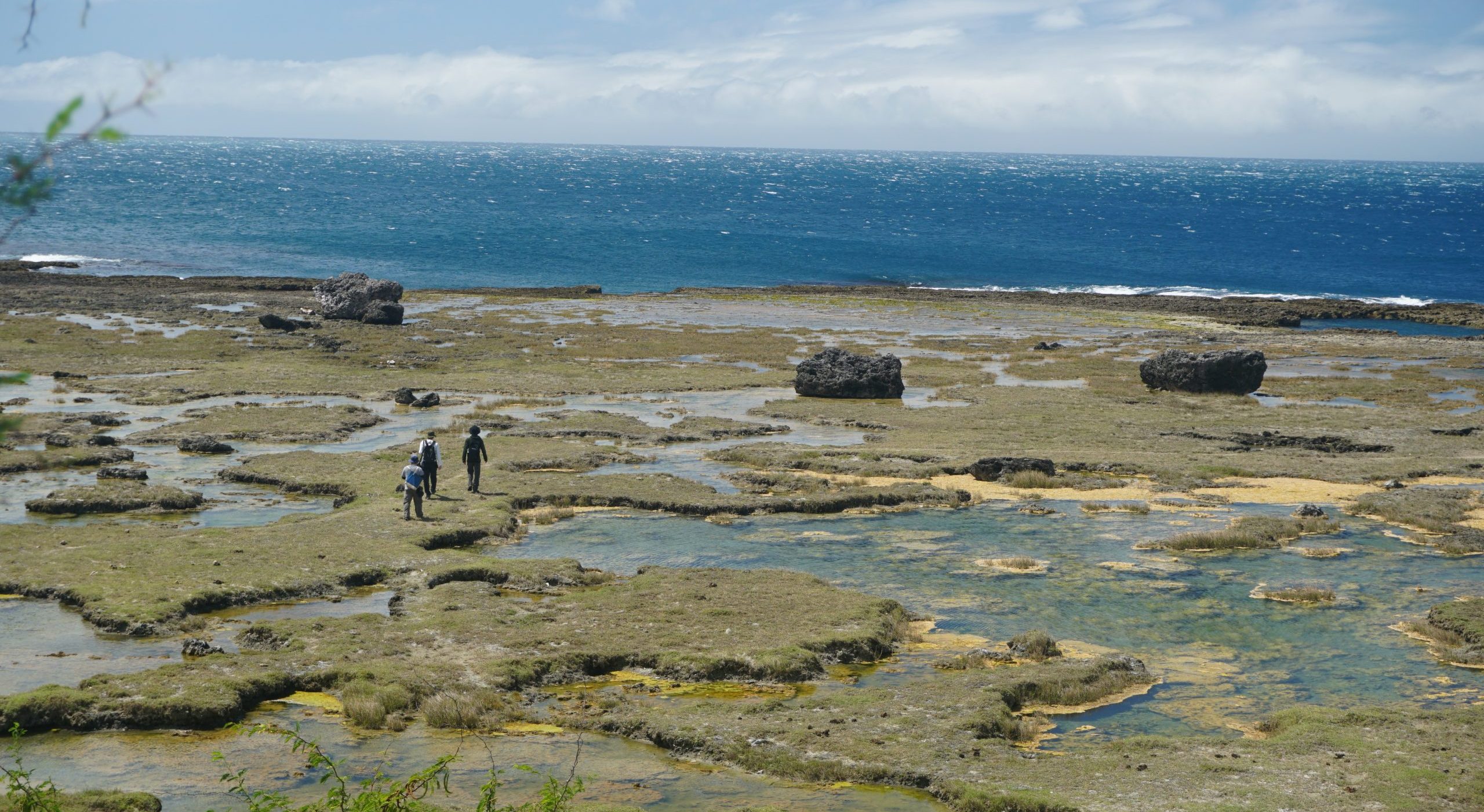
Nakita mo na ba ang mga malalaking tipak ng bato, ang ilan ay kasinglaki ng malaking trak, na nakakalat sa mabatong baybayin ng Pasuquin, Ilocos Norte? Ang mga dambuhalang bato ay makikitang nakapatong sa taas ng nakaangat na reef platform na malayo sa dagat. Pinapaniwalaan na ang mga ito ay bahagi or piraso ng isang sinaunang bahurang koral (ancient coral reef) na napunit at naihagis papaloob ng lupa, dala ng matitinding alon.
Ang kakaibang tanawing ito ang umantig sa kuryosidad ng mga geologist mula sa National Institute of Geological Sciences (NIGS), College of Science, University of the Philippines Diliman (UPD-CS). Sina Edrian Tubalado, Dr. Noelynna Ramos, Lyndon Nawanao Jr., Ace Matthew Cantillep, Alec Benjamin Ramirez, at Jelian Reyes ng Geomorphology and Active Tectonics Research (GEAR) Laboratory ng NIGS, kasama sina Dr. Kathrine Maxwell ng Leibniz Centre for Tropical Marine Research sa Germany, Dr. Shou-Yeh Gong ng National Museum of Natural Science sa Taiwan, Dr. Tsai-Luen Yu ng National Academy of Marine Research sa Taiwan, at Dr. Chuan-Chou Shen ng National Taiwan University, ay nagsuri ng 198 na malalaking carbonate boulders sa Barangay Davila at Dilavo sa Pasuquin, Ilocos Norte.
“Ang mga bato ay pangunahing binubuo ng mga fossil corals at maaaring tawaging mga coastal carbonate boulders,” paliwanag ni Tubalado. “Sinukat namin ang laki, bigat, at lokasyon ng mga ito, at gumamit ng mga specialized dating techniques upang matukoy ang edad ng mga coral components. Ipinapakita ng edad ng mga ito kung kailan naiangat at nailipat ang mga batong koral mula sa tubig-dagat patungo sa baybayin.”
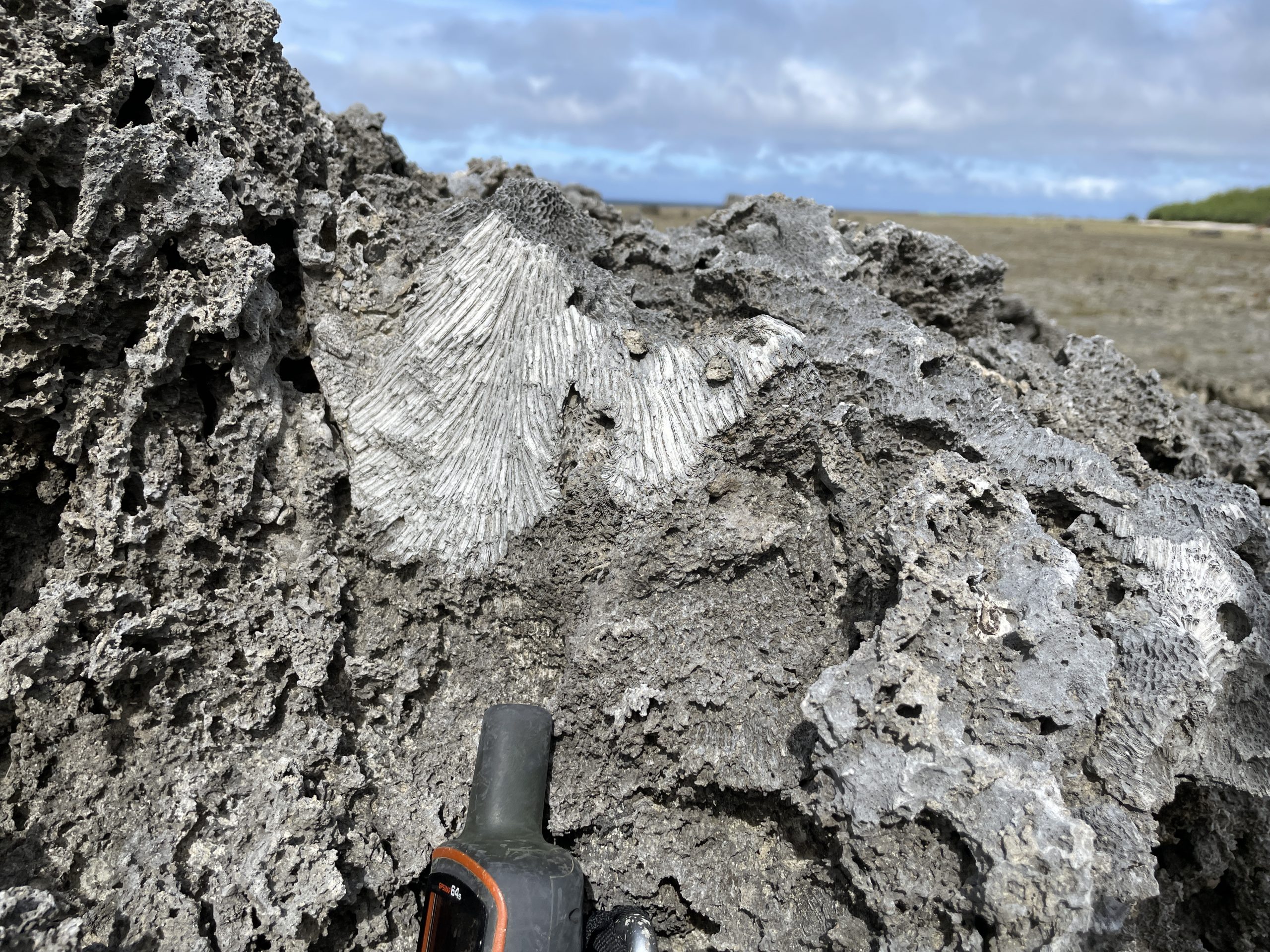
Sa pamamagitan ng pagsusuri sa mga bato, nagawa ng grupo na buuin muli ang kasaysayan ng mga nagdaang matitinding alon o extreme wave events. Ang malakas na alon na tulad ng tsunami o dulot ng matitinding bagyo na tumama sa Pasuquin ay may kakayahang maglipat ng malalaking bato at magbago ng anyo ng baybayin. Kaya din tantyahin kung kailan nangyari at gaano kalakas ang mga wave events na ito. Makakatulong din ang impormasyong ito sa paghahanda ng mga pamayanang nasa baybayin para sa mga possibleng pangyayari sa hinaharap.
Nagbibigay ang mga coastal boulders ng pangmatagalang tala ng mga matitinding wave events. “Hindi tulad ng buhangin o mas maliliit na bato na madaling maanod muli ng mas mahihinang alon, nananatili ang mga dambuhalang batong sa kanilang kinalalagyan kapag naideposito na, maliban na lamang kung may isa pang pambihira at napakatinding alon na muling maglilipat sa kanila. Ibig sabihin, may potensiyal ang mga batong ito na mapreserba ang ebidensiya ng mga matitinding pangyayari sa loob ng daan-daan o libu-libong taon,” paliwanag ni Tubalado.
Ipinapakita rin ng laki at bigat ng mga bato kung gaano kalakas ang mga alon para mailipat ang mga ito, gaya ng batong may bigat na 31 tonelada na naitala sa kanilang pag-aaral. Sa mga bansang tulad ng Pilipinas, kung saan ang mga nakasulat na talaan ay sumasaklaw lamang ng ilang siglo, nakatutulong ang mga batong tulad nito upang punan ang mga puwang sa kasaysayan, at magbigay ng mas mahabang pananaw hinggil sa mga panganib sa baybayin.
Tumutulong din ang pag-aaral na ito sa pagtukoy ng mga pinakamasamang posibleng senaryo, sa pamamagitan ng pagkilala sa mga nagdaang extreme wave events, at sa gayon ay nagbibigay sa mga komunidad ng mga pagtatayang nakabatay sa ebidensiya hinggil sa posibleng taas ng matitinding alon. Sa Pasuquin, umaabot hanggang humigit-kumulang apat na metro o higit pa ang taas ng alon sa mga pinakamatitinding kaso. Ang pag-unawa na ang baybayin ay ilang ulit nang tinamaan ng matitinding alon ay magbibigay-daan sa mga lokal na pamahalaan at komunidad na paghusayin ang paghahanda sa panganib sa pamamagitan ng angkop na mga plano sa paglikas, mga pamantayan sa pagtatayo, at mas matatag na imprastrakturang baybayin.
“Ipinakita ng aming spatial analysis na may ilang lugar na mas prone sa pagde-deposito ng mga bato at pinsala. Halimbawa, ang mga lugar na may mga embayment, o mga coastal indentations, at mas matarik na nearshore slopes ay nakaranas ng mas matinding enerhiya ng alon. Nakakatulong ito sa pagtukoy kung aling mga lugar ang may pinakamalaking panganib,” dagdag ni Tubalado. “Habang posibleng pinapalakas ng climate change ang tindi ng mga tropikal na bagyo, lalo pang nagiging mahalaga ang pag-unawa sa historikal na baseline ng mga matitinding wave events para sa pagtataya ng mga panganib sa hinaharap at pagkakaroon ng angkop na kahandaan ng mga pamayanang nasa baybayin.”
Ang kanilang pag-aaral, na pinamagatang “Extreme wave events inferred from large subaerial carbonate boulders on a rocky coast in Pasuquin, Ilocos Norte, Philippines,” ay nalathala sa Marine Geology, isang journal na nakatuon sa mga prosesong heolohikal sa karagatan. Ang pananaliksik ay bahagyang sinuportahan ng proyektong pinondohan ng DOST (Blg. 4233), “Investigation and Numerical Modeling of Philippine Tsunamis Based on Historical, Geomorphological, and Geological Evidence of Past Earthquakes.” Ang pagpepetsa ng mga fossil na koral sa High-Precision Mass Spectrometry and Environment Change (HISPEC) Laboratory ng National Taiwan University ay sinuportahan ng NSTC (111-2116-M-002-022-MY3, 113-2926-I-002-510-G para sa CCS), Higher Education Sprout Project ng Ministry of Education, Taiwan, ROC (112L894202 para sa CCS), at National Taiwan University Core Consortiums Project (113L891902 para sa CCS).
References:
Tubalado, E. M., Ramos, N. T., Nawanao, L. P., Cantillep, A. M., Ramirez, A. B., Reyes, J. S., Maxwell, K. V., Gong, S., Yu, T., & Shen, C. (2026). Extreme wave events inferred from large subaerial carbonate boulders on a rocky coast in Pasuquin, Ilocos Norte, Philippines. Marine Geology, 493, 107704. https://doi.org/10.1016/j.margeo.2026.107704
For interview requests and other concerns, please contact media@science.upd.edu.ph.
Large boulders, some weighing as much as a large truck, are scattered along the rocky coastline of Pasuquin, Ilocos Norte.
These enormous boulders, which sit on an uplifted reef platform far from the sea, are not random. They are fragments of an ancient coral reef that were torn from the reef and hurled inland by extreme waves. This unusual sight piqued the curiosity of geologists from the University of the Philippines – Diliman College of Science’s National Institute of Geological Sciences (UPD-CS NIGS).
Edrian Tubalado, Dr. Noelynna Ramos, Lyndon Nawanao Jr., Ace Matthew Cantillep, Alec Benjamin Ramirez, and Jelian Reyes of the Geomorphology and Active Tectonics Research (GEAR) Laboratory, UPD-CS NIGS, together with Dr. Kathrine Maxwell of the Leibniz Centre for Tropical Marine Research in Germany, Dr. Shou-Yeh Gong of the National Museum of Natural Science in Taiwan, Dr. Tsai-Luen Yu of the National Academy of Marine Research in Taiwan, and Dr. Chuan-Chou Shen of National Taiwan University, investigated 198 large, carbonate boulders in Barangays Davila and Dilavo in Pasuquin, Ilocos Norte.
“The boulders were primarily composed of fossil corals and can be called coastal carbonate boulders,” Tubalado said. “We measured its size, weight, and location, and used specialized dating techniques to determine the ages of the coral components. These ages tell us when the coral boulders were transported out from the seawater onto the coast.”
By analyzing the boulders, Tubalado and his team can reconstruct past extreme wave events—powerful waves such as tsunamis or intense storms that are capable of moving massive boulders and reshaping coastlines—that struck Pasuquin, estimate their intensity, and determine when they occurred. This information can help coastal communities prepare for similar events in the future.
The coastal boulders provide a long-term record of extreme wave events. “Unlike sand or smaller sediments that get washed away or redistributed by relatively weaker waves, these massive boulders stay put once deposited unless another similarly rare and extreme wave moves them. This means that these boulders can potentially preserve the evidence of extreme events over hundreds or thousands of years,” Tubalado explained.
Their size and weight also reveal just how powerful the waves must have been to move them—such as the 31-ton boulder documented in their study. In regions like the Philippines, where written records cover only a few centuries, boulder deposits help fill gaps in historical records, offering a much longer perspective on coastal hazards.
The study helps establish worst-case scenarios by identifying past extreme wave events, providing communities with evidence-based estimates of potential wave heights—in Pasuquin, up to around 4 meters or higher in extreme cases. Understanding that the coastline has been struck by multiple extreme wave events allows local governments and communities to improve hazard preparedness through appropriate evacuation plans, building codes, and resilient coastal infrastructure.
“Our spatial analysis showed that certain areas are more prone to boulder deposition and damage. For example, areas with embayments, or coastal indentations, and steeper nearshore slopes experienced more intense wave energy. This helps identify which areas face the greatest risk,” Tubalado added. “As climate change potentially increases the intensity of tropical cyclones, understanding the historical baseline of extreme wave events becomes even more critical for predicting future risks and helping coastal communities adapt accordingly.”
Their study, titled “Extreme wave events inferred from large subaerial carbonate boulders on a rocky coast in Pasuquin, Ilocos Norte, Philippines,” was published in Marine Geology, a journal focused on marine geological processes. The research was partially supported by the DOST-funded project (No. 4233), “Investigation and Numerical Modeling of Philippine Tsunamis Based on Historical, Geomorphological, and Geological Evidence of Past Earthquakes”. Dating of fossil corals in the High-Precision Mass Spectrometry and Environment Change (HISPEC) Laboratory, National Taiwan University, was supported by the NSTC (111-2116-M-002-022-MY3, 113-2926-I-002-510-G to CCS), Higher Education Sprout Project of the Ministry of Education, Taiwan, ROC (112L894202 to CCS), and National Taiwan University Core Consortiums Project (113L891902 to CCS).
References:
Tubalado, E. M., Ramos, N. T., Nawanao, L. P., Cantillep, A. M., Ramirez, A. B., Reyes, J. S., Maxwell, K. V., Gong, S., Yu, T., & Shen, C. (2026). Extreme wave events inferred from large subaerial carbonate boulders on a rocky coast in Pasuquin, Ilocos Norte, Philippines. Marine Geology, 493, 107704. https://doi.org/10.1016/j.margeo.2026.107704
For interview requests and other concerns, please contact media@science.upd.edu.ph.
Scientists from the University of the Philippines–Diliman College of Science (UPD-CS) have advanced a greener approach to silver nanoparticle (AgNP) synthesis by using gamma irradiation in combination with the natural seaweed-derived biopolymer ι-carrageenan. While gamma-radiolytic routes for AgNP formation have been reported previously, the specific role of ι-carrageenan in stabilizing and influencing nanoparticle formation during radiolysis has remained largely underexplored.
Instead of using harsh chemicals, researchers Mon Bryan Gili, Wendell Manuel, and Dr. Marienette Vega of the UPD-CS Materials Science and Engineering Program (MSEP); Dr. Marlon Conato of the UPD-CS Institute of Chemistry (IC); and Rakshith Gowda Shankaregowda and Dr. Manh-Huong Phan of the University of South Florida used gamma radiation and a natural seaweed-derived substance called carrageenan to create the nanoparticles.
“In simple terms, we let radiation do the “work” of forming the particles, while the seaweed extract keeps them stable and safe. We then tested how effective these particles are against common bacteria,” Gili explained. Compared to traditional chemical methods, the researchers’ approach is much greener.
Chemical synthesis often requires strong reducing agents and stabilizers, which can be toxic and difficult to dispose of safely. In their method, gamma radiation completely replaces these chemicals. It also sterilizes the nanoparticles as they form, which is a major advantage for medical applications. “Overall, this means fewer processing steps, less chemical waste, and a safer product for both people and the environment,” Gili added.
As a researcher in nuclear science, Gili was excited to apply radiation technology in a way that directly benefits health and sustainability. Concern for environmental safety and the growing issue of antibiotic resistance motivated him and his team to explore alternative methods for producing silver nanoparticles. Many conventional approaches use toxic chemicals that can harm people and the environment.
“The next steps include improving their long-term stability, testing them in real-world products, and evaluating their safety for human use.” Gili said. “Ultimately, we hope this technology can lead to affordable, locally produced antibacterial materials using Philippine natural resources and nuclear science expertise.”
Their paper, “Antibacterial evaluation of radiolytically synthesized silver nanoparticles with ι-carrageenan stabilizers,” was published in Radiation Physics and Chemistry, a journal featuring studies which focus on research and developments involving ionizing radiation in radiation physics, radiation chemistry, and radiation processing.
References:
Gili, M. B., Manuel, W. A., Guillermo, N. R., Shankaregowda, R. G., Phan, M., Conato, M. T., & Vega, M. M. (2025). Antibacterial evaluation of radiolytically synthesized silver nanoparticles with ι-carrageenan stabilizers. Radiation Physics and Chemistry, 236, 112941. https://doi.org/10.1016/j.radphyschem.2025.112941
For interview requests and other concerns, please contact media@science.upd.edu.ph.