
UP Study Traces Extreme Waves through Ancient Coastal Boulders
Published: February 9, 2026
By: Eunice Jean C. Patron
Large boulders, some weighing as much as a large truck, are scattered along the rocky coastline of Pasuquin, Ilocos Norte.
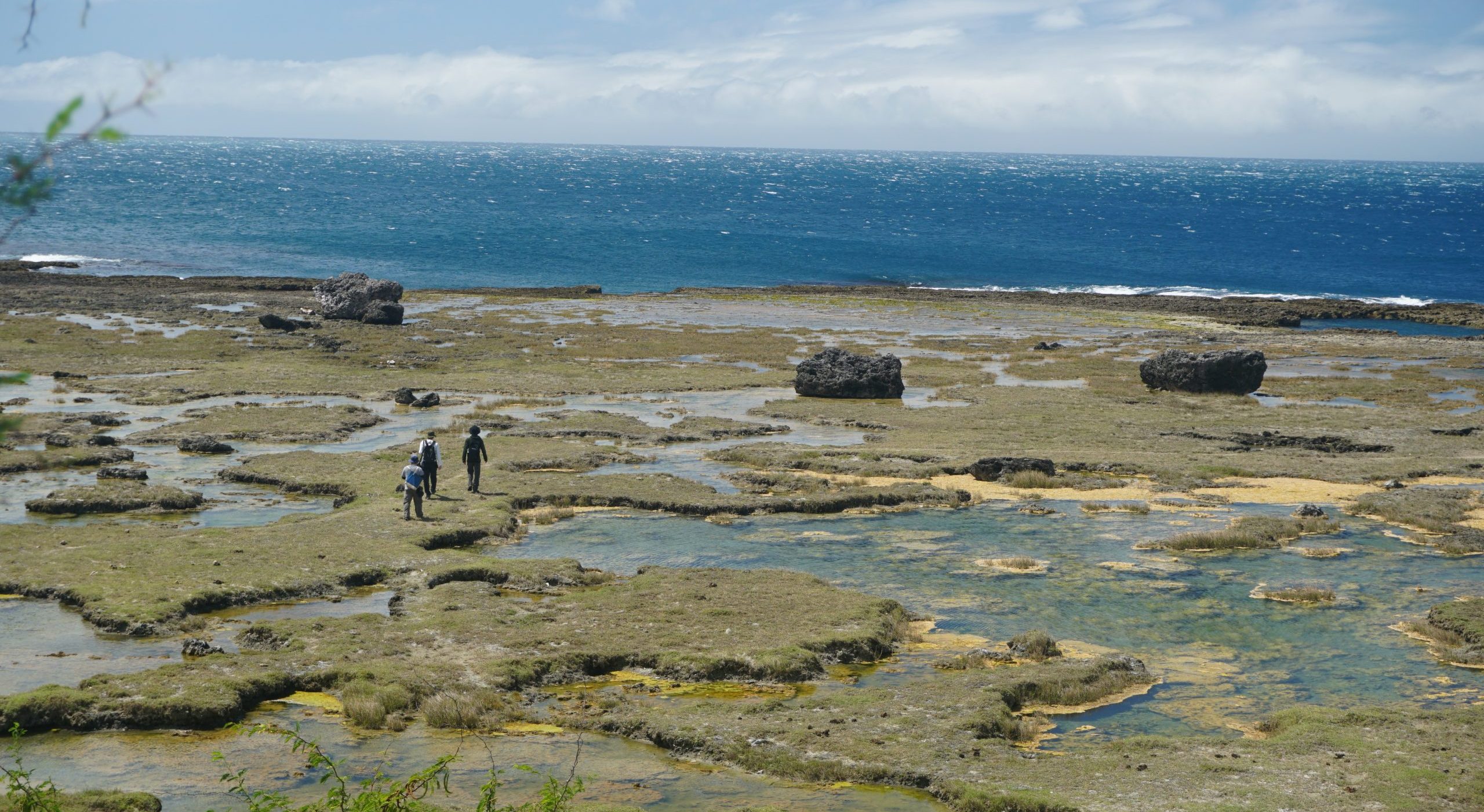
These enormous boulders, which sit on an uplifted reef platform far from the sea, are not random. They are fragments of an ancient coral reef that were torn from the reef and hurled inland by extreme waves. This unusual sight piqued the curiosity of geologists from the University of the Philippines – Diliman College of Science’s National Institute of Geological Sciences (UPD-CS NIGS).
Edrian Tubalado, Dr. Noelynna Ramos, Lyndon Nawanao Jr., Ace Matthew Cantillep, Alec Benjamin Ramirez, and Jelian Reyes of the Geomorphology and Active Tectonics Research (GEAR) Laboratory, UPD-CS NIGS, together with Dr. Kathrine Maxwell of the Leibniz Centre for Tropical Marine Research in Germany, Dr. Shou-Yeh Gong of the National Museum of Natural Science in Taiwan, Dr. Tsai-Luen Yu of the National Academy of Marine Research in Taiwan, and Dr. Chuan-Chou Shen of National Taiwan University, investigated 198 large, carbonate boulders in Barangays Davila and Dilavo in Pasuquin, Ilocos Norte.
“The boulders were primarily composed of fossil corals and can be called coastal carbonate boulders,” Tubalado said. “We measured its size, weight, and location, and used specialized dating techniques to determine the ages of the coral components. These ages tell us when the coral boulders were transported out from the seawater onto the coast.”
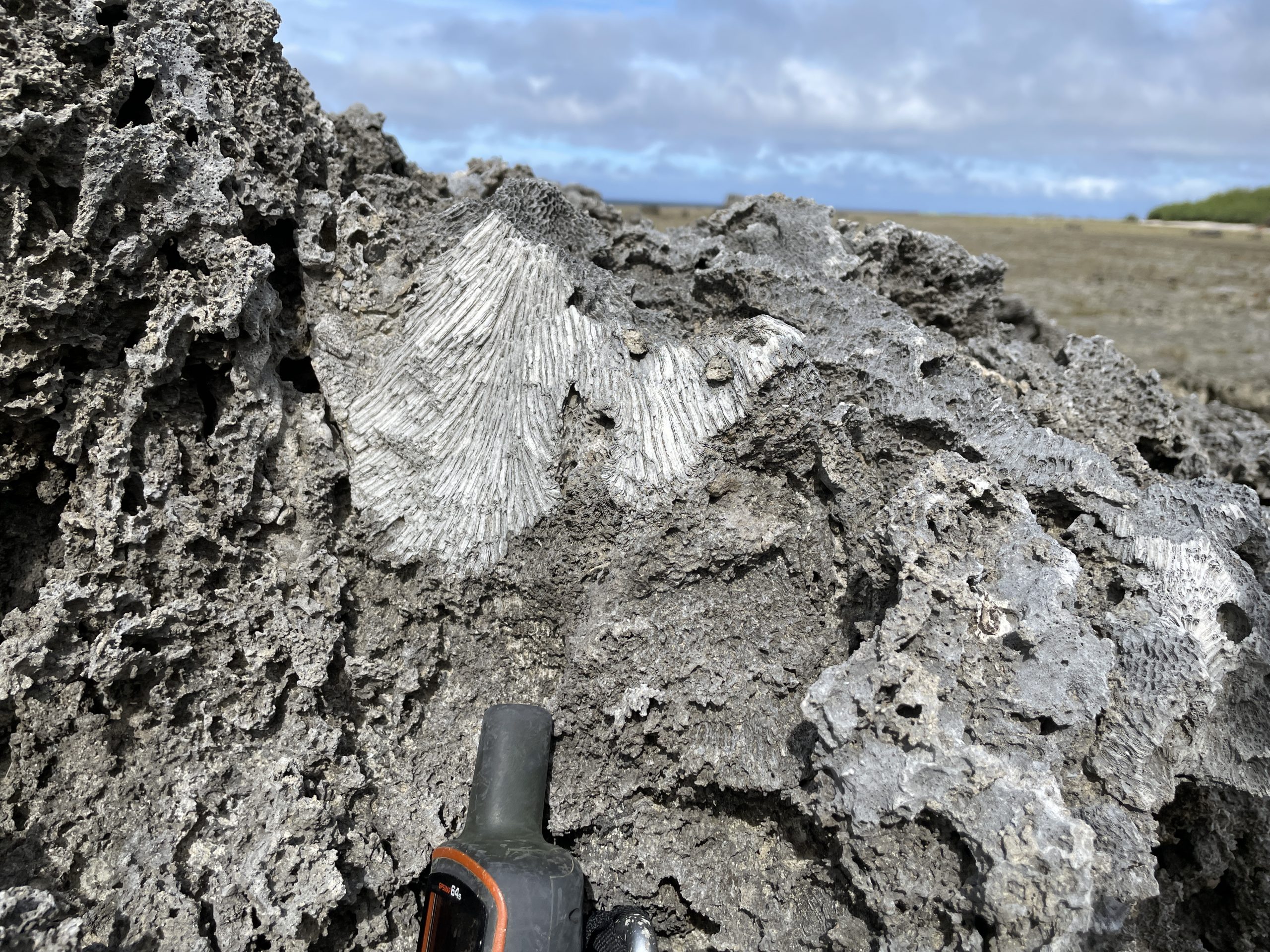
By analyzing the boulders, Tubalado and his team can reconstruct past extreme wave events—powerful waves such as tsunamis or intense storms that are capable of moving massive boulders and reshaping coastlines—that struck Pasuquin, estimate their intensity, and determine when they occurred. This information can help coastal communities prepare for similar events in the future.
The coastal boulders provide a long-term record of extreme wave events. “Unlike sand or smaller sediments that get washed away or redistributed by relatively weaker waves, these massive boulders stay put once deposited unless another similarly rare and extreme wave moves them. This means that these boulders can potentially preserve the evidence of extreme events over hundreds or thousands of years,” Tubalado explained.
Their size and weight also reveal just how powerful the waves must have been to move them—such as the 31-ton boulder documented in their study. In regions like the Philippines, where written records cover only a few centuries, boulder deposits help fill gaps in historical records, offering a much longer perspective on coastal hazards.
The study helps establish worst-case scenarios by identifying past extreme wave events, providing communities with evidence-based estimates of potential wave heights—in Pasuquin, up to around 4 meters or higher in extreme cases. Understanding that the coastline has been struck by multiple extreme wave events allows local governments and communities to improve hazard preparedness through appropriate evacuation plans, building codes, and resilient coastal infrastructure.
“Our spatial analysis showed that certain areas are more prone to boulder deposition and damage. For example, areas with embayments, or coastal indentations, and steeper nearshore slopes experienced more intense wave energy. This helps identify which areas face the greatest risk,” Tubalado added. “As climate change potentially increases the intensity of tropical cyclones, understanding the historical baseline of extreme wave events becomes even more critical for predicting future risks and helping coastal communities adapt accordingly.”
Their study, titled “Extreme wave events inferred from large subaerial carbonate boulders on a rocky coast in Pasuquin, Ilocos Norte, Philippines,” was published in Marine Geology, a journal focused on marine geological processes. The research was partially supported by the DOST-funded project (No. 4233), “Investigation and Numerical Modeling of Philippine Tsunamis Based on Historical, Geomorphological, and Geological Evidence of Past Earthquakes”. Dating of fossil corals in the High-Precision Mass Spectrometry and Environment Change (HISPEC) Laboratory, National Taiwan University, was supported by the NSTC (111-2116-M-002-022-MY3, 113-2926-I-002-510-G to CCS), Higher Education Sprout Project of the Ministry of Education, Taiwan, ROC (112L894202 to CCS), and National Taiwan University Core Consortiums Project (113L891902 to CCS).
References:
Tubalado, E. M., Ramos, N. T., Nawanao, L. P., Cantillep, A. M., Ramirez, A. B., Reyes, J. S., Maxwell, K. V., Gong, S., Yu, T., & Shen, C. (2026). Extreme wave events inferred from large subaerial carbonate boulders on a rocky coast in Pasuquin, Ilocos Norte, Philippines. Marine Geology, 493, 107704. https://doi.org/10.1016/j.margeo.2026.107704
For interview requests and other concerns, please contact media@science.upd.edu.ph.