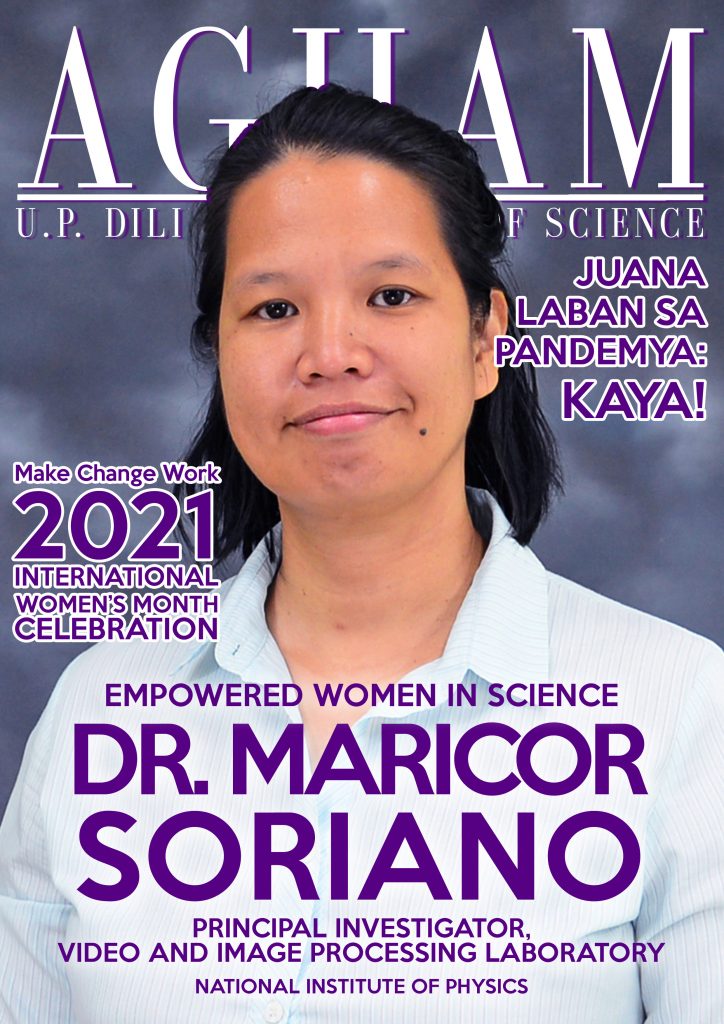
 “State universities in the Philippines, especially UP, are one of the best places to pursue science if you are a woman. Apart from the academe being generally gender blind, the enactment of the Expanded Maternity Leave Law in 2019 now levels the playing field for married or expecting lady scientists.”
This is what Dr. Maricor Soriano, an applied physics professor at the National Institute of Physics, believes as she was one of the women who experienced the benefits of being a woman scientist in the country and witnessed significant changes for women in the workforce.
“In Finland where I had my postdoc from 1998 to 2000, I was amazed that maternal leaves were as long as four months and fathers can share child-rearing duties through paternal leaves. Since then, I desperately wanted it to be the same for our country. And now it’s a reality!”
Dr. Soriano started her special connection with science when she used to observe and assist her father, an engineer, in making and assembling things from scratch. This influenced her to become a tinkerer and encouraged her to pursue Physics, despite initially wanting to become a medical doctor.
Dr. Soriano’s research specialty is color, video and image processing. She is currently the principal investigator of the Video and Image Processing Laboratory in NIP. Her laboratory creates hardware and software tools and technology to answer different institutions or agencies’ imaging needs. Her laboratory caters multidisciplinary requests, from art museums, marine science researchers, medical doctors, anthropologists, archaeologists, etc. One remarkable technology she helped develop is ARRAS, a coral reef imaging technology, which mapped 2,000km of coral reefs around the Philippines.
She also serves as the program leader of “STAMINA4Space,” funded by the Department of Science and Technology where they make the satellite bus and optical payloads locally for a future Diwata 3.
Dr. Soriano believes that although there have been improvements over the years, Physics is still a male-dominated field, and three factors she can think of are: gender stereotyping, lack of role models, and the institutional gender bias of certain research areas. “It should not be the sole responsibility of women to assert themselves and make adjustments in their careers in science. Let us also ask men in scientific labs , and also in STEM industries to make the environment more conducive and welcoming to women,” she says.
She also pointed out that employers from different industries should stop their discrimination—if ever existent—to women who are married or are about to have kids. She has witnessed that pregnant ladies are discriminated upon by their employers who think hiring married women is unstrategic. She says that this kind of thinking is absurd especially that this pandemic has proven that people can still be productive even at home.
“My role model in life is my mom. She is a teacher and when I was a baby, her school was just across the road. During her lunch break, she would come home and she would breastfeed me and my brother, and then return to her classes after. When I learned of this years later, it ingrained in me a lifelong respect for working mothers.”
Dr. Soriano hopes that more and more young girls will be interested in pursuing science and engineering because she believes that women have a big role in bringing together researchers from different fields. She shares a research study about feminine and masculine work values where the results state that women are more collaborative; men are more independent and women tend to work as a team; men are more competitive.
“Dealing with intricate systems, processes, and negotiations in STAMINA4Space made me realize that our innate collaborativeness is an advantage in space science and engineering.”
Dr. Soriano is an advocate of self-learning. She believes that the future of education is self-learning. With the Internet being available as an online resource, anything can be learned if one just has the right amount of interest and discipline.
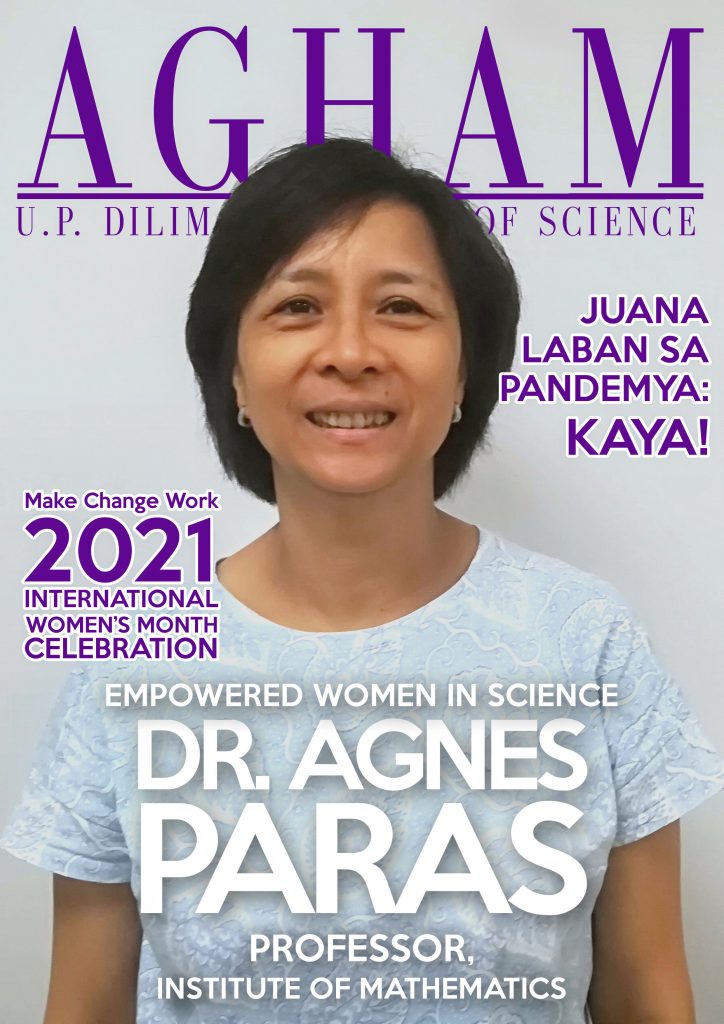
 Dr. Agnes T. Paras, Professor at the Institute of Mathematics and conferred UP Scientist I, has been fond of mathematics since she was young. “It was a subject that I enjoyed and was willing to devote more time to,” she recalls.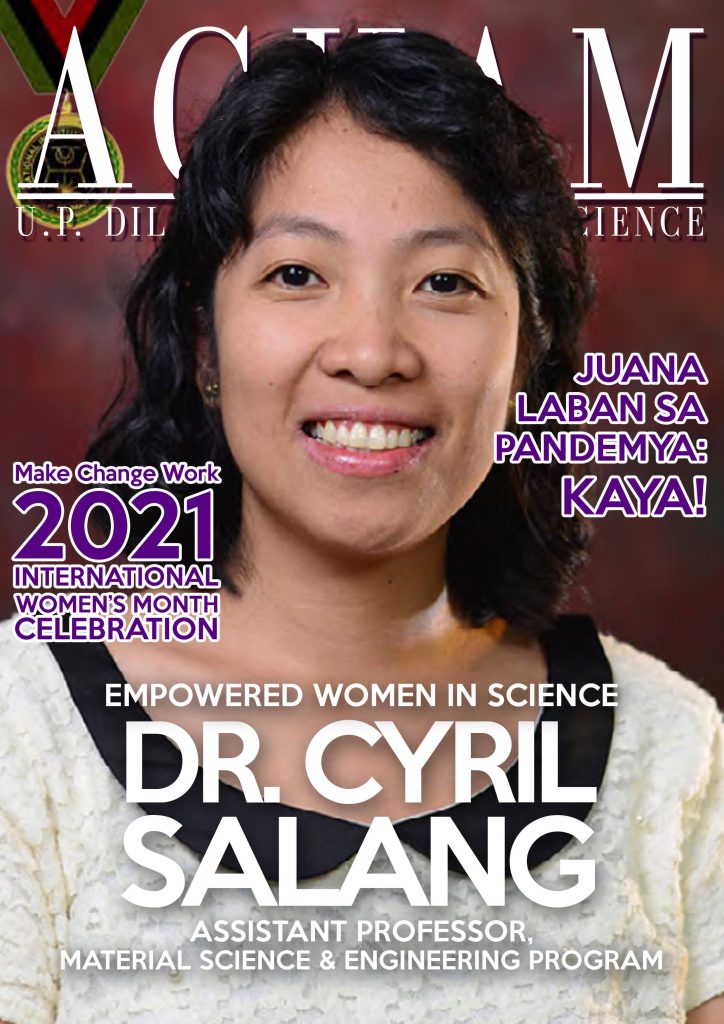
 An addition to the list of women scientists who also took the challenge of being mothers is Prof. Cyril Salang, Ph.D. of the Materials Science and Engineering Program (MSEP). She has a doctorate degree in Physics and is currently an Assistant Professor at the university.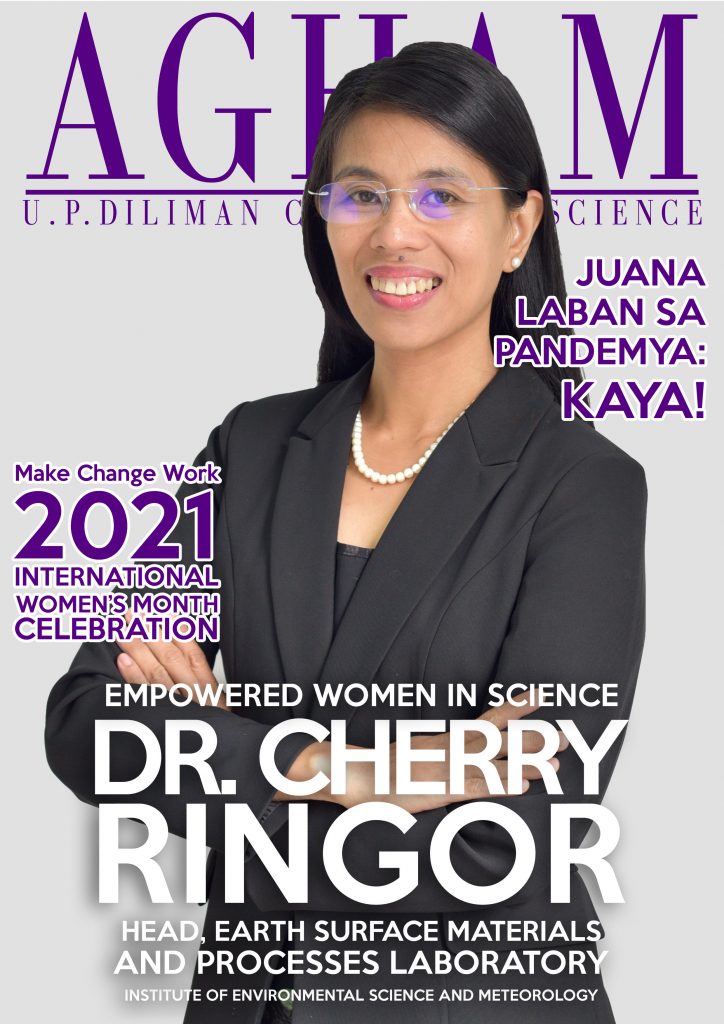
 Growing up with parents who used to work in science, Dr. Cherry Ringor naturally found it easier to study science herself. This paved the way for a science-related education and eventually, a career as a geologist.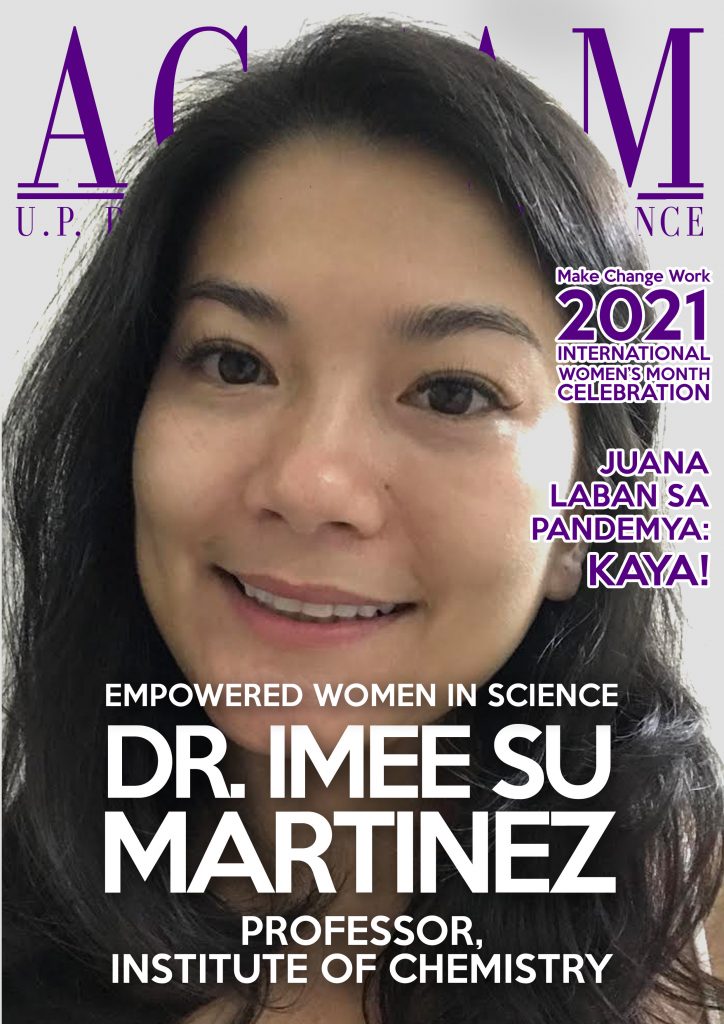
 The perfect blend of beauty and brains, Dr. Imee Su Martinez, Professor at the Institute of Chemistry, has always been curious about the “how and why” of things around her. She studied at the Philippine Science High School, which influenced her to pursue a career in science.
 “The notion that women should just stay at home or women scientists should just focus on science must be eradicated. We are able to do both, and we are successful in doing our tasks as homemakers and as career women.”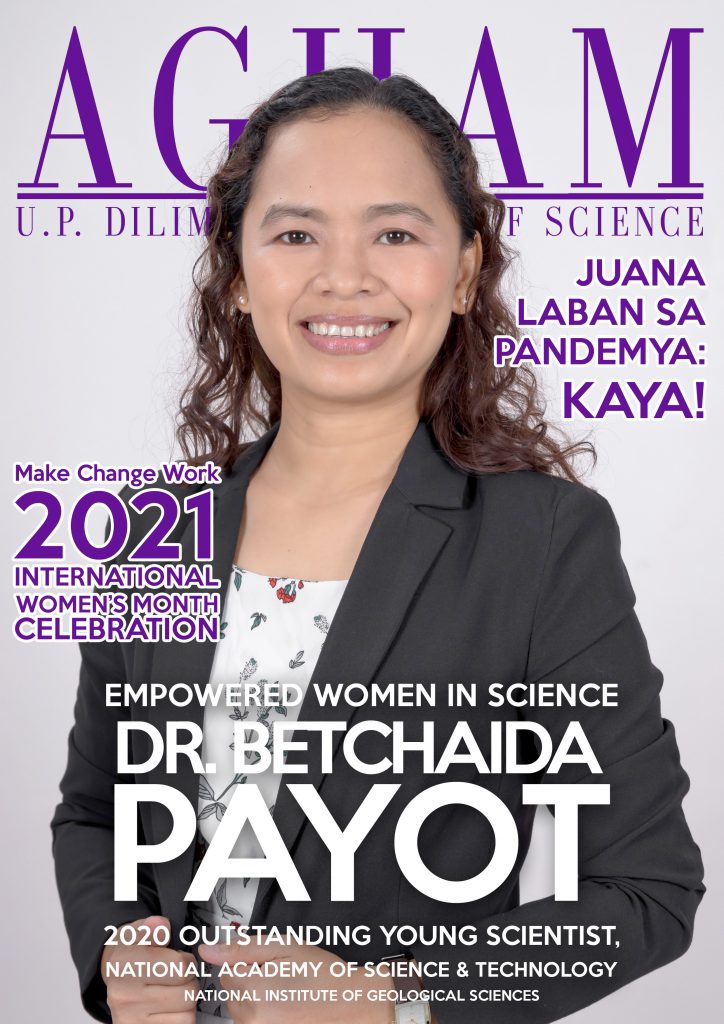

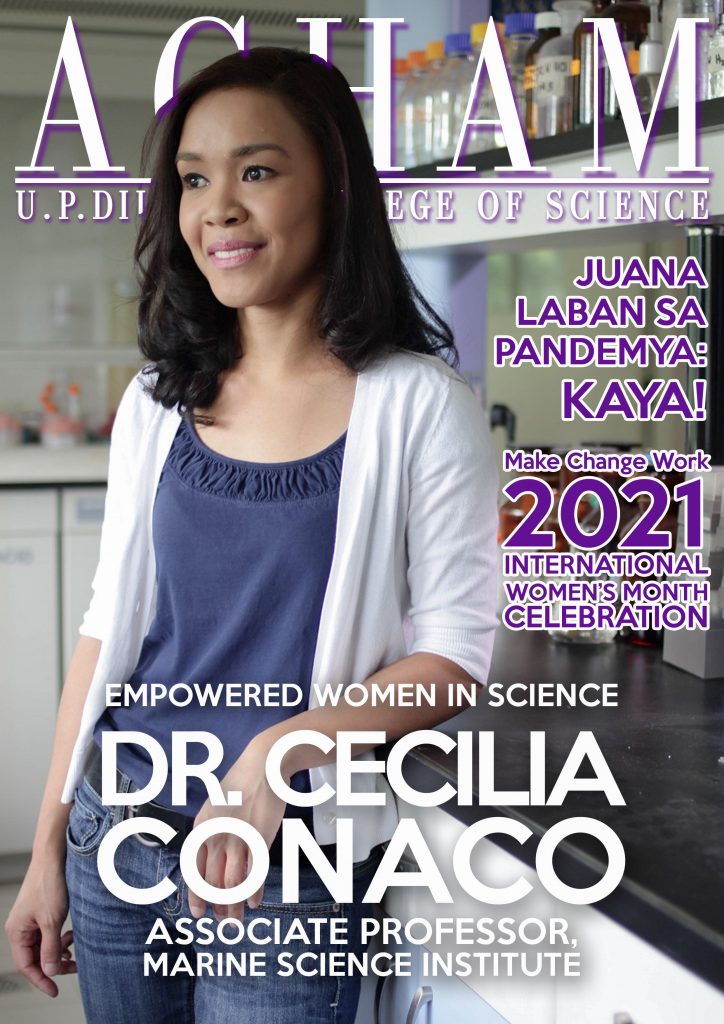
 Dr. Cecilia Conaco, an Associate Professor of the Marine Science Institute, has always been curious and passionate about science ever since she was a kid. She remembered reading “Mutation” a book about the perils of genetic engineering. From that moment on, her interests in molecular biology piqued, which made her pursue a degree in Molecular Biology and, eventually, a career in Science.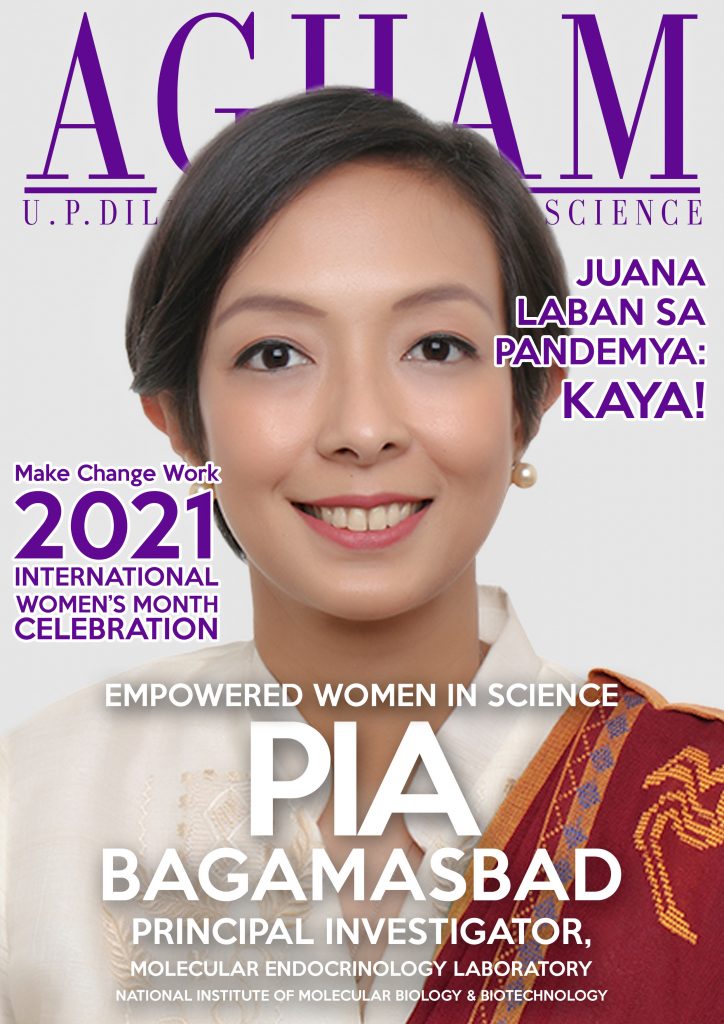
 Dr. Pia Bagamasbad is currently an Associate Professor and the Principal Investigator of the Molecular Endocrinology Laboratory.