Isang UP Alumnus Pinangunahan ang Digital Health Initiative para sa PH Marginalized Communities

Isang UP Alumnus Pinangunahan ang Digital Health Initiative para sa PH Marginalized Communities

Published: November 17, 2025
By: Eunice Jean C. Patron
Translated by: Dr. Ian Kendrich C. Fontanilla
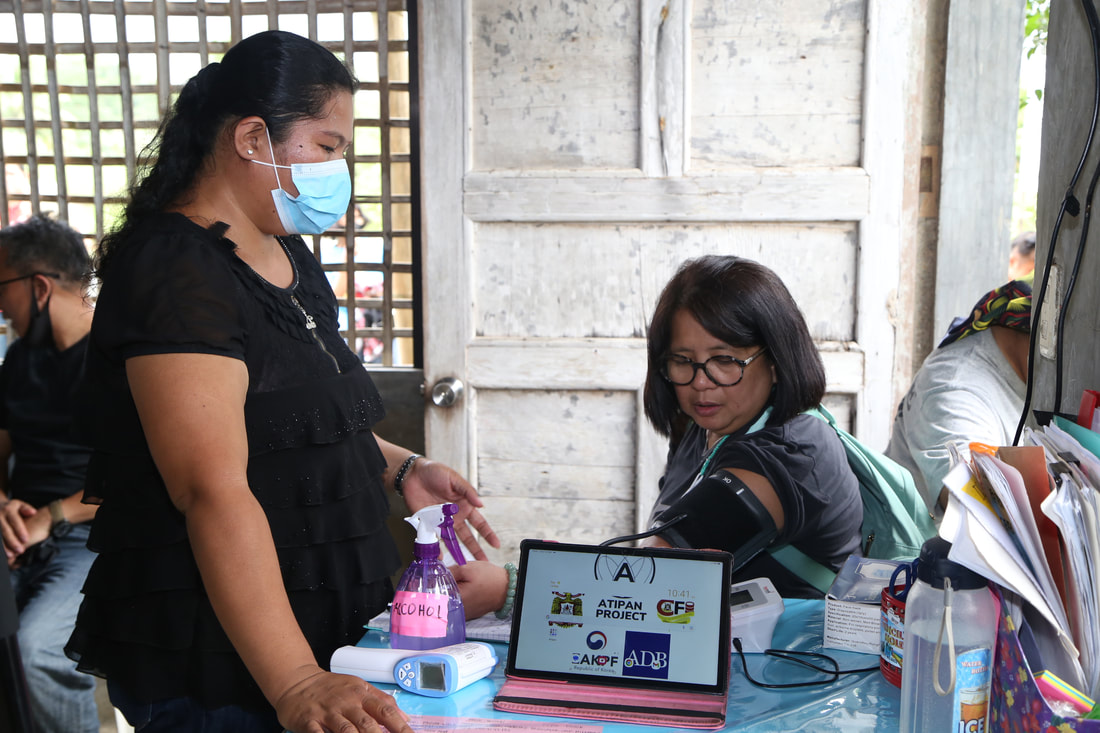
The ATIPAN Project aims to bring digital health to marginalized communities. (Photo credit: Center for Informatics)

Ang mga liblib na komunidad sa Pilipinas ay nahaharap sa mga hamon na humahadlang sa kanilang pag-access sa mga de-kalidad na healthcare service. Bilang tugon, ipinatupad ni Dr. Romulo De Castro at ng kanyang grupo ang ATIPAN Project, na naglalayong iparating ang digital health sa mga marginalized na komunidad.


Dahil sa inspirasyon mula sa salitang Hiligaynon na atipan—na nangangahulugang “pangalagaan”—at mula sa mga komunidad ng Ati na pinaglilingkuran ng grupo ni Dr. De Castro, inilunsad ang proyekto noong 2021 upang mag-alok ng mga libreng teleconsultation, magbigay ng technology at training para sa mga health worker na nakadestino sa katuwang na mga katutubo at mga low income rural community sa Kanlurang Visayas, gayundin ang pagbibigay ng mga pangunahing gamot at pangangailangang pangkalusugan.


Naging positibo ang pagtanggap sa ATIPAN Project mula sa mga komunidad, na nagpapatunay sa mga benepisyo ng telehealth sa kanilang lugar. Habang hindi pa ganap na nasusuri ang mga pangmatagalang epekto ng proyekto, ipinakikita na nito ang potensyal na baguhin ang paghahatid ng health care sa mga remote at under-resourced community, lalo na sa pamamagitan ng pagpapabuti ng local access sa health services.


Ang proyekto ay kasalukuyang pinopondohan ng mga dayuhang ahensya, at umaasa itong magkakabunga ang ginagawa nilang mga expansion plan at innovation.


Si Dr. De Castro ay alumnus ng University of the Philippines – Diliman College of Science (UPD-CS), nakapagtapos ng degree sa Molecular Biology at Biotechnology. Siya ngayon ang Direktor ng Center for Informatics ng University of San Agustin sa Iloilo City.


Kamakailan lang ay naging resource speaker si Dr. De Castro sa “Innovation Impact Stories: A Webinar Series on the Societal Impacts of Science Innovation” ng UPD-CS Innovation Program na ginanap noong Oktubre 15, 2025.


Ang Innovation Impact Stories ay isang webinar series na nagsisiyasat kung paano tinutulak ng agham, technology, at innovation ang real-world impact. Itinatampok ng seryeng ito ang mga paglalakbay, hamon, at tagumpay sa likod ng mga research-driven innovation tungo sa mga makabuluhang kontribusyon sa iba’t ibang larangan. Layon nitong ipagpaalam at bigyang-inspirasyon ang mga mag-aaral, mananaliksik, at guro na pasiglahin ang isang kultura ng purposeful at collaborative innovation na tumutulay sa academic theory at practical application.


Para sa mga katanungan tungkol sa Innovation Impact Stories, mangyaring mag-message sa cs.innovation_committee@science.upd.edu.ph.


References:

Zamora, P. R., Celeste, J., Rivera, R. L., Petrola, J. P., Aguila, R. N., Ledesma, J., Ermoso, M. K., & De Castro, R. (2024). The ATIPAN project: A community-based digital health strategy toward UHC. Oxford Open Digital Health, 2. https://doi.org/10.1093/oodh/oqae011


For interview requests and other concerns, please contact media@science.upd.edu.ph.
UP Alumnus Leads Digital Health Initiative for PH Marginalized Communities

UP Alumnus Leads Digital Health Initiative for PH Marginalized Communities

Published: November 17, 2025
By: Eunice Jean C. Patron

The ATIPAN Project aims to bring digital health to marginalized communities. (Photo credit: Center for Informatics)

Remote communities in the Philippines face challenges that hinder their access to quality healthcare services. In response, Dr. Romulo De Castro and his team implemented the ATIPAN Project, which aims to bring digital health to marginalized communities.


Drawing inspiration from the Hiligaynon word atipan—which means “to take care of”—and from the Ati communities Dr. De Castro’s team serves, the project was launched in 2021 to offer free teleconsultations, provide technology and training for health workers in partner indigenous people and rural low income communities, as well as supply basic medication and health essentials.


The ATIPAN Project has received positive feedback from communities, who highlighted the benefits of telehealth in their area. While the long-term impacts of the project have yet to be fully assessed, there is already evidence of its potential to transform health care delivery in remote and under-resourced communities, primarily by improving local access to health services.


Dr. De Castro is an alumnus of the University of the Philippines – Diliman College of Science (UPD-CS), graduating with a degree in Molecular Biology and Biotechnology. He is now the Director of the Center for Informatics of the University of San Agustin in Iloilo City.


Dr. De Castro is the resource speaker of the recent “Innovation Impact Stories: A Webinar Series on the Societal Impacts of Science Innovation” of the University of the Philippines – Diliman College of Science’s (UPD-CS) Innovation Program held last October 15, 2025 via Zoom.


Innovation Impact Stories is a webinar series that explores how science, technology, and innovation drive real-world impact. This initiative highlights the journeys, challenges, and successes behind research-driven innovations that have made meaningful contributions across various fields. It aims to inform and inspire students, researchers, and faculty to foster a culture of purposeful and collaborative innovation that bridges academic theory with practical application.

For inquiries about Innovation Impact Stories, please message cs.innovation_committee@science.upd.edu.ph


References:

Zamora, P. R., Celeste, J., Rivera, R. L., Petrola, J. P., Aguila, R. N., Ledesma, J., Ermoso, M. K., & De Castro, R. (2024). The ATIPAN project: A community-based digital health strategy toward UHC. Oxford Open Digital Health, 2. https://doi.org/10.1093/oodh/oqae011


For interview requests and other concerns, please contact media@science.upd.edu.ph.
UP Mathematician Nakagawa ng Framework para Ilarawan ang Complex Quantum Operators

UP Mathematician Nakagawa ng Framework para Ilarawan ang Complex Quantum Operators

Published: November 11, 2025
By: Eunice Jean C. Patron
Translated by: Dr. Ian Kendrich C. Fontanilla

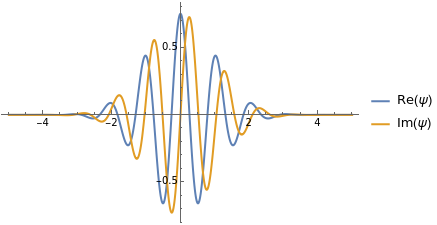
Ang graph na ito ay nagpapakita ng time-frequency shifted Gaussian function, isang halimbawa ng wavelet. Maraming pag-aaral sa harmonic analysis ang nakatuon sa pagbabasag o pagde-decompose ng mga signal gamit ang mga wavelet na ganito. (Larawan: Dr. Arvin Lamando)

Ang mga mathematician na sina Dr. Arvin Lamando ng University of the Philippines – Diliman College of Science’s Institute of Mathematics (UPD-CS IM) at Dr. Henry McNulty ng Norwegian University of Science and Technology ay nakatuklas ng bagong paraan upang maunawaan ang mga mathematical “machine” na tinatawag na operator, na susi sa quantum mechanics at signal processing. Ipinapakita ng kanilang pag-aaral na kahit na ang pinaka masalimuot sa mga operator na ito ay maaaring hatiin sa mas simpleng mga bahagi at pagkatapos ay bubuuhin muli, na nagbibigay ng mga bagong insight sa mga quantum system at technology.


“Malaking bahagi ng akung research ay nasa area ng mathematics na “harmonic analysis””, sabi Dr. Lamando. “Puwede ba nating i-decompose ang mga arbitrary na signal f bilang sum of pure frequencies (sines at cosine)? Kaya itong sagutin ng Fourier transform.”


Maaari nating isipin ang signal bilang isang musical chord. Hinahati ng Fourier transform ang tunog sa mga indibidwal nitong pure note. At tulad ng kung paano tayo mag-replay ng chord sa pamamagitan ng pagpindot sa parehong mga note nang sabay sa isang piano, maaari rin nating buuin ang mga “abstract signal” mula sa mga “pure frequency” nila.

“Habang ang harmonic analysis ay matagal nang nakaugat sa real-world applications, lumalabas na ang mga ideya na may kinalaman sa Fourier transform ay napaka-amenable pala sa abstraction; nakakagulat na may mga koneksyon din ito sa iba’t ibang sangay ng abstract mathematics,” paliwanag niya.


Habang ang classical harmonic analysis ay tumatalakay sa mga signal at kanilang mga frequency, ang quantum harmonic analysis naman ay gumagamit ng mga katulad na ideya sa mga operator. Pinag-aaralan ng field na ito ang mga operator na sumusunod sa mga partikular na tuntunin sa matematika na ginagamit kapag isinasalin ang classical physics sa quantum physics.


“Nagpakilala rin kami ng isa pang ideya, ang tinatawag na ‘modulation’ ng isang operator sa phase space. Ang ideyang ito ay pare-pareho sa mga pangunahing tema ng quantum harmonic analysis: sa katunayan, ang operator Fourier transform ng operator modulation ay nagreresulta sa isang isinalin na operator Fourier transform,” pahayag niya. Sa kanilang pag-aaral, natunton ng mga mathematician ang mga operator na nananatiling hindi nagbabago, o invariant, kahit na isinalin o binago sa mga lattice sa phase space.


“Ipinakita namin na nagtataglay ang mga operator na ito ng mga katangiang kahalintulad sa classical case,” ibinahagi ni Dr. Lamando, at idinagdag na siya at si Dr. McNulty ay gumamit ng isang mathematical framework na tinatawag na Heisenberg module upang mas maunawaan at mailarawan ang mga operator na ito.


Nalaman ng mga mathematician na maaaring mas matantya pa ang mga invariant na operator na ito gamit ang mas simpleng mga operator na tinatawag na finite-rank operators, na ang ibig sabihin ay mailalarawan ang kanilang output gamit lamang ang finite number of dimensions. Nagsisilbing tulay ang kanilang mga resulta sa abstract algebraic ideas at concrete structures sa quantum mathematics.


Ang kanilang pananaliksik, “On Modulation and Translation Invariant Operators and the Heisenberg Module,” ay lumabas sa Journal of Fourier Analysis and Applications, na naglalathala ng mga artikulong may mga paksa mula sa abstract harmonic analysis at group representation theory hanggang sa real world applications at partial differential equations.


References:

Lamando, A., & McNulty, H. (2025). On modulation and translation invariant operators and the heisenberg module. Journal of Fourier Analysis and Applications, 31(4). https://doi.org/10.1007/s00041-025-10176-5


For interview requests and other concerns, please contact media@science.upd.edu.ph.
UP Mathematician Develops Framework to Describe Complex Quantum Operators

UP Mathematician Develops Framework to Describe Complex Quantum Operators

Published: November 11, 2025
By: Eunice Jean C. Patron

The plot of a time-frequency shifted Gausssian function, an example of a wavelet. A substantial effort in harmonic analysis is devoted to the decomposition of signals in terms of wavelets. (Photo credit: Dr. Arvin Lamando)

Mathematicians Dr. Arvin Lamando of the University of the Philippines – Diliman College of Science’s Institute of Mathematics (UPD-CS IM) and Dr. Henry McNulty of the Norwegian University of Science and Technology have found a new way to understand mathematical “machines” called operators, which are key to quantum mechanics and signal processing. Their study shows that even the most intricate of these operators can be broken down into simpler parts and then reconstructed, offering new insights into quantum systems and technologies.


“My research is mostly within the area of mathematics called ‘harmonic analysis,’” Dr. Lamando said. “Can we always decompose arbitrary signals f as a sum of pure frequencies (sines and cosines)? The Fourier transform answers this.”


We can think of the signal as a musical chord. The Fourier transform breaks the sound down into its individual pure notes. And just like how we can replay the chord by pressing those same notes together on a piano, we can also reconstruct “abstract signals” from its “pure frequencies.”


“While harmonic analysis has historical roots in real-world applications, the ideas related to the Fourier transform turned out to be very amenable to abstraction; and it is surprising that it has connections to different branches of abstract mathematics,” he explained.


As classical harmonic analysis deals with signals and their frequencies, quantum harmonic analysis applies similar ideas to operators. This field studies operators that follow specific mathematical rules used when translating classical physics into quantum physics. 


“We also introduced another notion, called the ‘modulation’ of an operator in the phase space. This notion is consistent with the main themes of quantum harmonic analysis: in fact, the operator Fourier transform of operator modulation results in a translated operator Fourier transform,” he said. In their study, the mathematicians focused on operators that remain unchanged, or invariant, even when translated or modulated over lattices on the phase space. 

“We have shown that these operators possess properties analogous to the classical case,” Dr. Lamando shared, adding that he and Dr. McNulty used a mathematical framework called the Heisenberg module to better understand and describe these operators.


The mathematicians found that these invariant operators can be closely approximated using much simpler operators called finite-rank operators, which can roughly be interpreted to mean that their outputs can be described using only a finite number of dimensions. Their results bridge abstract algebraic ideas to concrete structures in quantum mathematics.


Their research, “On Modulation and Translation Invariant Operators and the Heisenberg Module,” was included in the Journal of Fourier Analysis and Applications, which publishes articles with topics that range from abstract harmonic analysis and group representation theory to real world applications and partial differential equations.


References:

Lamando, A., & McNulty, H. (2025). On modulation and translation invariant operators and the heisenberg module. Journal of Fourier Analysis and Applications, 31(4). https://doi.org/10.1007/s00041-025-10176-5


For interview requests and other concerns, please contact media@science.upd.edu.ph.

‘Forged in Mentorship and Innovation’: Binalangkas ng Bagong UPD-CS Dean ang mga Plano sa Hinaharap

'Forged in Mentorship and Innovation': Binalangkas ng Bagong UPD-CS Dean ang mga Plano sa Hinaharap

Published: November 3, 2025
By: Eunice Jean C. Patron
Translated by: Dr. Ian Kendrich C. Fontanilla

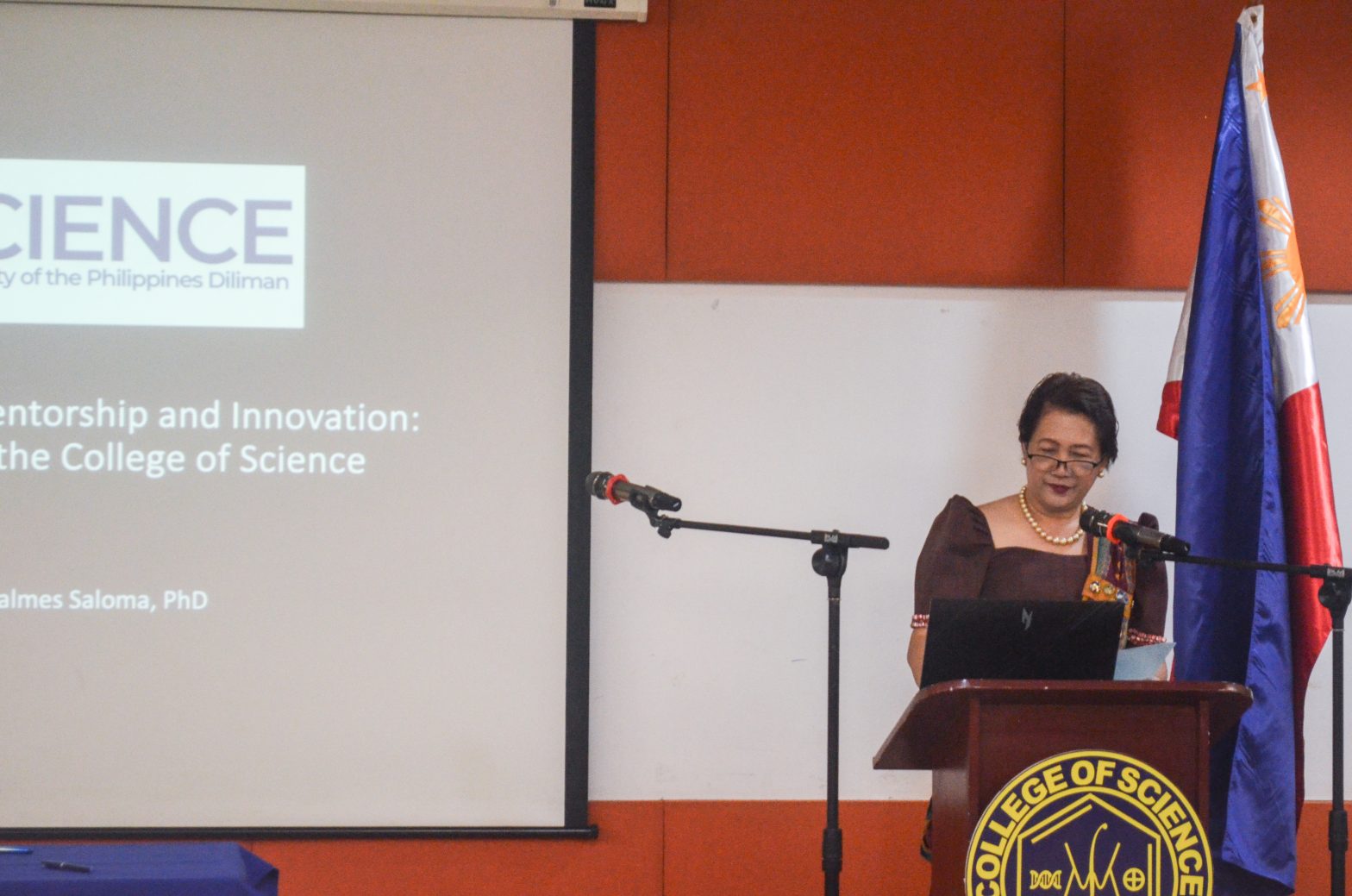
Si Dr. Cynthia P. Saloma ay opisyal na kinumpirma bilang bagong Dekana ng UPD-CS noong Oktubre 20.

Sa pagpasok ng University of the Philippines – Diliman College of Science (UPD-CS) sa isang panahong hinihimok ng guidance at innovation, isa sa mga pangunahing molecular biologist sa bansa ang mamumuno ngayon upang patnubayan ang Kolehiyo tungo sa kahusayan.


“Mentorship is the heartbeat of academic excellence,” sabi ni Dr. Cynthia P. Saloma ng UPD-CS National Institute of Molecular Biology and Biotechnology (NIMBB), na kamakailan lamang ay na-affirm bilang bagong Dekano ng Kolehiyo noong Oktubre 20. “It is through your guidance that our students will develop the vision and the resilience to tackle the unknown.”


Sa kanyang affirmation address, binigyang-diin ni Dr. Saloma na higit pa sa supervision,dapat ding tumanggap ang mga mag-aaral ng UPD-CS ng transformative mentorship mula sa mga guro. Sa kanyang termino, nakatuon siya sa patuloy na pagsuporta ng Kolehiyo sa mga guro nito bilang mga mentor sa pamamagitan ng paglinang ng isang environment kung saan ang mga mag-aaral ay sinusuportahan, empowered, at pinaghahanda upang maging susunod na mga pinuno.


“The Philippines faces complex challenges and opportunities, all of which demand a robust pipeline of homegrown, world-class experts,” dagdag ni Dr. Saloma, na binibigyang-diin na ang pamumuhunan sa pag-unlad ng mga mag-aaral ay isa ring pamumuhunan sa kakayahan ng bansa na mamuno, makipagkumpetensya, at mag-innovate sa pandaigdigang antas.


Binigyang-diin din ng bagong Dekano ang pangako ng Kolehiyo na gamitin ang makabagong pananaliksik at kolaborasyon upang harapin ang mga hamon na kinakaharap ng Pilipinas—mula sa pagbabago ng klima at seguridad sa pagkain hanggang sa kalusugan ng mundo.


Pagpapanatili ng kahusayan sa pananaliksik


Upang matupad ang mga pangako ng Kolehiyo, binanggit ni Dr. Saloma na dapat munang tugunan ang isang pangunahing isyu—sustainable support. Pinaalalahanan niya ang komunidad ng UPD-CS kung paano makakagawa ng pagbabago ang pagpopondo sa pagsulong ng mga scientific project:


“No matter how brilliant an idea is, without a well-equipped lab, it remains a pipe dream—a project deferred. A promising student or researcher without adequate funding is potential left untapped,” diin ni Dr. Saloma “We are thankful for the grants we receive for certain projects, but we face a critical gap in the foundational funding that keeps our lights on, our equipment running, and our facilities safe and modern. This is the lifeblood of our daily operations.”


Nangako siya na unang tututukan ng kanyang deanship ang pagbuo ng mga partnership sa iba’t ibang sektor—mula sa administrasyon ng UP at alumni ng UPD-CS hanggang sa mga kasama sa industriya, at mga ahensya mula sa pribado at gobyerno. “It is investing in the very infrastructure of innovation and mentorship in our country,” dagdag niya.


Si Dr. Saloma ay ang ika-walong Dekano ng UPD-CS. Isa siya sa mga founding member ng Philippine Genome Center at nagsilbi bilang Executive Director nito mula 2018 hanggang 2023. Nagsilbi rin siyang Director ng NIMBB mula 2012 hanggang 2018. Si Dr. Saloma ay ang Principal Investigator sa Laboratory of Molecular and Cell Biology (LMCB) ng NIMBB, na nakatuon sa gene function in development.


Si Dean Saloma ay susuportahan ng College Executive Board na binubuo nina Dr. Manuel Joseph C. Loquias (Academic Affairs), Dr. Betchaida D. Payot (Research and Extension), Dr. Allan Christopher C. Yago (Facilities and Resources), Dr. Leilani G. Sumabat-Dacones (Student and Public Affairs), Dr. Marie Christine M. Obusan (College Secretary), at Dr. Rheadel G. Fulgencio (Assistant College Secretary), kasama ang mga program at center director tulad nina Dr. Bantang (Computational Science Research Center), Dr. Lerrie Ann D.G. Ipulan-Colet (Science and Society Program), Dr. Marienette M. Vega (Material Science and Engineering Program), Dr. Rachelle R. Sambayan (Data Science Program), Dr. William Patrick C. Buhian (NSTP Coordinator), at Dr. Wilfred John E. Santiañez (Graduate Program Coordinator).


For interview requests and other concerns, please contact media@science.upd.edu.ph.

‘Forged in Mentorship and Innovation’: New UPD-CS Dean Outlines Future Plans

‘Forged in Mentorship and Innovation’: New UPD-CS Dean Outlines Future Plans

Published: November 3, 2025
By: Eunice Jean C. Patron

Dr. Cynthia P. Saloma was recently affirmed as the new Dean of UPD-CS last October 20.

As the University of the Philippines – Diliman College of Science (UPD-CS) enters a new era driven by guidance and innovation, one of the country’s leading molecular biologists now takes the helm to steer the college towards excellence.


“Mentorship is the heartbeat of academic excellence,” said Dr. Cynthia P. Saloma of the UPD-CS National Institute of Molecular Biology and Biotechnology (NIMBB), who was recently affirmed as the new Dean of the College last October 20. “It is through your guidance that our students will develop the vision and the resilience to tackle the unknown.”


In her affirmation address, Dr. Saloma emphasized that beyond supervision, students of UPD-CS should also receive transformative mentorship from the faculty. During her term, she committed to ensuring that the College continues to support its faculty as mentors by cultivating an environment where students are supported, empowered, and equipped to become future leaders.


“The Philippines faces complex challenges and opportunities, all of which demand a robust pipeline of homegrown, world-class experts,” Dr. Saloma added, highlighting that investing in students’ development is also an investment in the country’s capacity to lead, compete, and innovate at a global level.


The new dean also highlighted the College’s commitment to harness innovative research and collaboration to tackle head-on the challenges the Philippines faces—from climate change and food security to global health.


Sustaining research excellence


To make the College’s commitments possible, Dr. Saloma noted that a fundamental issue must be addressed—sustainable support. She reminded the UPD-CS community of how funding can make a difference in advancing scientific projects:


“No matter how brilliant an idea is, without a well-equipped lab, it remains a pipe dream—a project deferred. A promising student or researcher without adequate funding is potential left untapped,” underscored Dr. Saloma “We are thankful for the grants we receive for certain projects, but we face a critical gap in the foundational funding that keeps our lights on, our equipment running, and our facilities safe and modern. This is the lifeblood of our daily operations.”


She pledged that a key focus of her deanship will be to build partnerships with various sectors—from the UP administration and UPD-CS alumni to industry partners, and both private and government agencies. “It is investing in the very infrastructure of innovation and mentorship in our country,” she added.


Dr. Saloma is the 8th Dean of UPD-CS. She is one of the founding members of the Philippine Genome Center and served as its Executive Director from 2018 to 2023. She also served as Director of NIMBB from 2012 to 2018. Dr. Saloma is the Principal Investigator at the Laboratory of Molecular and Cell Biology (LMCB) of NIMBB, which focuses on gene function in development.


Dean Saloma will be supported by the College Executive Board composed of Dr. Manuel Joseph C. Loquias (Academic Affairs), Dr. Betchaida D. Payot (Research and Extension), Dr. Allan Christopher C. Yago (Facilities and Resources), Dr. Leilani G. Sumabat-Dacones (Student and Public Affairs), and Dr. Marie Christine M. Obusan (College Secretary), along with program and center directors Dr. Johnrob Y. Bantang (Computational Science Research Center), Dr. Lerrie Ann D.G. Ipulan-Colet (Science and Society Program), Dr. Marienette M. Vega (Material Science and Engineering Program), Dr. Rachelle R. Sambayan (Data Science Program), Dr. William Patrick C. Buhian (NSTP Coordinator), Dr. Wilfred John E. Santiañez (Graduate Program Coordinator), and Dr. Rheadel G. Fulgencio (Assistant College Secretary).


For interview requests and other concerns, please contact media@science.upd.edu.ph.

EXTENDED! Call for Abstract Submission for the 6th Graduate Student Research Conference

EXTENDED! Call for Abstract Submission for the 6th Graduate Student Research Conference

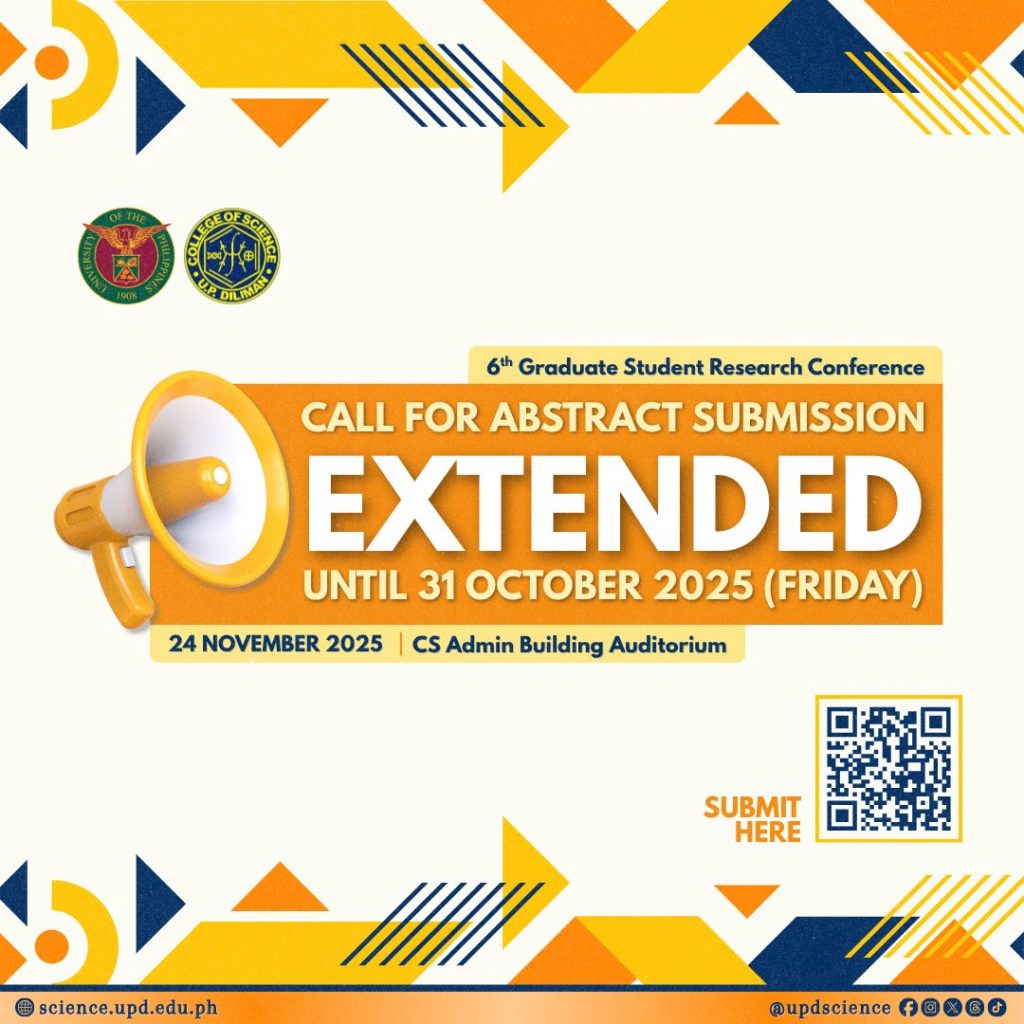
🗣 DEADLINE FOR ABSTRACT SUBMISSIONS EXTENDED! 📣


We’ve heard you! Good news, UP Diliman College of Science graduate students and recent graduates! The deadline for abstract submissions for the 6th Graduate Student Research Conference (GSRC2025) has been extended until October 31, 2025 (Friday)!

Don’t miss this chance to present your research at the GSRC2025, happening on November 24, 2025 (Monday) at the CS Admin Building Auditorium.

Send us your abstracts on or before the new deadline through this link:
🔗 https://tinyurl.com/GSRC2025Submissions

Take this extra week to polish your abstracts and be part of another exciting celebration of research and collaboration at the College of Science!

🗣 CALL FOR ABSTRACT SUBMISSION FOR THE 6TH GRADUATE STUDENT RESEARCH CONFERENCE! 📣
 
The College of Science of the University of the Philippines Diliman (UPD-CS) invites its current graduate students and recent graduates to present their exciting research works during the GSRC2025 to be held on November 24, 2025, at the CS Admin Building Auditorium. Aside from showcasing your research, the GSRC is also a venue to link and promote collaboration among other graduate students and faculty members from the different institutes within UPD-CS.
 
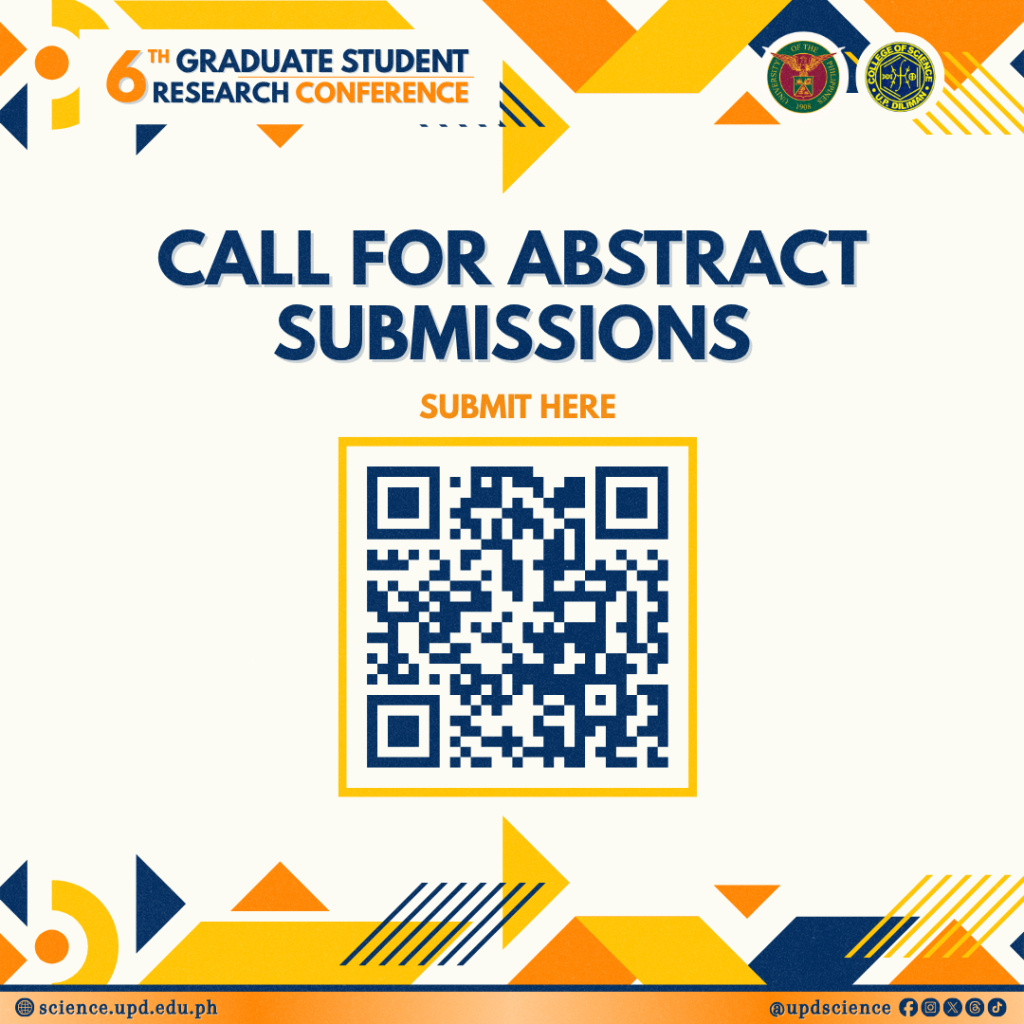
To join us, please register and submit your abstracts on or before October 24, 2025, by scanning the QR code (please see image below) or through this link: tinyurl.com/GSRC2025Submissions

Unang pagsukat ng “Elusive” na Light Shift sa Low-Loss Dielectric Materials naitala ng mga mananaliksik ng UP

Unang pagsukat ng “Elusive” na Light Shift sa Low-Loss Dielectric Materials naitala ng mga mananaliksik ng UP

Published: October 29, 2025
By: Eunice Jean C. Patron

Ang pag-reflect ng isang laser sa salamin ay tila sumusunod sa “mirror rule”- ang anggulong papasok ay katumbas ng anggulong palabas. Ngunit  kapag gumamit ng mga sensitibong instrumento, mapapansin na lumilihis ng bahagya ang sinag. Kadalasan, kasing liit lang ng isang hibla ng buhok ang distansya ng paglihis. Ang elusive na epektong ito, na tinatawag na Goos–Hänchen (GH) shift, ay sinuri kamakailan lang ng mga siyentipiko mula sa College of Science ng UP Diliman (UPD-CS) sa mga materyales na halos hindi  nag-“aabsorb” ng liwanag—tulad ng ginagamit sa mga semiconductor at photonics.


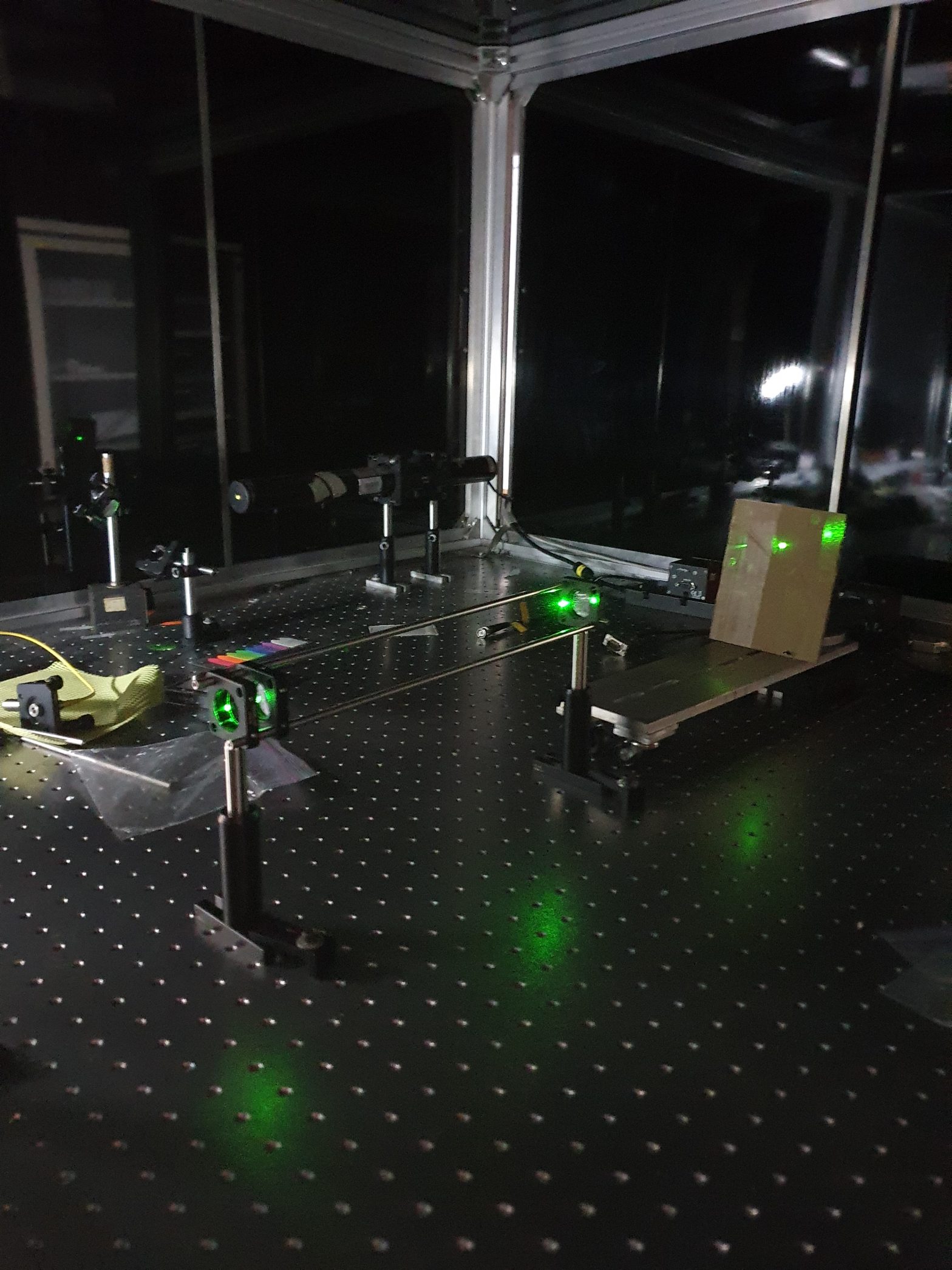
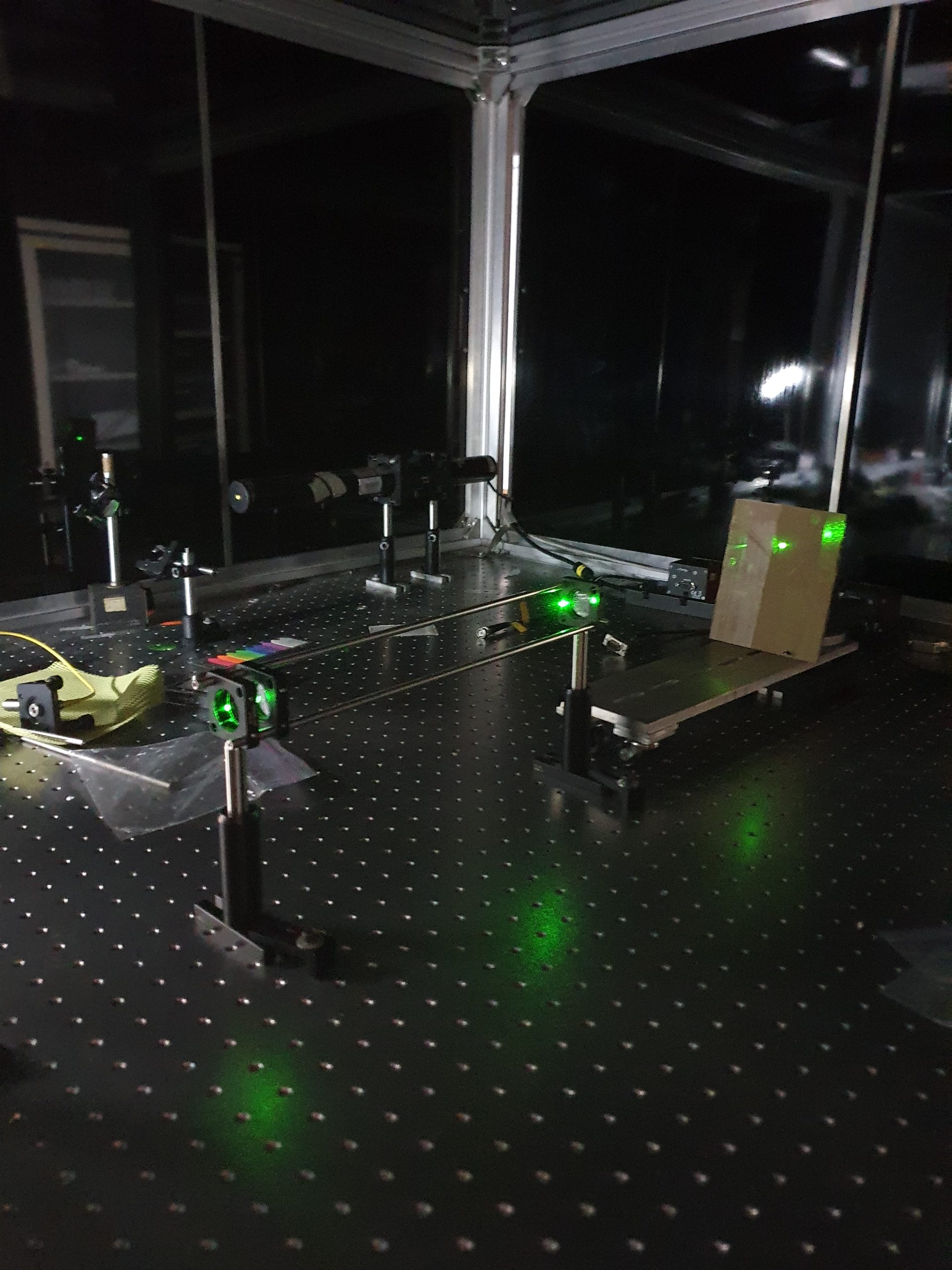
Experimental set-up sa isang optical table sa Darkroom ng Structured Light and Applications Lab, Photonics Research Laboratory, sa National Institute of Physics. (Larawan: Jared Joshua Operaña)

Pinag-aralan nila Jared Joshua Operaña ng Materials Science and Engineering Program (MSEP), kasama sina Dr. Niña Zambale Simon at Dr. Nathaniel Hermosa ng National Institute of Physics (NIP), kung paano nakita ang GH shift sa low-loss dielectric materials gaya ng silicon at gallium arsenide. Ipinakita ng kanilang pananaliksik na ang “elusive na light shift” na ito ay pwedeng maging mas malaki, at ang paglaki ay nakadepende sa mga katangian ng materyal na gamit, bagay na ikinasorpresa nila.


Kauna-unahang Pagsukat


“Hanggang ngayon, ang GH shifts ay kadalasang nasusukat lamang sa mga metal o kakaibang layered structures, at ito ay dahil mas malaki ang GH shifts sa mga materyales na iyon kaya’t madali itong makita,” paliwanag ni Operaña sa isang panayam. “Ngunit matagal nang ipinapahiwatig ng mga teoretikal na pag-aaral na kahit ang mga ordinaryo at uncoated dielectric na halos hindi nag-aabsorb ng liwanag ay kayang makapagtala ng di-karaniwang malalaking GH shifts.”


Mahirap sukatin ang mga malalaking GH shifts na ito gamit ang mga tradisyonal na instrumento dahil nagaganap lamang ang mga ito sa napakakitid na saklaw ng mga anggulo. Ngunit ang grupo nila Operaña ang kauna-unahang nakapagpatunay ng mga prediksyong ito sa pamamagitan ng aktuwal na eksperimento—isang mahalagang hakbang na nagpapakita na kahit ang mga karaniwang materyales ay maaaring magkaroon ng makahulugang GH shifts. “Ipinakita namin na ang silicon, na mas mababa ang “light absorption” kaysa gallium arsenide, ay nakapagtala ng GH shift na hanggang 100 beses ng wavelength ng laser beam,” dagdag pa niya.


Sa kanilang pananaliksik, nasukat lang nila ang GH shifts sa 543 at 633 nanometers, ngunit plano nilang palawakin pa ito upang isama ang mas maraming pang laser wavelengths, at  posibleng maski ang mga wavelength na labas sa visible region ng spektrum. Possible ring baguhin ng ibang mananaliksik ang mga katangian ng mga materyales na kanilang gagamitin, depende sa layunin ng kanilang pag-aaral.


Patungo sa Praktikal na Aplikasyon at iba pa


Ang pagtuklas sa pagiging sensitibo ng GH shifts sa maliit na pagkakaiba ng “light absorption properties” ng materyales ay pwedeng gamitin na pamamaraan para gumawa ng mga praktikal na instrument para sa pananaliksik at industriya. “Sa industriya, maaaring makabuo ng maliliit na instrumento batay sa GH-shift detection para sa quality control ng mga semiconductor, photonics, at advanced coatings, kung saan napakahalaga ng eksakto at tiyak na kontrol sa mga katangian ng materyales,” paliwanag ni Operaña.


Sa larangan naman ng akademikong pananaliksik, pwede itong gamitin na bago at napakasensitibong paraan ng pag-aaral kung paano nakikipag-ugnayan ang mga materyales sa liwanag, bagay na magbubukas ng daan sa mas malalim na pag-unawa at mga bagong aplikasyon.


Ang kanilang pag-aaral ay sinuportahan ng Department of Science and Technology – Philippine Council for Industry, Energy, and Emerging Technology Research and Development (DOST-PCIEERD) at ng Office of the Vice Chancellor for Research and Development (OVCRD) ng University of the Philippines.


References:

Operaña, J. J., Zambale Simon, N., & Hermosa, N. (2025). Observation of the spatial goos–hänchen shift due to low-loss dielectrics. Optics Letters, 50(11), 3533. https://doi.org/10.1364/ol.550141


For interview requests and other concerns, please contact media@science.upd.edu.ph.

UP Researchers Record First Measurement of Elusive Light Shift in Low-Loss Dielectric Materials

UP Researchers Record First Measurement of Elusive Light Shift in Low-Loss Dielectric Materials

Published: October 29, 2025
By: Eunice Jean C. Patron

A laser reflecting off glass looks like it follows the mirror rule—angle in equals angle out. But with sensitive tools, the spot shifts slightly, no bigger than a strand of hair. This elusive effect, called the Goos–Hänchen (GH) shift, was recently explored by scientists from the UP Diliman College of Science (UPD-CS) in materials that barely absorb light—such as those used in semiconductors and photonics.


Early stages of the experiment set-up in one of the optical tables at the Darkroom of the Structured Light and Applications Lab, Photonics Research Laboratory, at the National Institute of Physics. (Photo credit: Jared Joshua Operaña)

Jared Joshua Operaña of the UPD-CS Materials Science and Engineering Program (MSEP), together with Drs. Niña Zambale Simon and Nathaniel Hermosa of the UPD-CS National Institute of Physics (NIP), studied how the GH shift is evident in low-loss dielectric materials such as silicon and gallium arsenide. The findings of their research show that this elusive light shift can become surprisingly large, revealing that the size of the GH shift changes depending on the material’s properties.


A First-of-its-kind Measurement


“Until now, GH shifts were mostly observed in metals or exotic layered structures, because these are the materials where GH shifts are relatively larger and thus are easily observed,” Operaña said in an interview. “But theoretical studies have long suggested that even ordinary, uncoated dielectrics with very little light absorption should produce unusually large GH shifts.”


These large GH shifts are difficult to measure with traditional tools, as they occur only within an extremely narrow range of angles. Operaña’s team is the first to experimentally confirm these predictions in materials that barely absorb light, marking an important step in showing that widely available materials can exhibit significant GH shifts. “We showed that silicon, which absorbs less light than gallium arsenide, produces a shift up to 100 times the wavelength of the laser beam,” he added.


In their research, the team measured GH shifts at just 543 and 633 nanometers, but they plan to expand their method to include more laser wavelengths, possibly even those outside the visible region. Other researchers may also modify the properties of the materials they will use, depending on the goals of their studies.


Toward Real-Life Use and Beyond


Discovering the sensitivity of GH shifts to subtle differences in the material’s light absorption gives their method the potential to evolve into a practical tool for both research and industry. “In the commercial setting, compact instruments based on GH-shift detection could be developed for quality control in semiconductors, photonics, and advanced coatings, where precise control of material properties is critical,” explained Operaña.


In academic research, their method provides a new and highly sensitive approach to studying how materials interact with light, paving the way to deeper understanding and new applications.

Their study is funded by the Department of Science and Technology Philippine Council for

Industry, Energy, and Emerging Technology Research and Development (DOST-PCIEERD) and the University of the Philippines Office of the Vice Chancellor for Research and Development (OVCRD).


References:

Operaña, J. J., Zambale Simon, N., & Hermosa, N. (2025). Observation of the spatial goos–hänchen shift due to low-loss dielectrics. Optics Letters, 50(11), 3533. https://doi.org/10.1364/ol.550141


For interview requests and other concerns, please contact media@science.upd.edu.ph.
Imbensyon ng mga Siyentista sa UP kayang ibaba ang presyo ng Terahertz Antenna Device

Imbensyon ng mga Siyentista sa UP kayang ibaba ang presyo ng Terahertz Antenna Device

Published: October 3, 2025
By: Eunice Jean C. Patron
Translated by: Dr. Eizadora T. Yu

Nakabuo ng bagong semiconductor structure ang mga syentista ng UP Diliman College of Science na pwedeng magbigay-daan sa mas abot-kaya at mas reliable na Terahertz (THz) technology. Isa sa mga layunin ng THz research ay palawakin ang paggamit ng THz-Time Domain Spectroscopy (THz-TDS).  Nalutas ng imbensyong ito ang pangunahing hadlang na teknikal at ekonomikal sa paggamit ng THz technology, na maaring magamit sa mga aplikasyon tulad ng medical imaging at high-speed wireless communication.


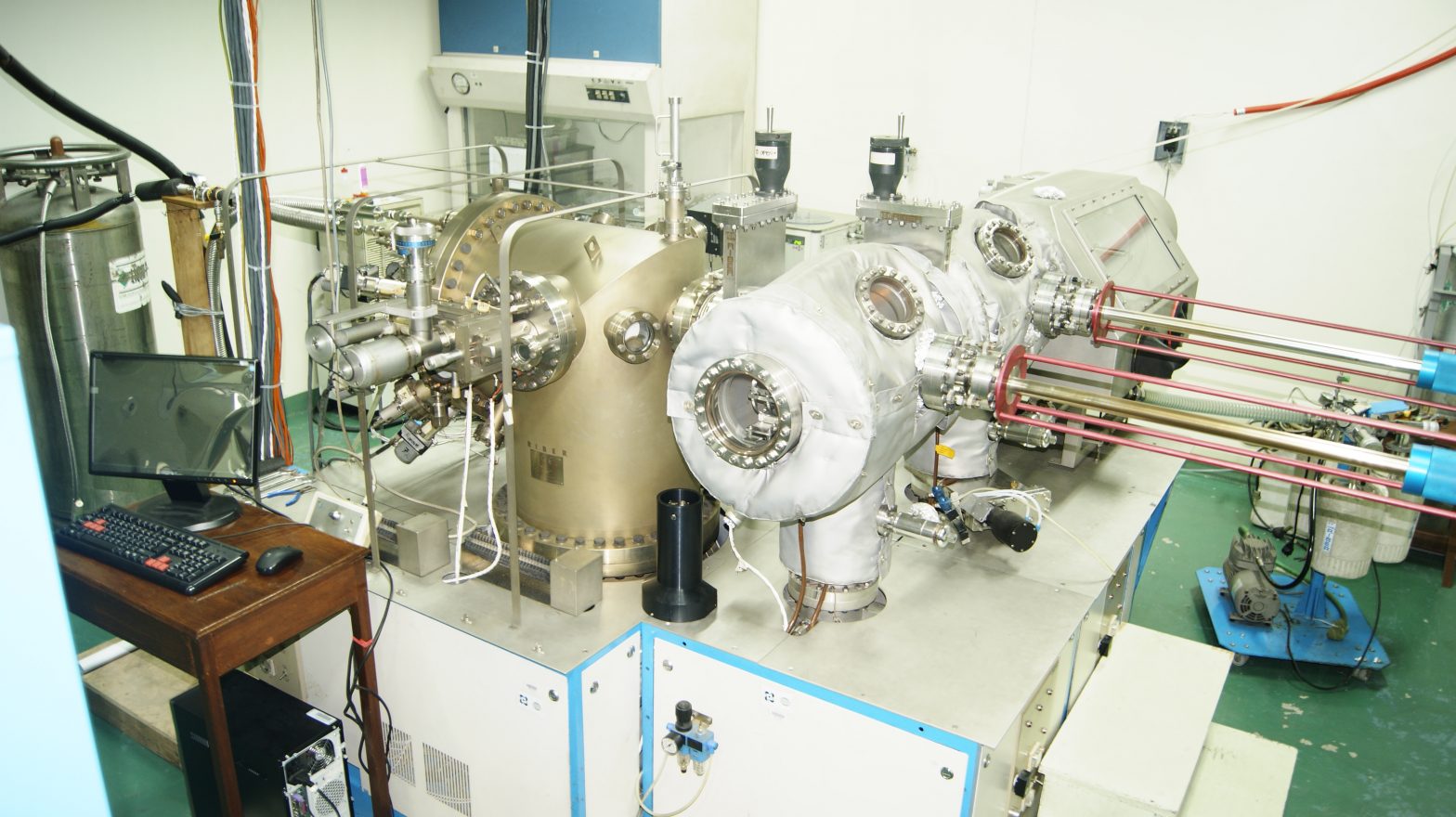
Ang Riber 32P MBE equipment na ginamit upang palaguin ang THz emitter. Ang THz emitter ay binubuo ng p-InAs epitaxial layers na nasa ibabaw ng patong-patong na InGaAs/GaAs superlattice at GaAs buffer na nasa ibabaw ng growth-interrupted GaAs region at n-GaSb substrate. (Photo credit: Dr. Cyril Salang)

Nagpakilala ng bagong disenyo ng semiconductor sila Dr. Cyril Salang ng Materials Science and Engineering Program (MSEP), kasama sina Dr. Arnel Salvador, Dr. Armando Somintac, at Dr. Elmer Estacio ng National Institute of Physics (NIP), at Dr. Joselito Muldera ng RIKEN (ang RIKEN ay isang pambansang institusyong pang-agham sa Japan). Tampok ng bagong disenyo ang isang substrate, isang buffer layer at isang epitaxial layer sa ibabaw. Ang epitaxial layer ay isang manipis na layer ng kristal.


Ang katangi-tangi sa kanilang disenyo ay ang paggamit ng isang “mismatched buffer layer” na isang materyal na may atomic structure (o lattice constant) na ibang-iba kumpara sa substrate sa ibaba at itaas ng epitaxial layer. Bagama’t karaniwang nagdudulot ng mga depekto o mahinang performance ang mismatches, nakakagulat na ang kombinasyong ito ay nakabuo ng mga layers na mataas ang kalidad, at kasing husay o mas mahusay pa sa mga tradisyunal na materyales na ginagamit sa THz emitters.


Nagdagdag din sila ng “growth-interrupted  region” at isang superlattice, isang istrukturang gawa sa pinagpatong-patong na mga manipis na layer, para palakasin ang kapit sa pagitan ng mga sangkap kahit na may lattice mismatch. Isang layer ng p-type indium arsenide (p-InAs) ay pinatubo sa ibabaw ng isang superlattice, na siya naming dineposito sa taas ng pangunahing buffer layer na siya naming nasa itaas ng isang “growth-interrupted region” sa itaas ng isang murang substrate, gallium antimonide (n-GaSb).


Nagpakita ng kahanga-hangang resulta ang imbensyon na ito sa mga test. Ang performance nito ay katulad ng tradisyunal na bulk materials kapag gumagamit ng 0.80 μm laser, at mas mahusay pa kapag gumamit ng 1.55 μm fiber laser. Lumalabas na mas mura at praktikal para sa karaniwang paggamit ang imbensyon nila kaya’t maaari itong maging game-changer para sa THz-TDS systems.


Ibinahagi ni Dr. Salang na umabot ng labing isang taon mula sa unang idea noong 2013 hanggang sa pagbigay ng patent noong 2024.  “Na-publish ang aking papel noong 2015, na sinundan ng isang invention disclosure sa parehong taon. Sa tulong ng UP Diliman Office of the Vice Chancellor for Research and Development (OVCRD), naisumite ang aplikasyon para sa patent noong Pebrero 2016 at opisyal na naaprubahan noong 2024,” aniya.


Sa pagkakaloob ng bagong patent, mas malakas na ang posisyon ng pangkat nila Dr. Salang upang makapag-ambag sa lumalaking industriya ng Terahertz. “Ang pagtanggap ng isang pambansang patent ay nangangahulugan na kinikilala ang orihinalidad ng aming trabaho. Hinihikayat ako nitong magpatuloy sa paggawa ng mga bagong inobasyon,” dagdag niya.


For interview requests and other concerns, please contact media@science.upd.edu.ph.