The relationship between Super Typhoon occurrence and Climate Change
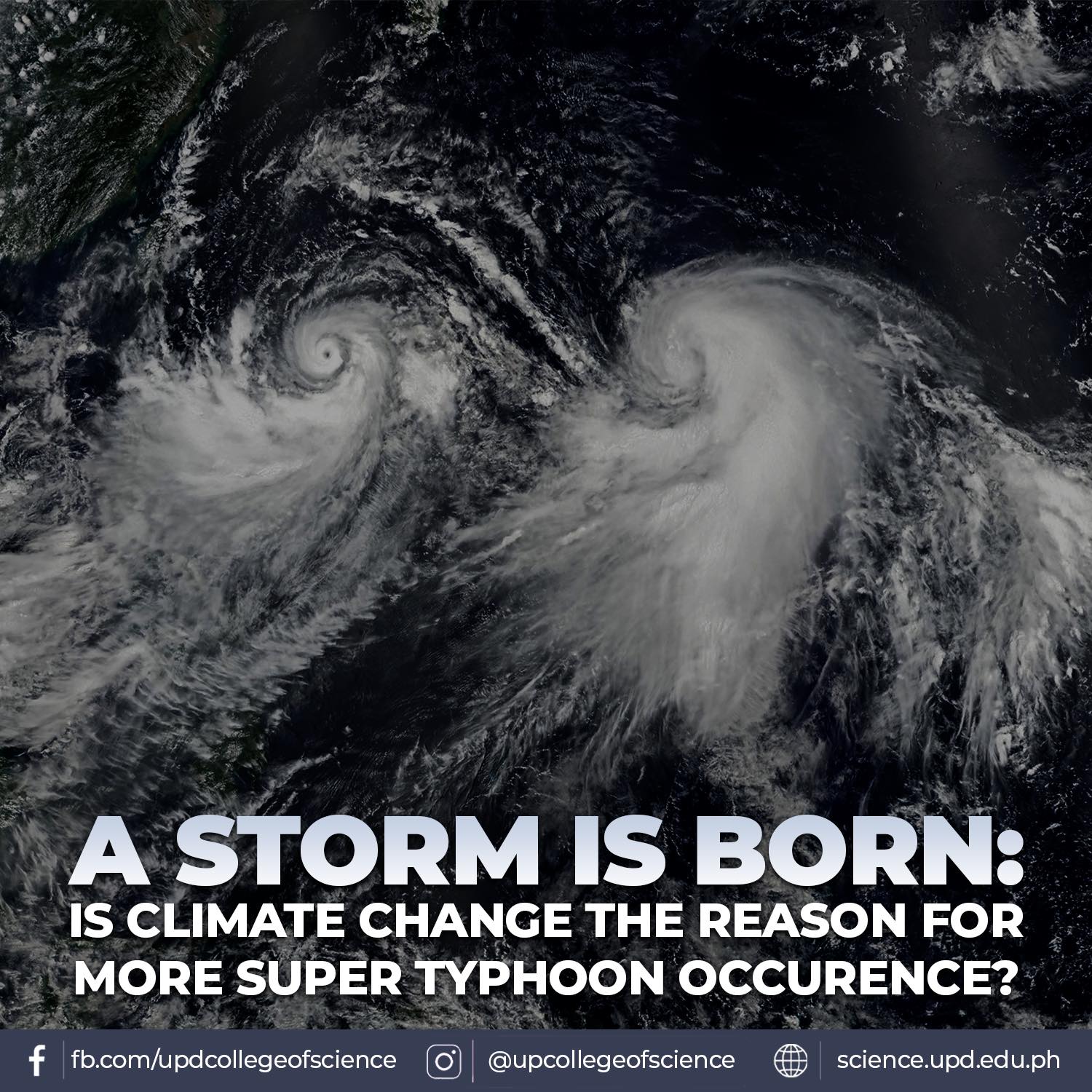
Our country is not new to typhoons and its devastating impacts. Each year, about 20 tropical cyclones traverse the Philippine Area of Responsibility (PAR). Tropical cyclones occur when the following conditions are present: (1) warm ocean, (2) ample convection (air rising), (3) humid environment, (4) low wind shear, (5) 500 km away from the equator, and (6) a pre-existing low level disturbance. However, even if all these conditions are present, tropical cyclones may not form. Tropical cyclones that form over tropical oceans tend to move west and northward. It is often characterized by strong winds and intense rains that can bring destruction along its path.
Tropical cyclones form when thunderstorms in the monsoon trough (located over tropical waters east of the Philippines) group together and follow a spiral motion. Tropical cyclones can occur anytime of the year in the western Pacific due to the presence of an environment conducive to formation all year round. The Philippines, being located on the western rim of the western Pacific, is vulnerable to tropical cyclones forming in the region.
In the Philippines, the Philippine Atmospheric, Geophysical and Astronomical Services Administration (PAG-ASA) classifies tropical cyclones depending on their maximum wind strength. These classifications include—from lowest to highest—Tropical Depression, Tropical Storm, Severe Tropical Storm, Typhoon, and Supertyphoon.
Having different thresholds and categories with other countries, PAG-ASA categorizes a supertyphoon when a typhoon’s maximum winds reach >200 kmph. Some of the supertyphoons recorded in the Philippines are Bagyong Rolly in 2020 and Bagyong Lawin in 2016. Despite Yolanda’s wind speed passing as a super typhoon, it was only classified as a typhoon back then. Bagyong Yolanda was also the reason for PAGASA to adopt the term “super typhoon” as a classification.
Known internationally as Typhoon Haiyan, Bagyong Yolanda made its landfall in the country on November 8, 2013 in the Eastern Visayas region. It peaked at ~235 kph, affecting more than 14 million people and causing around 6,300 deaths. Apart from the strong winds, the most destructive was the storm surge that struck the Leyte Gulf. The City of Tacloban in Leyte was the most affected and was declared to be 100% destroyed after the typhoon.
According to the Institute of Environmental Science and Meteorology Professor, Dr. Gerry Bagtasa, there is not enough data yet to conclude that climate change is one of the major causes of the increasing number of typhoons and its severity. “Several studies show a relationship between rising ocean temperature and typhoon intensity, however, weather records are rather short at ~40 years starting when satellites were developed. It is therefore difficult to have strong conclusions for now” he explains. In fact, the year 2021 was a strange one because the number of tropical cyclones so far recorded this year is way lower than the previous years.
Although the impact of climate change on tropical cyclones has not been directly observed yet, it is expected that the influence of climate change on tropical cyclones will become clear, and we will likely know this within our lifetime. It is also important that we always prepare for the adverse impacts of typhoons and impose policymakers to implement better disaster-management strategies and shift the focus to preventing damages from happening instead of fixing the damages as a result of typhoon occurrence.
References:
https://www.pagasa.dost.gov.ph/information/about-tropical-cyclone
https://windy.app/textbook/how-typhoons-form.htmlv
https://www.wired.com/story/what-is-a-super-typhoon-and-why-are-they-so-dangerous/
https://www.rappler.com/nation/lookback-super-typhoon-yolanda-haiyan-anniversary-2021
https://www.climate.gov/news-features/understanding-climate/climate-change-probably-increasing-intensity-tropical-cyclones
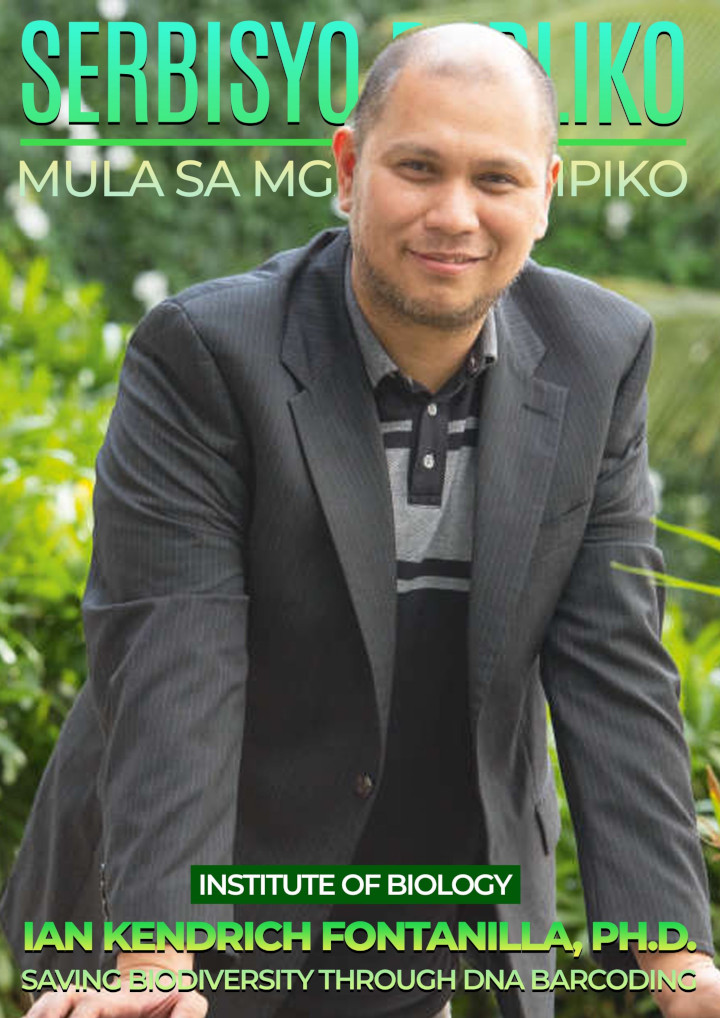
 In 2013, a Chinese vessel with over 3,000 frozen pangolins onboard was caught in the Tubbataha Natural Park in Sulu Sea. The pangolins were already processed and their scales were removed, making it hard to identify if they belonged to the endemic Philippine species, Manis culionensis, and if the Chinese fishermen should be prosecuted under the Republic Act No. 9147 or the Wildlife Resources Conservation and Protection Act. The authorities seeked help from experts to identify where the pangolins came from to determine their next course of action. A team from the UP Diliman Institute of Biology (IB) headed by Dr. Ian Kendrich C. Fontanilla came to rescue and with the samples provided, they concluded that the pangolins were only closely related Southeast Asian species.
  The DBL and Dr. Fontanilla have received praises and distinction for their DNA barcoding work, which they started to build up in 2008. “Through this method, we describe the Philippine biodiversity to know what is out there and what we have,” then 46-year-old UP Scientist says.
 As a professor, one of Dr. Fontanilla’s goals is to mentor new doctoral students that would become the Philippines’ new wave of scientists. “We need to encourage more people to enter the field of research because we need it more than ever.” He also expressed his ideals in spreading UP scientists in different institutes as administrators and policy makers to ensure the effective applications of science to society and to easily share their research to those who need it most.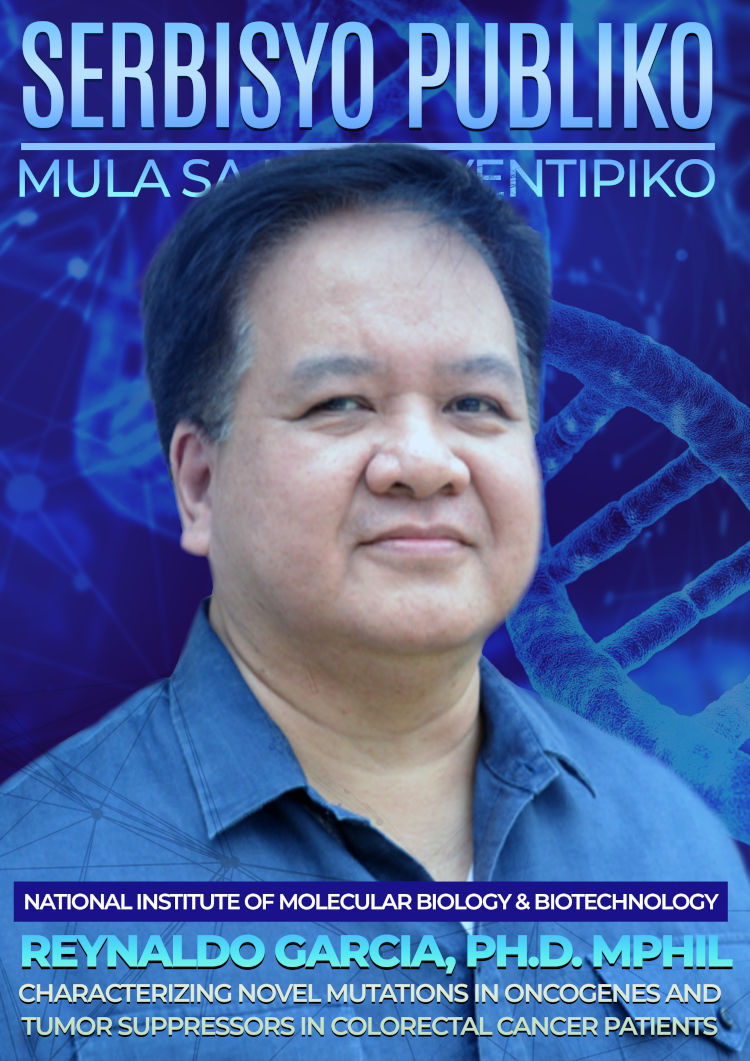
 When the pandemic hit and lockdowns were implemented in March 2020, Dr. Reynaldo “Rey” L. Garcia of the National Institute of Molecular Biology and Biotechnology (NIMBB) unexpectedly found a bigger and more important role for his laboratory. He volunteered to loan out his laboratory’s RT-qPCR machine and other equipment to COVID-19 testing laboratories and to the Lung Center of the Philippines while they wait for the procurement of these equipment. Together with his research assistants, they also mapped out the locations and created a database of qPCR machines across the country and made arrangements for the loaning and lending to accredited testing labs.
 Apart from DMBEL being able to publish in high-impact international journals, Dr. Garcia also envisions it to be an excellent research laboratory that will produce the next generation of molecular biologists who will help form the critical mass we so badly need. Dr. Garcia hopes that studies done in his laboratory can help improve clinical practice, especially in the area of differential cancer diagnosis and personalized medicine. At the same time, he hopes to produce scientists who are technically capable and globally competitive.
 Dr. Garcia says he is proud that his lab has come a long way but it also has a lot more to offer. He is constantly working with researchers all over the country in the area of drug discovery and hopes to leverage biodiversity in the Philippines in the search for first-in-class and novel drug candidates.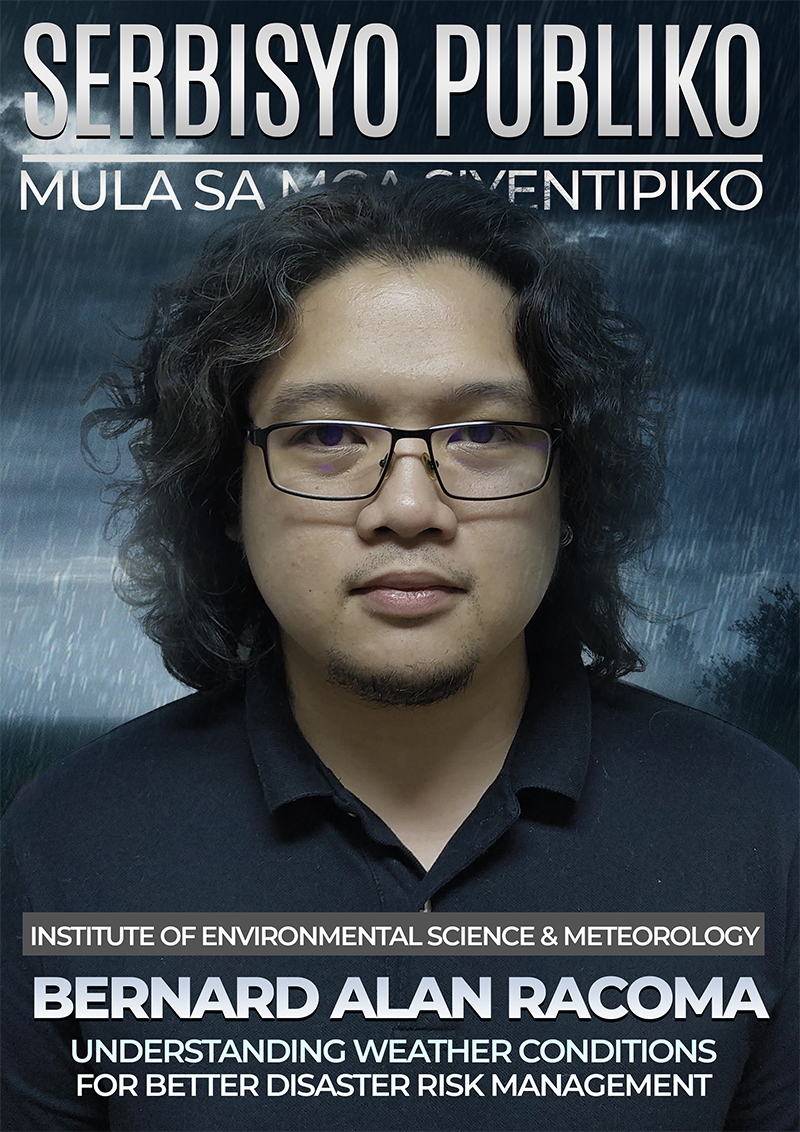
 Bernard Alan “BA” Racoma is currently a 3rd year PHD student and an instructor in the Institute of Environmental Science and Meteorology (IESM). Through a scholarship, he is taking up a double degree: a PHD in Meteorology at the University of the Philippines Diliman and a PHD in Atmosphere, Oceans and Climate at the University of Reading in the UK.
 In 2011, BA was recruited as part of the ClimateX project where he helped in developing a tool to convert satellite data into meaningful information that will predict rainfall. The tool is helpful in monitoring rainfall during extreme weather events like tropical cyclones and enhanced monsoons. In 2016, he joined DOST’s Project Nationwide Operational Assessment of Hazards or Project NOAH. Project NOAH is a response program that monitors satellite or radar data used for real time risk assessment. Through this, they were able to provide the list and maps of high-risk areas that were used by different agencies to respond and manage the typhoon. These projects were carried on to monitor other succeeding weather events. As an IT Officer of NOAH, he led the IT and web development team before he moved on to take further studies in 2018.
 BA wants to relay the importance of science communicators. Although he believes that people generally have more awareness of the weather, atmospheric and climate status because of the use of different social media platforms, he still thinks that there is a need to bridge the gap that sets apart the scientific community and the society. “A scientist’s mission should not only be to publish a paper, but also to be able to relay their research to the public through effectively translating its findings and implications.”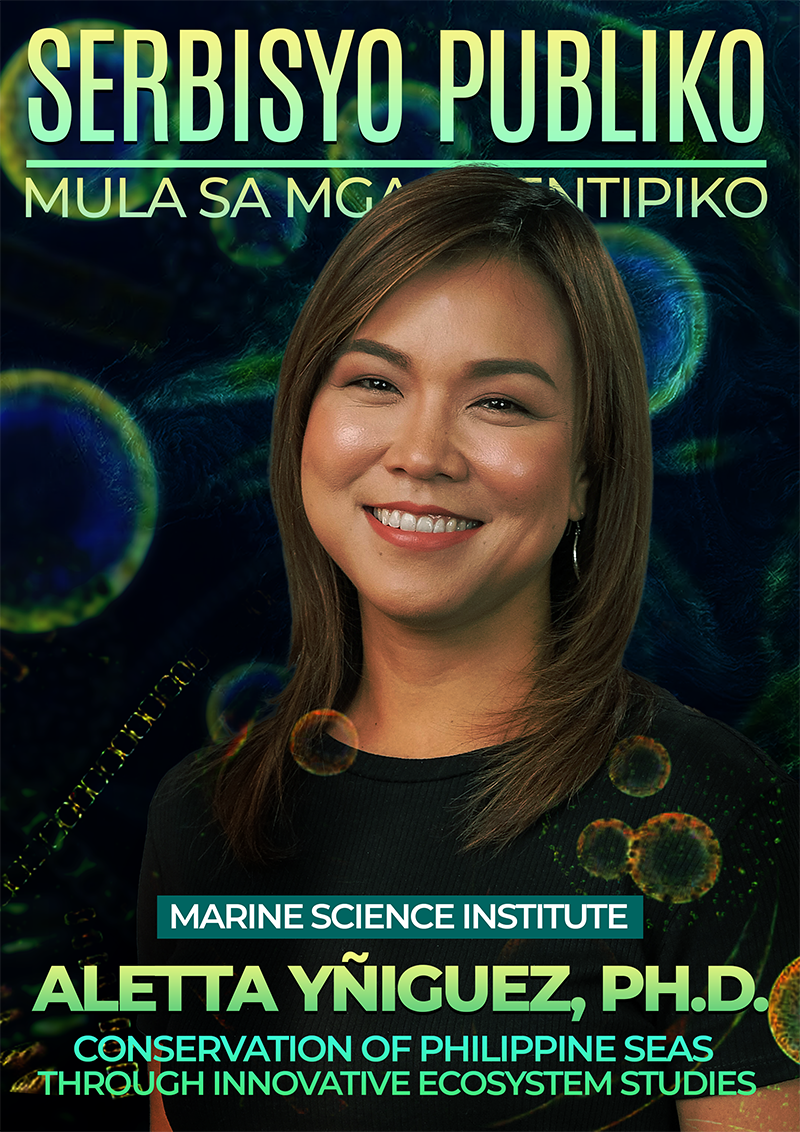
 As a faculty member and scientist in the Marine Science Institute (MSI), Dr. Aletta Yñiguez’ area of interest includes marine ecology, biological oceanography, ecological modelling, and dynamics of marine systems. Currently, she is still focusing on these specializations but with a distinct objective—to develop tools model for sustainable fisheries that will be accessible not only to big industries but also to small-scale fisherfolks.
 It is her ultimate goal to generate scientific information, tools and systems that help ensure the health of our ocean resources; this includes developing decision-support systems for resource managers like BFAR, DENR, as well as coastal communities. Particularly, these tools and systems provide real-time ocean status. This data and information are then used to forecast probable change in the conditions of the water that may help decision-makers like LGUs determine the best course of response to take. This will greatly help the public as most sea-related issues generally affect them, taking red tide as an example.
 Dr. Yñiguez is also involved in extension programs such as organizing summer camps and marine science events for the youth because she believes that producing advocates of science starts at the basic level of education and that there is a need to strongly enhance scientific literacy in the country.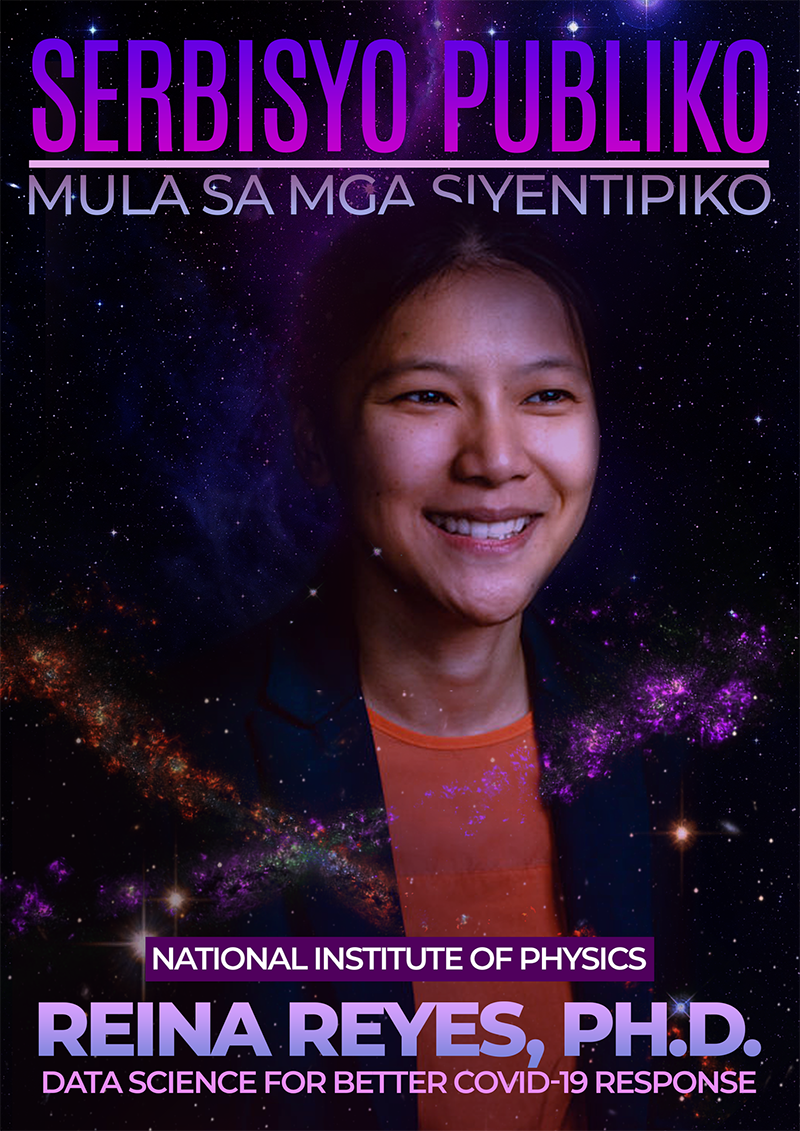
 It was in 2014 when Dr. Reinabelle Reyes decided to go back home to the Philippines and eventually settle. At the height of her scientific career abroad, with her confirming Einstein’s theory of relativity and making headlines for her scientific discoveries and achievements, she questioned herself,
 Currently, Reyes is working with the United Nations Development Program (UNDP), in the laboratory called “Pintig Lab,” to apply data science and analytics to developmental problems. As the lab’s chief technical adviser, she supports and guides the lab’s initiatives to monitor and track the COVID-19 pandemic and provide data-driven support to DOH, IATF, and other agencies in their response and recovery efforts. “The [COVID-19] pandemic showed the importance of timely and accurate data and the need to invest in people who have the skills and mindset to collect, organize, analyze and present data to decision makers,” says Reyes whose current goal is to contribute to helping PH achieve the sustainable development goals.
 She also used to travel to deliver talks around the country which was recently diverted into online talks with today’s current challenges. While still sharing topics on astrophysics, Reyes is more dedicated to sharing her experience and knowledge on data science, hoping to spread its importance to many societal aspects and of course, to inspire younger generations.
 In UP, Reyes is also helping undergraduate and graduate students in addressing societal challenges by way of research. She believes that faster solutions can be done through accurate and thorough research. Through being a teacher, she hopes to nurture Pinoy scientists who will have the heart to do scientific research for the betterment of the country. She is currently an Associate Professor at the National Institute of Physics and heads the Data & Computation Research Group under the Theoretical Physics Group. The group’s research interests currently fall under topics in data-driven astronomy— including gravitational wave astronomy and extragalactic astrophysics— and computational physics and data analysis— including machine learning and data for social good.
 “With the connectedness of the world, it is easy for the youth to gain new knowledge everyday. Use the resources we have today to satisfy your curious minds.” These are her words of wisdom to the youth. She wants to encourage scientists of today to support the next generation of scientists so that the country becomes a better place for learning and doing science.