
Filipino Scientists Develop Novel Method to Refine Mathematical Models and Identify Drug Targets
Published: May 29, 2026
By: Eunice Jean C. Patron
Biological processes like the Wnt signaling pathway—which regulates crucial development and helps keep the body’s tissues functioning normally and in balance—are often described by scientists using mathematical maps called reaction networks, which serve as the foundation of mathematical models. These allow scientists to examine and compare models based on their structure alone without needing or with minimal specific parameter values. Although several Wnt models exist, they differ in how they represent the same underlying biological system. To address this, Filipino mathematicians introduced a new method to find the common ground between these different maps.
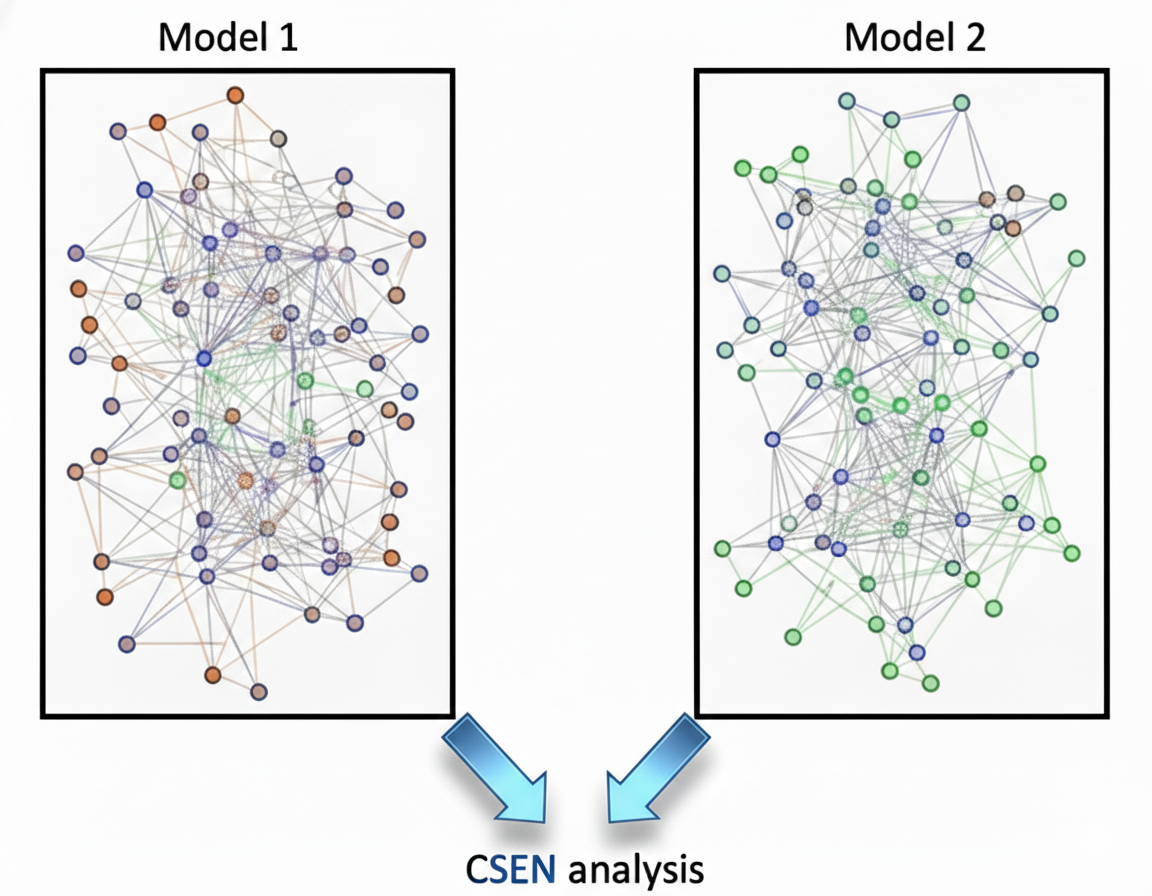
Dr. Bryan Hernandez of the University of the Philippines – Diliman College of Science’s Institute of Mathematics (UPD-CS IM), along with Patrick Vincent Lubenia and Dr. Eduardo Mendoza of the Center for Natural Science and Environmental Research, De La Salle University, developed the Common Species Embedded Networks (CSEN) analysis.
The CSEN analysis compares two reaction networks of the same or similar systems by focusing on their common species, such as proteins or chemicals, to identify similarities and differences.
“The method works by first isolating the networks ‘embedded’ within the models that involve only the common species. For the reactions that are not identical, the method checks for ‘transformations’—mathematical links that can explain how one reaction set might induce equivalence between the systems with the underlying embedded networks,” Dr. Hernandez explained.
Their group compared existing reaction networks associated with Wnt signaling models they had identified, including those by Lee, Schmitz, MacLean, and Feinberg. Through the CSEN analysis, the mathematicians found that some existing models are strongly similar because their embedded networks are connected through specific transformations. Conversely, the analysis can also reveal when no comparable relationship exists due to the absence of such transformations.
Dr. Hernandez shared the team’s inspiration behind creating the CSEN analysis. “In the field of systems biology, different researchers often propose different reaction networks to describe the same biological process. Historically, it has also been difficult to compare these models because they are often treated as entirely separate entities, utilizing different sets of variables and reactions.”
The CSEN analysis addresses this difficulty by emphasizing two key pillars: network embedding, which narrows complex networks to focus only on the species shared between models; and structural comparisons, in which the embedded networks are analyzed to determine whether one model is a more complex version of another or if they are “proximately equivalent” through mathematical transformations.
“Traditional approaches often discriminate between models based on specific properties, such as whether they have one long-term state (mono-stationarity) or the capacity for multiple long-term states (multi-stationarity). CSEN is different because it looks at the underlying structure and dynamical equivalence,” Dr. Hernandez added.
The CSEN analysis was particularly insightful for Wnt signaling, revealing that certain models—previously thought to differ fundamentally due to their stability properties—are actually structurally very similar.
According to Dr. Hernandez, the CSEN analysis is a general mathematical tool that can be applied to models in systems beyond Wnt signaling. “While we demonstrated its use with Wnt signaling, it can be applied to any system represented by reaction networks. This includes other biological pathways, such as insulin signaling or metabolism, as well as potentially non-biological networks such as chemical engineering processes or ecological models.”
The CSEN analysis can be vital in refining models in biological and chemical systems by identifying which parts of a model—or which models—are unique and which are redundant. This method can highlight robust targets: if many models, despite their differences, agree that a specific interaction drives a disease, that interaction becomes a more reliable and robust therapeutic target.
Their research, “Embedding-based comparison of reaction networks of Wnt signaling,” is included in MATCH Communications in Mathematical and in Computer Chemistry, an open-access journal that publishes papers of original research as well as reviews on chemically important mathematical results and non-routine applications of mathematical techniques to chemical problems.
References:
Hernandez, B. S., Lubenia, P. V., & Mendoza, E. R. (2024). Embedding-based comparison of reaction networks of Wnt signaling. MATCH Communications in Mathematical and in Computer Chemistry, 93(1), 235-245. https://doi.org/10.46793/match.93-1.223h
For interview requests and other concerns, please contact media@science.upd.edu.ph.